Institute of Novel and Emerging Infectious Diseases, Friedrich-Loeffler-Institut, Suedufer 10, 17493 Greifswald, Germany.
Viruses. 2024 Aug 26;16(9):1359. doi: 10.3390/v16091359.
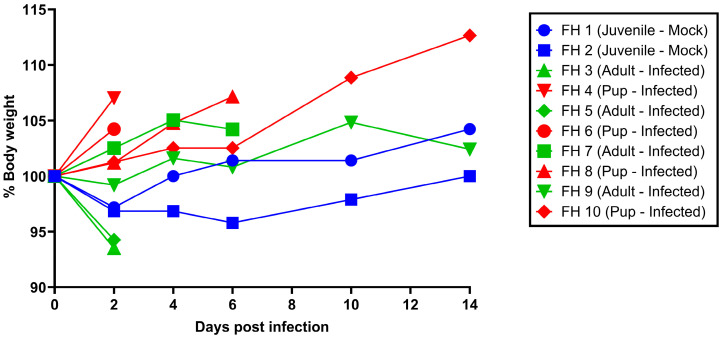
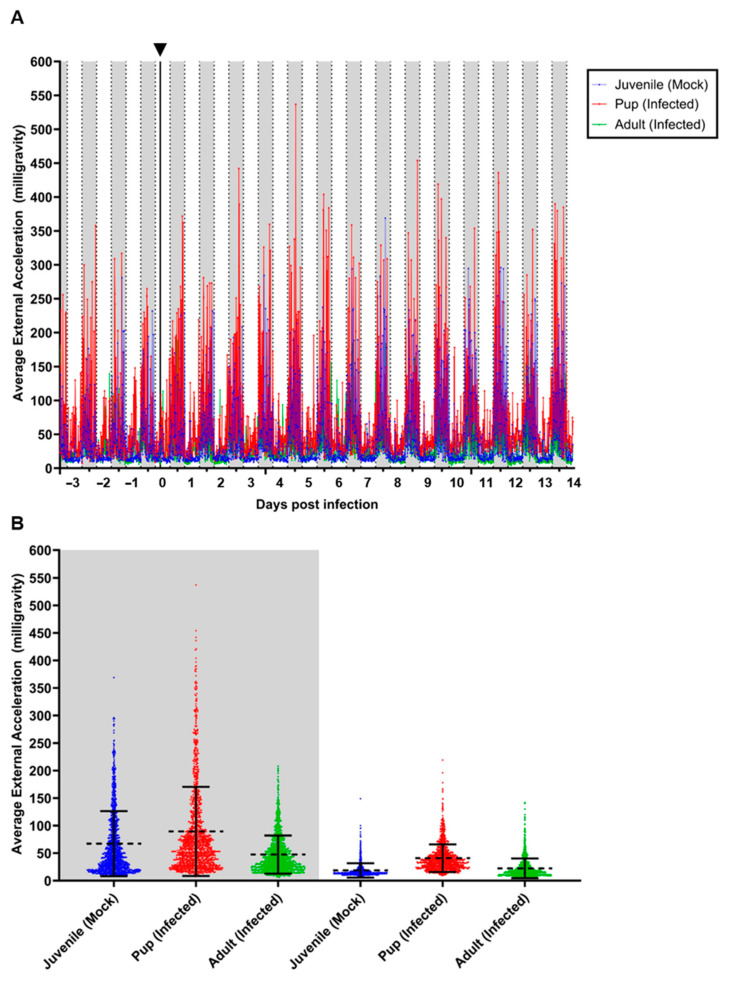
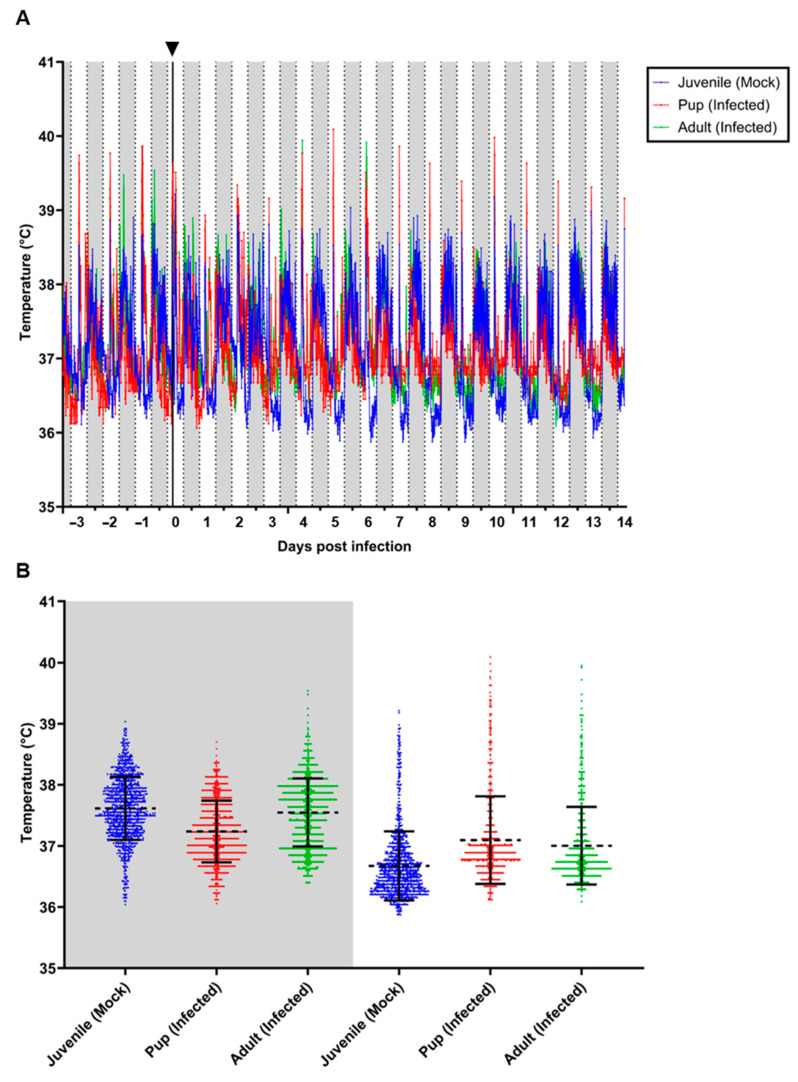
Cedar henipavirus (CedV), which was isolated from the urine of pteropodid bats in Australia, belongs to the genus in the family of . It is closely related to the Hendra virus (HeV) and Nipah virus (NiV), which have been classified at the highest biosafety level (BSL4) due to their high pathogenicity for humans. Meanwhile, CedV is apathogenic for humans and animals. As such, it is often used as a model virus for the highly pathogenic henipaviruses HeV and NiV. In this study, we challenged eight fruit bats of different age groups with CedV in order to assess their age-dependent susceptibility to a CedV infection. Upon intranasal inoculation, none of the animals developed clinical signs, and only trace amounts of viral RNA were detectable at 2 days post-inoculation in the upper respiratory tract and the kidney as well as in oral and anal swab samples. Continuous monitoring of the body temperature and locomotion activity of four animals, however, indicated minor alterations in the challenged animals, which would have remained unnoticed otherwise.
雪松亨尼帕病毒(CedV)于澳大利亚果蝠的尿液中分离得到,属于副黏病毒科亨尼帕病毒属。它与亨德拉病毒(HeV)和尼帕病毒(NiV)密切相关,由于对人类具有高致病性,已被归类为最高生物安全级别 4 级(BSL4)。同时,CedV 对人类和动物无致病性。因此,它常被用作高度致病性亨尼帕病毒 HeV 和 NiV 的模式病毒。在这项研究中,我们用 CedV 感染了 8 只不同年龄组的果蝠,以评估它们对 CedV 感染的年龄依赖性易感性。经鼻内接种后,动物均未出现临床症状,仅在接种后 2 天在上呼吸道、肾脏以及口腔和肛门拭子样本中可检测到痕量的病毒 RNA。然而,对 4 只动物的体温和运动活动的连续监测表明,受感染的动物有轻微变化,否则可能不会被注意到。