Institute of Diagnostic Virology, Friedrich-Loeffler-Institut, 17493 Greifswald, Insel Riems, Germany.
Institute of Novel and Emerging Infectious Diseases, Friedrich-Loeffler-Institut, Insel Riems, 17493 Greifswald, Insel Riems, Germany.
Viruses. 2021 Apr 14;13(4):672. doi: 10.3390/v13040672.
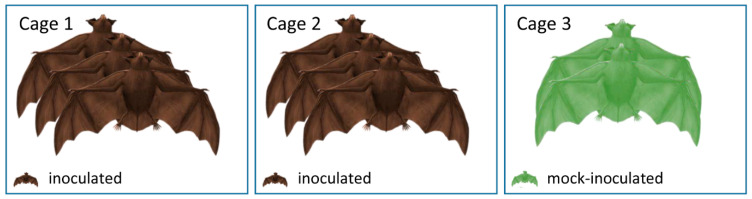
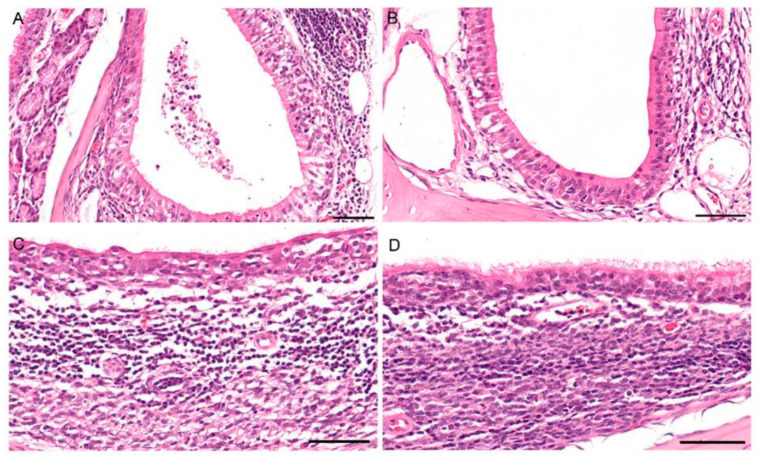
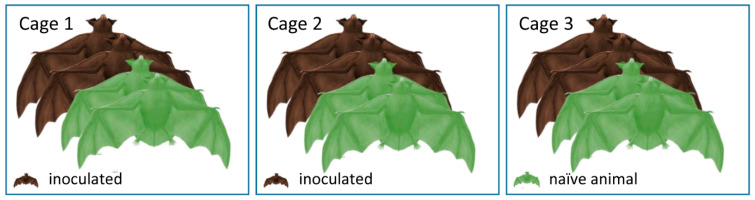
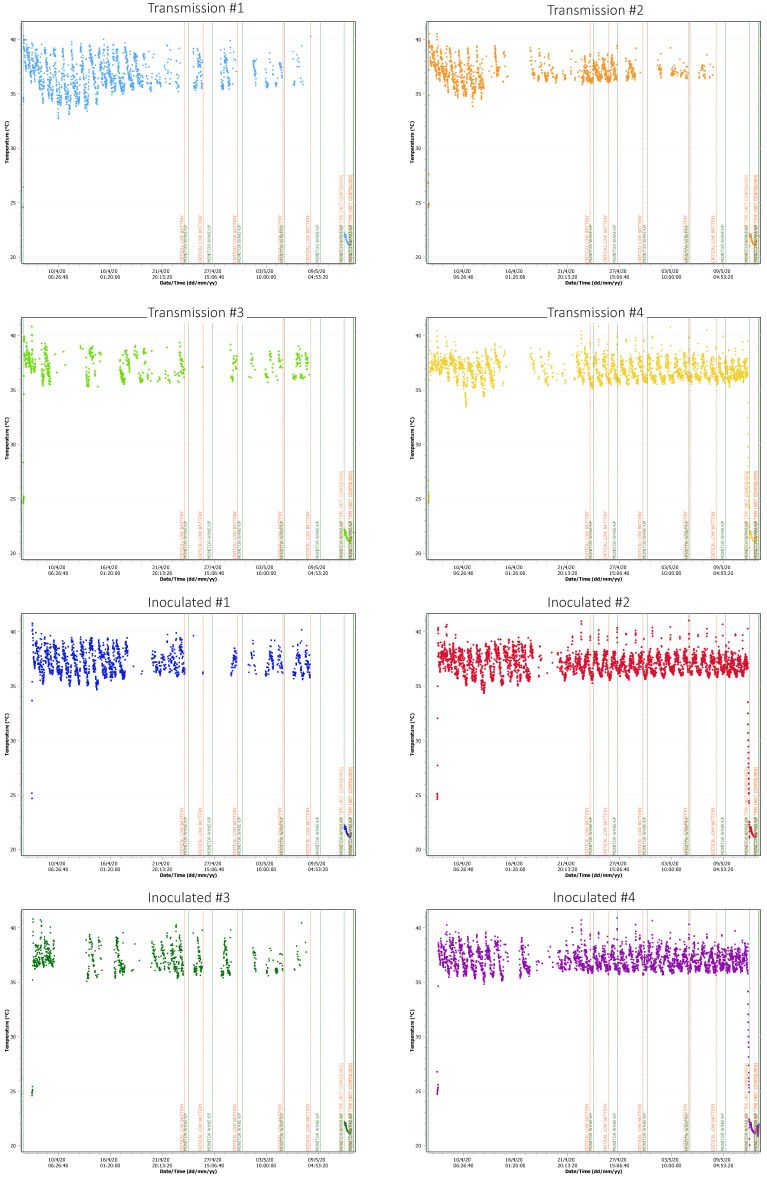
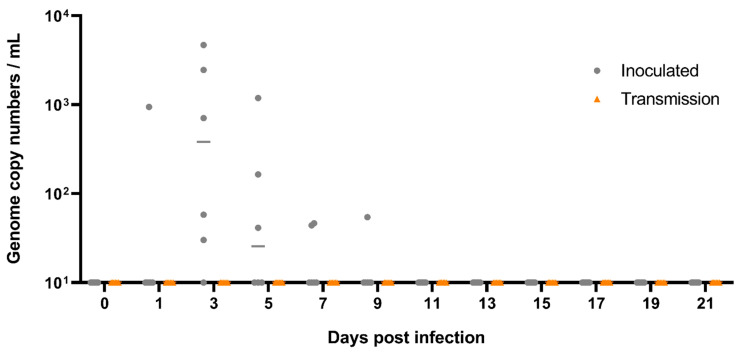
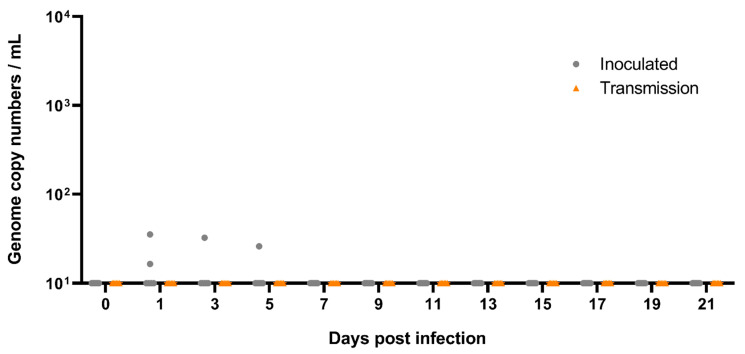
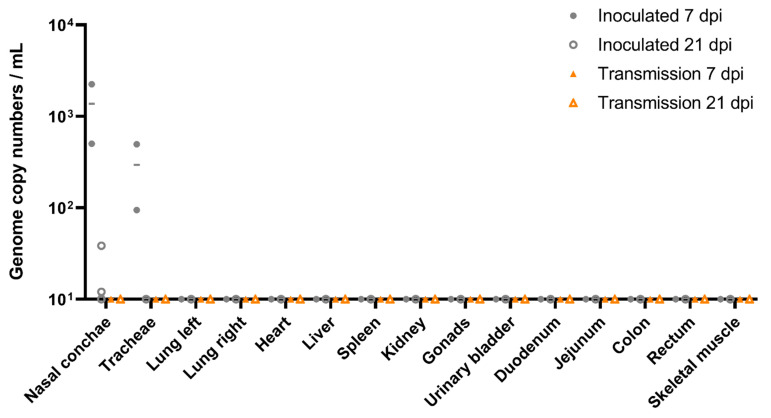
Influenza A viruses (IAV) of subtype H9N2, endemic in world-wide poultry holdings, are reported to cause spill-over infections to pigs and humans and have also contributed substantially to recent reassortment-derived pre-pandemic zoonotic viruses of concern, such as the Asian H7N9 viruses. Recently, a H9N2 bat influenza A virus was found in Egyptian fruit bats (), raising the question of whether this bat species is a suitable host for IAV. Here, we studied the susceptibility, pathogenesis and transmission of avian and bat-related H9N2 viruses in this new host. In a first experiment, we oronasally inoculated six Egyptian fruit bats with an avian-related H9N2 virus (A/layer chicken/Bangladesh/VP02-plaque/2016 (H9N2)). In a second experiment, six Egyptian fruit bats were inoculated with the newly discovered bat-related H9N2 virus (A/bat/Egypt/381OP/2017 (H9N2)). While turned out to be refractory to an infection with H9N2 avian-type, inoculation with the bat H9N2 subtype established a productive infection in all inoculated animals with a detectable seroconversion at day 21 post-infection. In conclusion, Egyptian fruit bats are most likely not susceptible to the avian H9N2 subtype, but can be infected with fruit bat-derived H9N2. H9-specific sero-reactivities in fruit bats in the field are therefore more likely the result of contact with a bat-adapted H9N2 strain.
H9N2 亚型甲型流感病毒(IAV)在世界范围内的家禽养殖场中流行,据报道可导致猪和人类的溢出感染,并且还对最近由重配衍生的、引起关注的人畜共患的前流行病毒做出了重大贡献,如亚洲 H7N9 病毒。最近,在埃及果蝠()中发现了一种 H9N2 蝙蝠流感病毒,这引发了一个问题,即这种蝙蝠物种是否是 IAV 的合适宿主。在这里,我们研究了这种新宿主中禽源和蝙蝠相关的 H9N2 病毒的易感性、发病机制和传播。在第一个实验中,我们经鼻内接种六只埃及果蝠禽源 H9N2 病毒(A/layer chicken/Bangladesh/VP02-plaque/2016 (H9N2))。在第二个实验中,六只埃及果蝠接种了新发现的蝙蝠相关 H9N2 病毒(A/bat/Egypt/381OP/2017 (H9N2))。虽然结果表明埃及果蝠对 H9N2 禽源型感染具有抗性,但接种蝙蝠 H9N2 亚型在所有接种动物中建立了可复制的感染,并在感染后第 21 天检测到血清转化。总之,埃及果蝠很可能不易感染禽源 H9N2 亚型,但可感染源自蝙蝠的 H9N2。因此,在野外果蝠中 H9 特异性血清反应性更可能是接触蝙蝠适应的 H9N2 株的结果。