Konopko Adrian, Łukomska Agnieszka, Kucia Magdalena, Ratajczak Mariusz Z
Center for Preclinical Studies and Technology, Laboratory of Regenerative Medicine at Medical University of Warsaw, Warsaw, Poland.
Stem Cell Institute at James Graham Brown Cancer Center, University of Louisville, 500 S. Floyd Street, Rm. 107, Louisville, KY, 40202, USA.
Stem Cell Rev Rep. 2025 Jan;21(1):59-67. doi: 10.1007/s12015-024-10792-6. Epub 2024 Sep 28.
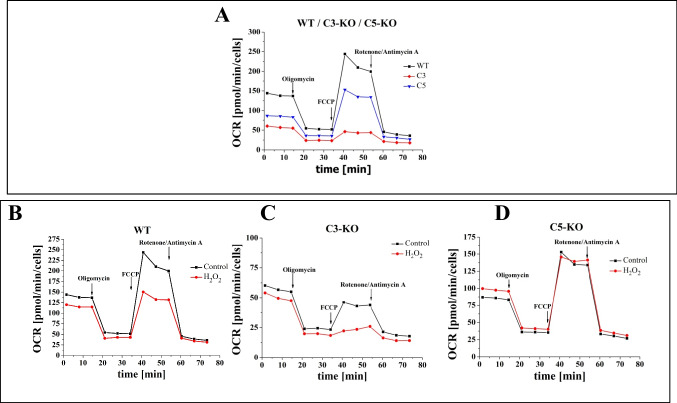
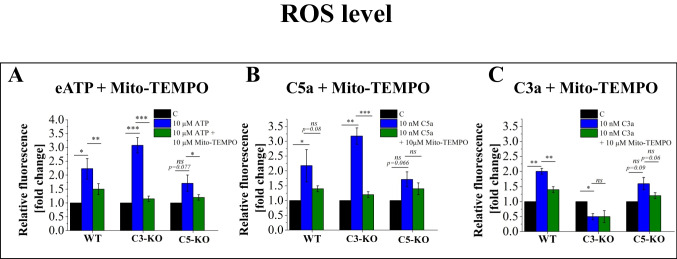
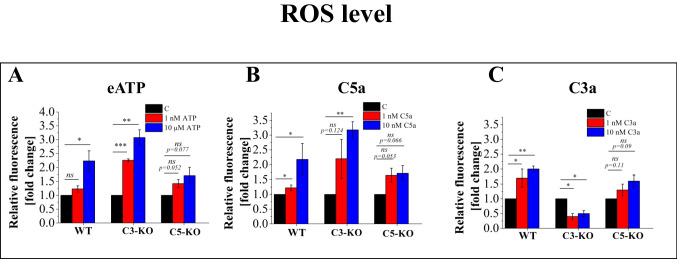
The liver-derived circulating in peripheral blood and intrinsic cell-expressed complement known as complosome orchestrate the trafficking of hematopoietic stem/progenitor cells (HSPCs) both during pharmacological mobilization and homing/engraftment after transplantation. Our previous research demonstrated that C3 deficient mice are easy mobilizers, and their HSPCs engraft properly in normal mice. In contrast, C5 deficiency correlates with poor mobilization and defects in HSPCs' homing and engraftment. The trafficking of HSPCs during mobilization and homing/engraftment follows the sterile inflammation cues in the BM microenvironment caused by stress induced by pro-mobilizing drugs or myeloablative conditioning for transplantation. Therefore, to explain deficiencies in HSPC trafficking between C3-KO and C5-KO mice, we evaluated the responsiveness of C3 and C5 deficient cells to low oxidative stress. As reported, oxidative stress in BM is mediated by the activation of purinergic signaling, which is triggered by the elevated level of extracellular adenosine triphosphate (eATP) and by the activation of the complement cascade (ComC). In the current work, we noticed that BM lineage negative cells (lin) isolated from C3-KO mice display several mitochondrial defects reflected by an impaired ability to adapt to oxidative stress. In contrast, C5-KO-derived BM cells show a high level of adaptation to this challenge. To support this data, C3-KO BM lin cells were highly responsive to eATP stimulation, which correlates with enhanced levels of reactive oxygen species (ROS) generation and more efficient activation of intracellular Nlrp3 inflammasome. We conclude that the enhanced sensitivity of C3-KO mice cells to oxidative stress and better activation of the Nox2-ROS-Nlrp3 inflammasome signaling axis explains the molecular level differences in trafficking between C3- and C5-deficient HSPCs.
肝脏衍生的循环于外周血中的成分以及内在细胞表达的补体(即补体小体)在药物动员期间以及移植后的归巢/植入过程中协调造血干/祖细胞(HSPCs)的转运。我们之前的研究表明,C3缺陷小鼠是易于动员的,并且它们的HSPCs能在正常小鼠中正常植入。相反,C5缺陷与动员不良以及HSPCs归巢和植入缺陷相关。在动员和归巢/植入过程中,HSPCs的转运遵循由促动员药物或移植的清髓预处理所诱导的应激在骨髓微环境中引发的无菌性炎症信号。因此,为了解释C3基因敲除(KO)和C5-KO小鼠之间HSPC转运的缺陷,我们评估了C3和C5缺陷细胞对低氧化应激的反应性。如报道所述,骨髓中的氧化应激由嘌呤能信号的激活介导,嘌呤能信号由细胞外三磷酸腺苷(eATP)水平升高以及补体级联反应(ComC)的激活触发。在当前工作中,我们注意到从C3-KO小鼠分离的骨髓谱系阴性细胞(lin)表现出几种线粒体缺陷,这通过适应氧化应激能力受损得以体现。相反,C5-KO来源的骨髓细胞对这种挑战表现出高度适应性。为支持该数据,C3-KO骨髓lin细胞对eATP刺激高度敏感,这与活性氧(ROS)生成水平增强以及细胞内Nlrp3炎性小体更有效的激活相关。我们得出结论,C3-KO小鼠细胞对氧化应激的敏感性增强以及Nox2-ROS-Nlrp3炎性小体信号轴的更好激活解释了C3缺陷和C5缺陷HSPCs在转运方面的分子水平差异。