Department of Oncology, Karmanos Cancer Institute, Wayne State University School of Medicine, HWCRC 723 4100 John R. Street, Detroit, MI, 48201, USA.
Georgia Cancer Center, Department of Biochemistry, Augusta University, Augusta, GA, USA.
Sci Rep. 2024 Sep 28;14(1):22487. doi: 10.1038/s41598-024-72989-6.
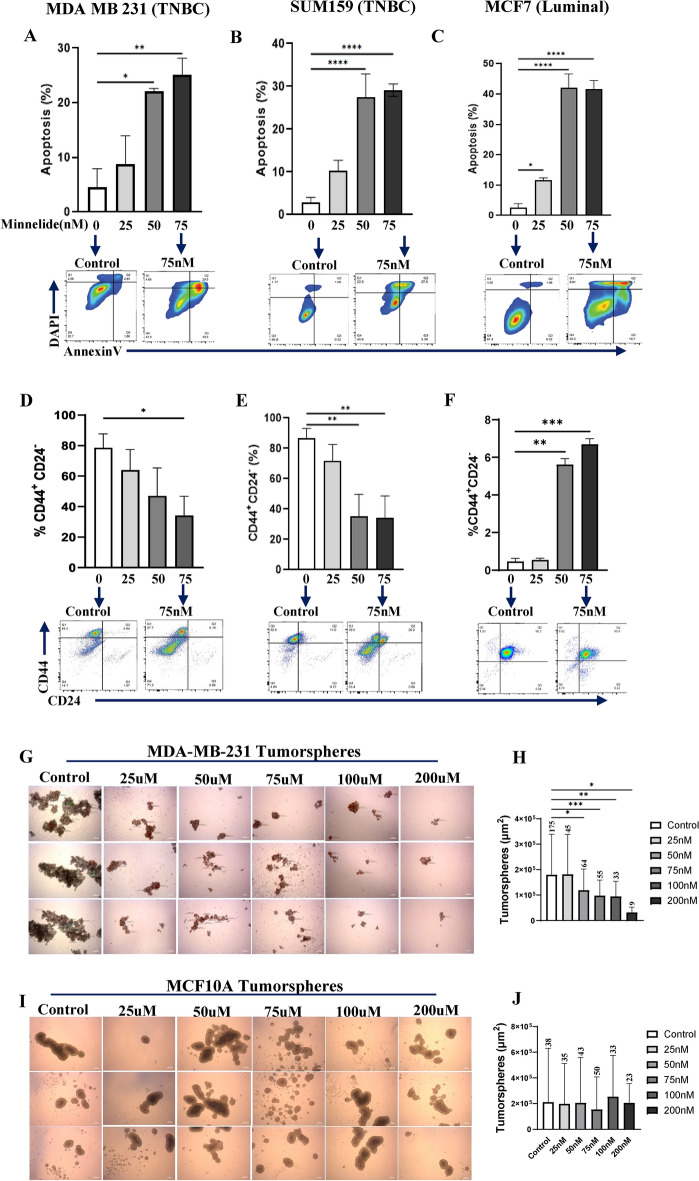
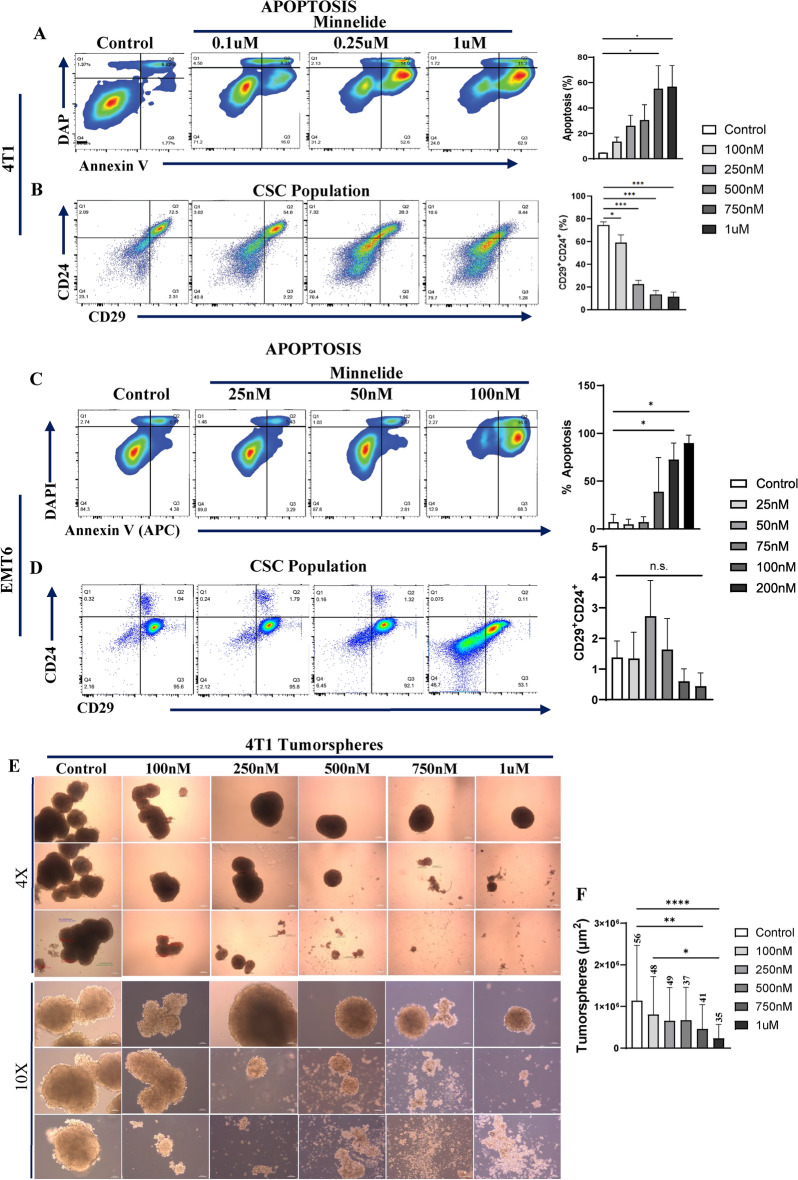
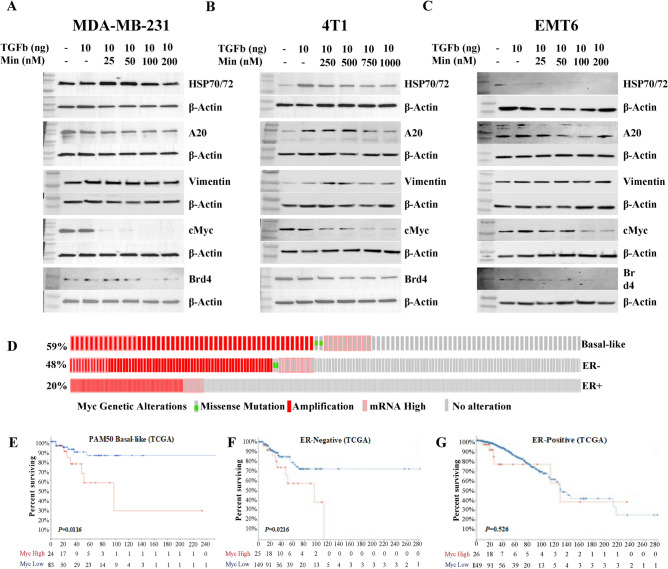
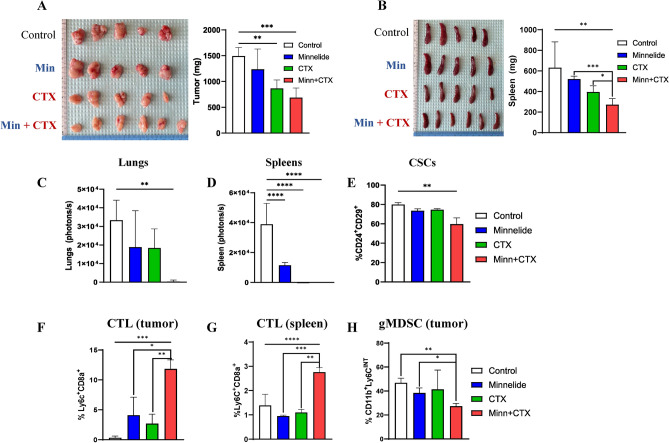
Triple negative breast cancer (TNBC) subtype is characterized with higher EMT/stemness properties and immune suppressive tumor microenvironment (TME). Women with advanced TNBC exhibit aggressive disease and have limited treatment options. Although immune suppressive TME is implicated in driving aggressive properties of basal/TNBC subtype and therapy resistance, effectively targeting it remains a challenge. Minnelide, a prodrug of triptolide currently being tested in clinical trials, has shown anti-tumorigenic activity in multiple malignancies via targeting super enhancers, Myc and anti-apoptotic pathways such as HSP70. Distinct super-enhancer landscape drives cancer stem cells (CSC) in TNBC subtype while inducing immune suppressive TME. We show that Minnelide selectively targets CSCs in human and murine TNBC cell lines compared to cell lines of luminal subtype by targeting Myc and HSP70. Minnelide in combination with cyclophosphamide significantly reduces the tumor growth and eliminates metastasis by reprogramming the tumor microenvironment and enhancing cytotoxic T cell infiltration in 4T1 tumor-bearing mice. Resection of residual tumors following the combination treatment leads to complete eradication of disseminated tumor cells as all mice are free of local and distant recurrences. All control mice showed recurrences within 3 weeks of post-resection while single Minnelide treatment delayed recurrence and one mouse was free of tumor. We provide evidence that Minnelide targets tumor intrinsic pathways and reprograms the immune suppressive microenvironment. Our studies also suggest that Minnelide in combination with cyclophosphamide may lead to durable responses in patients with basal/TNBC subtype warranting its clinical investigation.
三阴性乳腺癌(TNBC)亚型的特征是具有更高的 EMT/干性特性和免疫抑制性肿瘤微环境(TME)。晚期 TNBC 女性表现出侵袭性疾病,且治疗选择有限。尽管免疫抑制性 TME 被认为是驱动基底/TNBC 亚型侵袭性和治疗耐药性的原因,但有效地靶向它仍然是一个挑战。米内利德是雷公藤内酯的前体药物,目前正在临床试验中进行测试,它通过靶向超级增强子、Myc 和 HSP70 等抗凋亡途径,在多种恶性肿瘤中显示出抗肿瘤活性。独特的超级增强子景观驱动 TNBC 亚型中的癌症干细胞(CSC),同时诱导免疫抑制性 TME。我们表明,与 luminal 亚型的细胞系相比,米内利德通过靶向 Myc 和 HSP70,选择性地靶向人类和鼠源 TNBC 细胞系中的 CSC。米内利德与环磷酰胺联合使用可通过重编程肿瘤微环境和增强细胞毒性 T 细胞浸润,显著减少 4T1 荷瘤小鼠的肿瘤生长并消除转移。联合治疗后切除残余肿瘤可导致播散性肿瘤细胞的完全消除,因为所有小鼠均无局部和远处复发。所有对照小鼠在切除后 3 周内均出现复发,而单独使用米内利德治疗可延迟复发,且有一只小鼠无肿瘤。我们提供的证据表明,米内利德靶向肿瘤内在途径并重新编程免疫抑制性微环境。我们的研究还表明,米内利德与环磷酰胺联合使用可能会导致基底/TNBC 亚型患者产生持久的反应,值得进一步临床研究。