The Sanya Institute of the Nanjing Agricultural University, Key Lab of Organic-Based Fertilizers of China, Jiangsu Provincial Key Lab for Solid Organic Waste Utilization, Jiangsu Collaborative Innovation Center of Solid Organic Wastes, Educational Ministry Engineering Center of Resource-Saving Fertilizers, Nanjing Agricultural University, Nanjing, Jiangsu, 210095, China.
Wheat Health, Genetics and Quality Research Unit, Washington State University, Pullman, WA, 99164, USA.
Microbiome. 2024 Sep 28;12(1):185. doi: 10.1186/s40168-024-01906-w.
Soil nutrient status and soil-borne diseases are pivotal factors impacting modern intensive agricultural production. The interplay among plants, soil microbiome, and nutrient regimes in agroecosystems is essential for developing effective disease management. However, the influence of nutrient availability on soil-borne disease suppression and associated plant-microbe interactions remains to be fully explored. T his study aims to elucidate the mechanistic understanding of nutrient impacts on disease suppression, using phosphorous as a target nutrient.
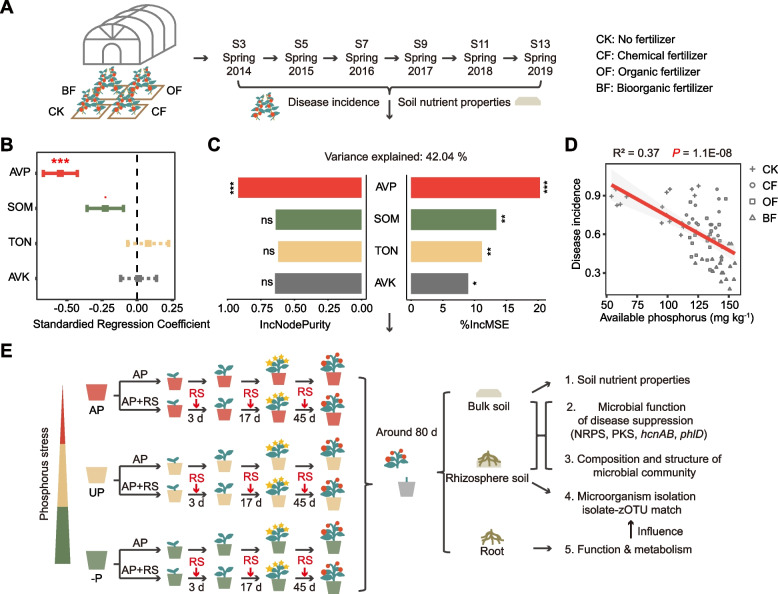
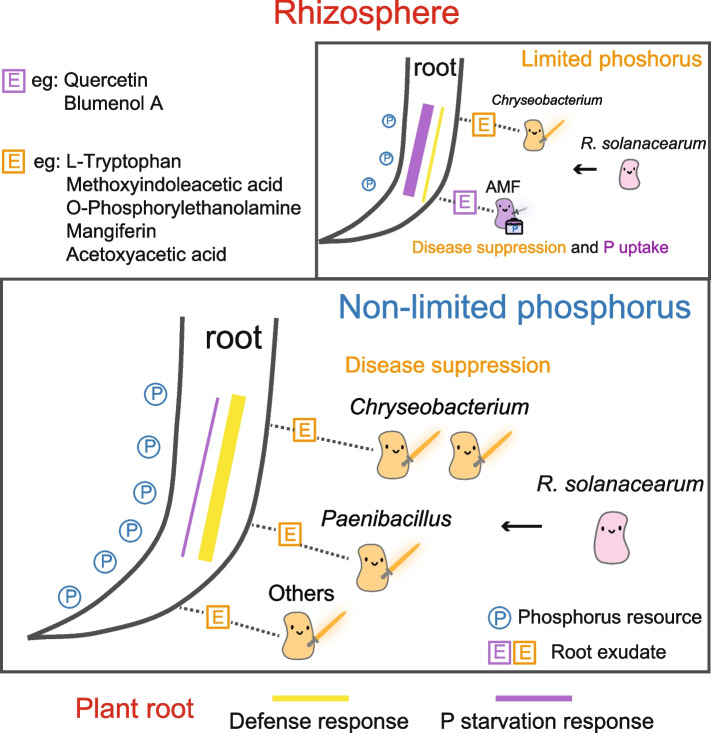
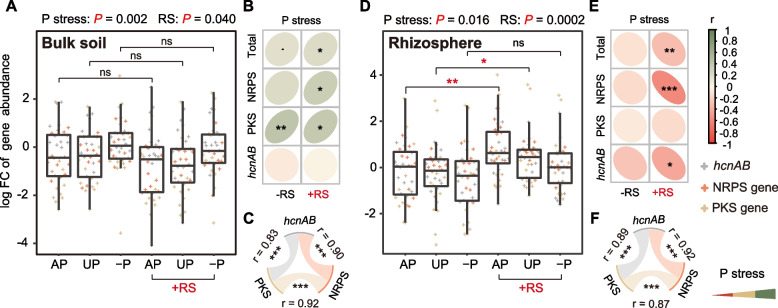
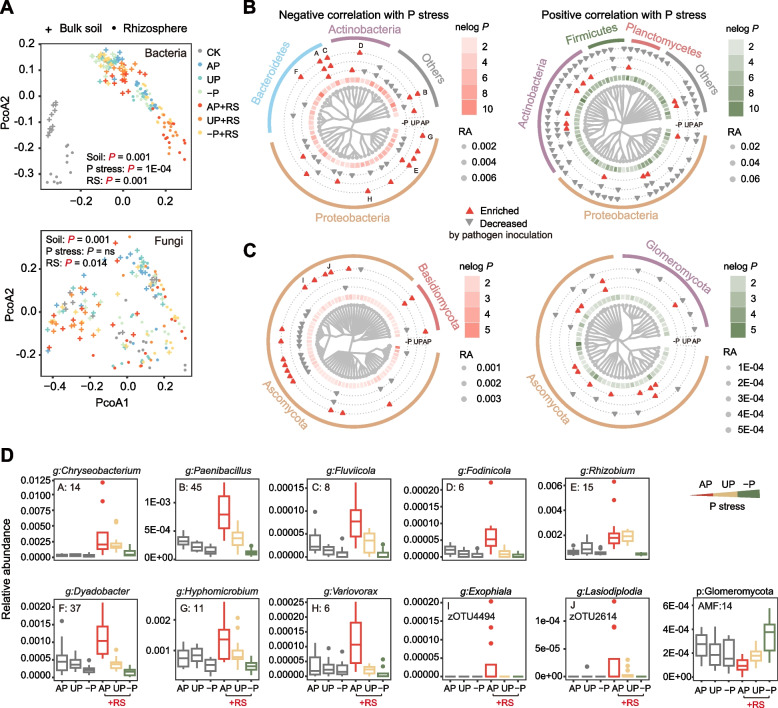
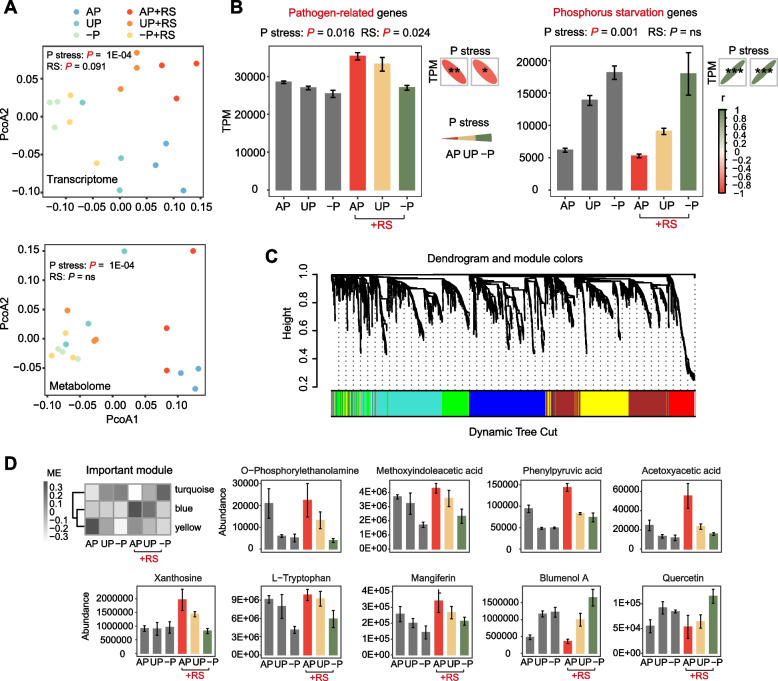
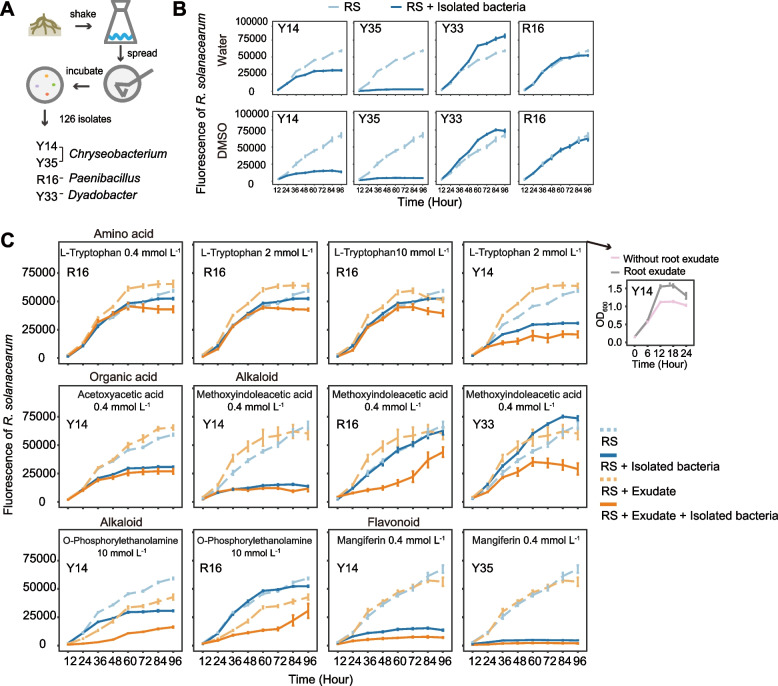
A 6-year field trial involving monocropping of tomatoes with varied fertilizer manipulations demonstrated that phosphorus availability is a key factor driving the control of bacterial wilt disease caused by Ralstonia solanacearum. Subsequent greenhouse experiments were then conducted to delve into the underlying mechanisms of this phenomenon by varying phosphorus availability for tomatoes challenged with the pathogen. Results showed that the alleviation of phosphorus stress promoted the disease-suppressive capacity of the rhizosphere microbiome, but not that of the bulk soil microbiome. This appears to be an extension of the plant trade-off between investment in disease defense mechanisms versus phosphorus acquisition. Adequate phosphorus levels were associated with elevated secretion of root metabolites such as L-tryptophan, methoxyindoleacetic acid, O-phosphorylethanolamine, or mangiferin, increasing the relative density of microbial biocontrol populations such as Chryseobacterium in the rhizosphere. On the other hand, phosphorus deficiency triggered an alternate defense strategy, via root metabolites like blumenol A or quercetin to form symbiosis with arbuscular mycorrhizal fungi, which facilitated phosphorus acquisition as well.
Overall, our study shows how phosphorus availability can influence the disease suppression capability of the soil microbiome through plant-microbial interactions. These findings highlight the importance of optimizing nutrient regimes to enhance disease suppression, facilitating targeted crop management and boosting agricultural productivity. Video Abstract.
土壤养分状况和土传病害是影响现代集约化农业生产的关键因素。植物、土壤微生物组和农业生态系统中的养分制度之间的相互作用对于开发有效的病害管理至关重要。然而,养分供应对土传病害抑制和相关植物-微生物相互作用的影响仍有待充分探索。本研究旨在阐明养分对病害抑制影响的机制理解,以磷作为目标养分。
一项涉及番茄单作和不同肥料处理的 6 年田间试验表明,磷的有效性是驱动由茄青枯假单胞菌引起的细菌性萎蔫病控制的关键因素。随后通过改变供试番茄的磷有效性进行温室实验,深入研究了这一现象的潜在机制。结果表明,缓解磷胁迫促进了根际微生物组的病害抑制能力,但对土壤微生物组的抑制能力没有促进。这似乎是植物在疾病防御机制与磷获取之间进行投资权衡的延伸。充足的磷水平与根代谢物如 L-色氨酸、甲氧基吲哚乙酸、O-磷酸乙醇胺或芒果苷的分泌增加有关,从而增加了根际微生物生物防治种群如黄杆菌的相对密度。另一方面,磷缺乏会触发通过根代谢物如 blumenol A 或槲皮素与丛枝菌根真菌形成共生关系的替代防御策略,从而促进磷的获取。
总的来说,我们的研究表明,磷的有效性如何通过植物-微生物相互作用影响土壤微生物组的病害抑制能力。这些发现强调了优化养分制度以增强病害抑制的重要性,有助于有针对性的作物管理和提高农业生产力。视频摘要。