Department of Food and Nutrition, University of Helsinki, Helsinki, Finland.
Department of Food Sciences, University of Copenhagen, Frederiksberg, Denmark.
mSystems. 2024 Oct 22;9(10):e0061524. doi: 10.1128/msystems.00615-24. Epub 2024 Sep 30.
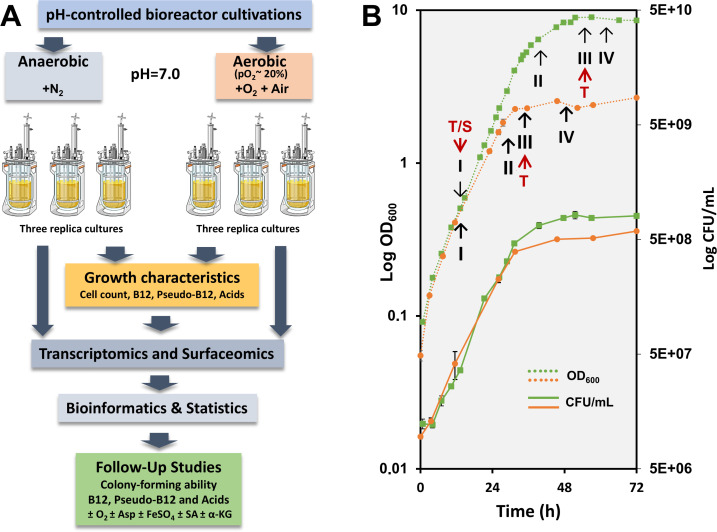
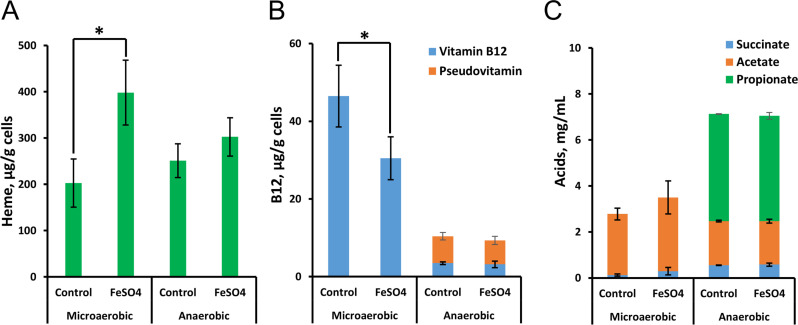
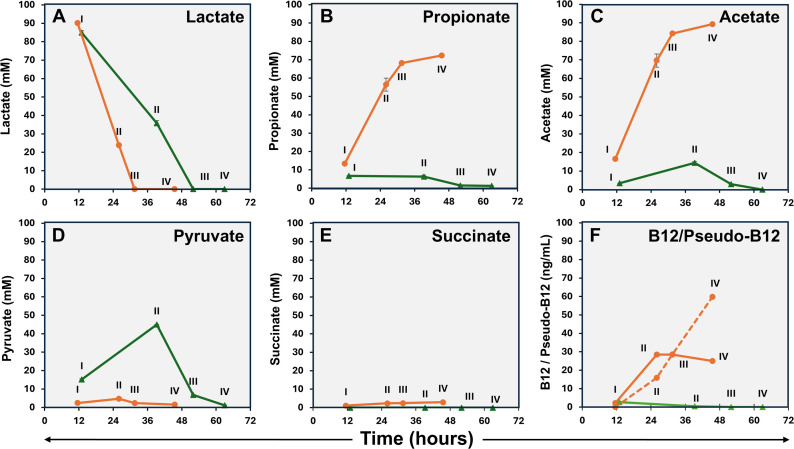
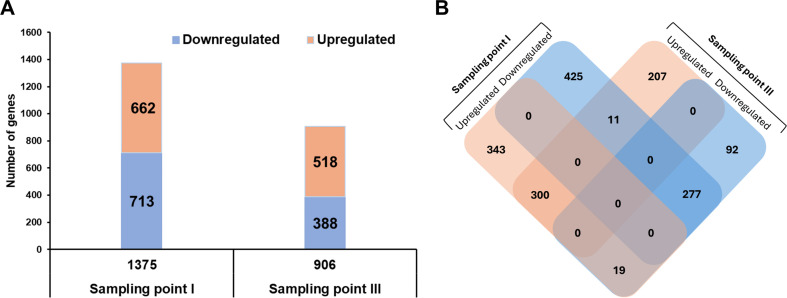
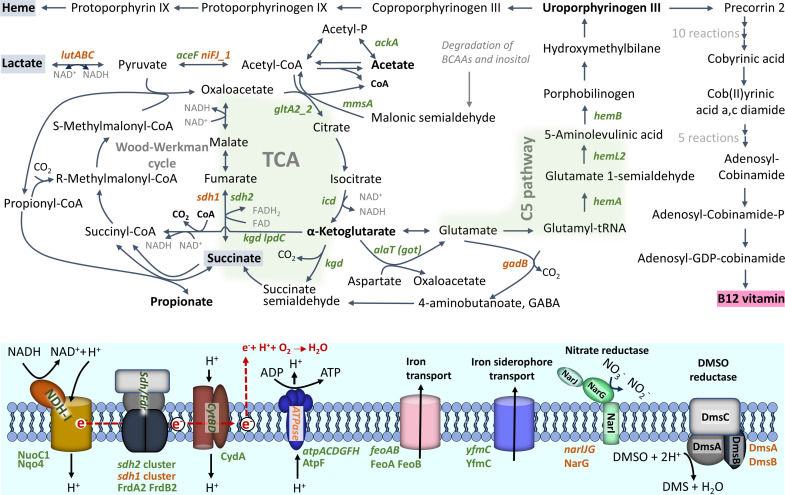
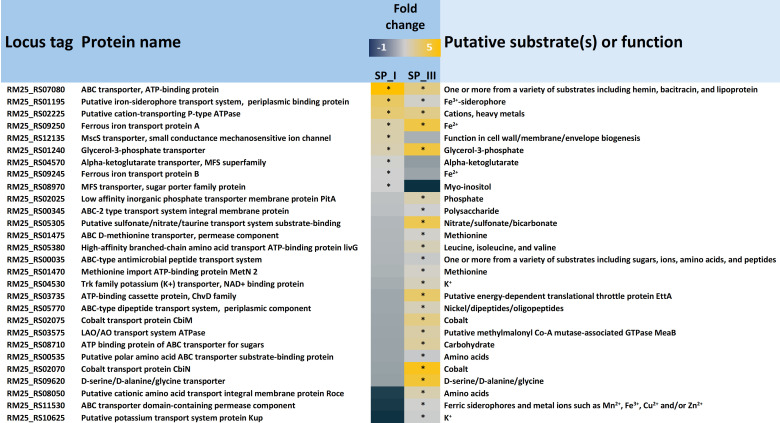
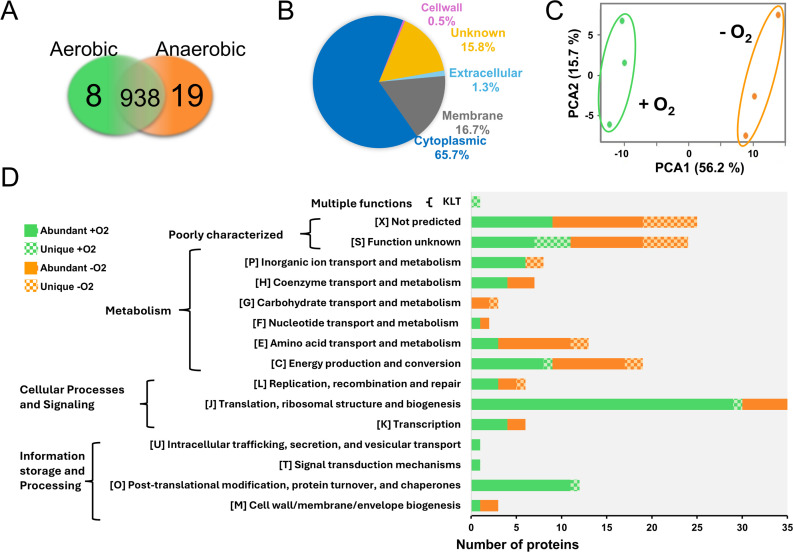
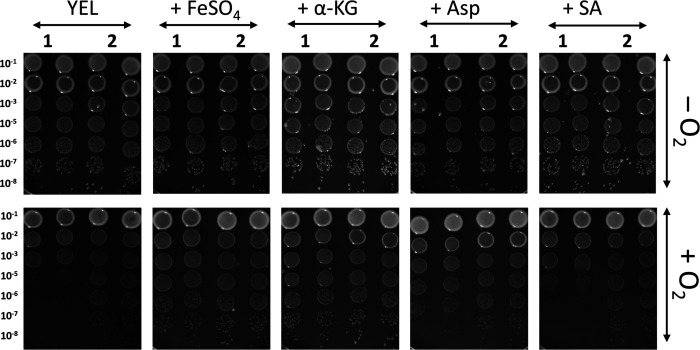
() DSM 20271 is a bacterium known for its ability to thrive in diverse environments and to produce vitamin B12. Despite its anaerobic preference, recent studies have elucidated its ability to prosper in the presence of oxygen, prompting a deeper exploration of its physiology under aerobic conditions. Here, we investigated the response of DSM 20271 to aerobic growth by employing comparative transcriptomic and surfaceome analyses alongside metabolite profiling. Cultivation under controlled partial pressure of oxygen (pO) conditions revealed significant increases in biomass formation and altered metabolite production, notably of vitamin B12, pseudovitamin-B12, propionate, and acetate, under aerobic conditions. Transcriptomic analysis identified differential expression of genes involved in lactate metabolism, tricarboxylic acid cycle, and electron transport chain, suggesting metabolic adjustments to aerobic environments. Moreover, surfaceome analysis unveiled growth environment-dependent changes in surface protein abundance, with implications for adaptation to atmospheric conditions. Supplementation experiments with key compounds highlighted the potential for enhancing aerobic growth, emphasizing the importance of iron and α-ketoglutarate availability. Furthermore, in liquid culture, FeSO supplementation led to increased heme production and reduced vitamin B12 production, highlighting the impact of oxygen and iron availability on the metabolic pathways. These findings deepen our understanding of 's physiological responses to oxygen availability and offer insights for optimizing its growth in industrial applications.
The study of the response of to aerobic growth is crucial for understanding how this bacterium adapts to different environments and produces essential compounds like vitamin B12. By investigating its physiological changes under aerobic conditions, we can gain insights into its metabolic adjustments and potential for enhanced growth. These findings not only deepen our understanding of s responses to oxygen availability but also offer valuable information for optimizing its growth in industrial applications. This research sheds light on the adaptive mechanisms of this bacterium, providing a foundation for further exploration and potential applications in various fields.
()DSM 20271 是一种以能够在各种环境中茁壮成长和产生维生素 B12 而闻名的细菌。尽管它优先进行厌氧代谢,但最近的研究已经阐明了它在有氧气存在的情况下茁壮成长的能力,这促使我们更深入地研究其在有氧条件下的生理学。在这里,我们通过比较转录组和表面组分析以及代谢物分析,研究了 DSM 20271 对有氧生长的反应。在受控的氧分压(pO)条件下培养,发现生物量形成显著增加,代谢物产生发生变化,特别是维生素 B12、假维生素 B12、丙酸和乙酸在有氧条件下。转录组分析确定了与乳酸代谢、三羧酸循环和电子传递链相关的基因的差异表达,表明了对有氧环境的代谢调整。此外,表面组分析揭示了生长环境依赖的表面蛋白丰度变化,这对适应大气条件具有重要意义。用关键化合物进行的补充实验强调了增强有氧生长的潜力,强调了铁和 α-酮戊二酸可用性的重要性。此外,在液体培养中,FeSO 补充导致血红素产生增加和维生素 B12 产生减少,突出了氧气和铁可用性对代谢途径的影响。这些发现加深了我们对 对氧气可用性的生理反应的理解,并为在工业应用中优化其生长提供了见解。
研究 对有氧生长的反应对于理解这种细菌如何适应不同的环境和产生必需化合物(如维生素 B12)至关重要。通过研究其在有氧条件下的生理变化,我们可以深入了解其代谢调整和潜在的增强生长能力。这些发现不仅加深了我们对 对氧气可用性的反应的理解,还为在工业应用中优化其生长提供了有价值的信息。这项研究揭示了这种细菌的适应机制,为进一步探索和潜在应用提供了基础,这些应用涉及各个领域。