Postgraduate Program in Food and Nutrition, Federal University of Parana, Curitiba, Brazil.
J Nutr Sci. 2024 Sep 25;13:e48. doi: 10.1017/jns.2024.45. eCollection 2024.
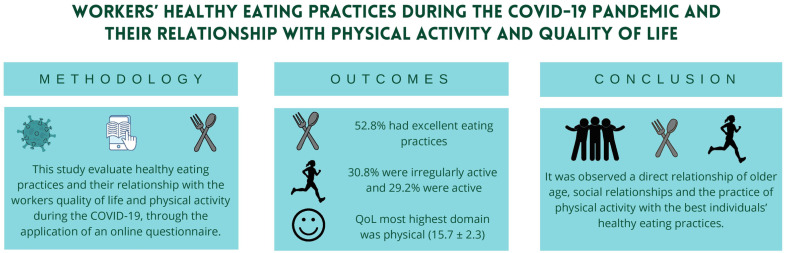
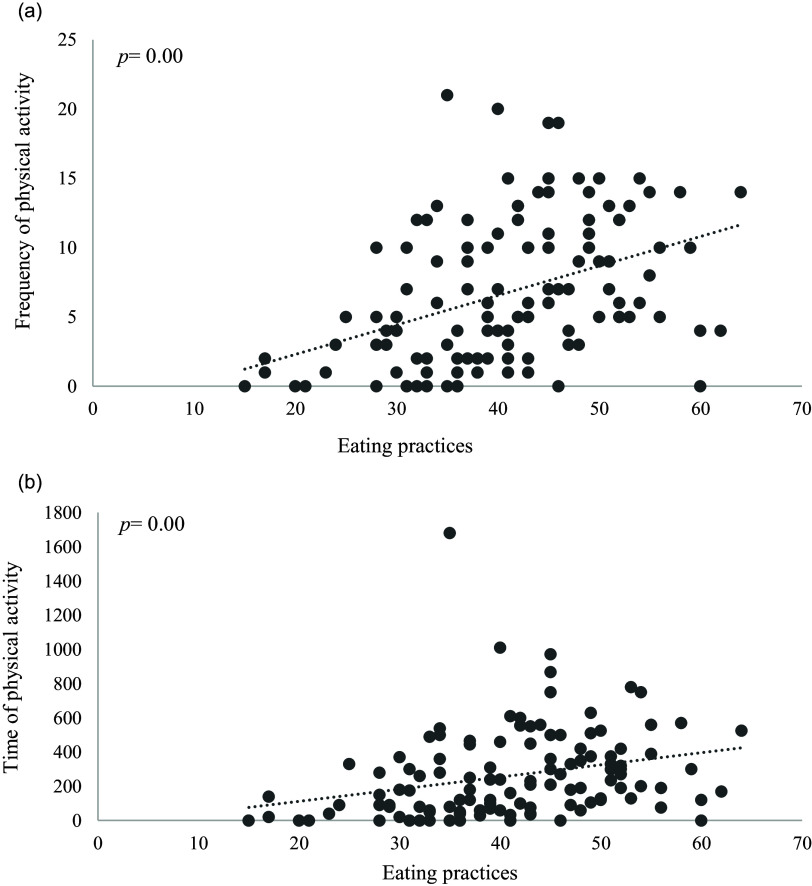
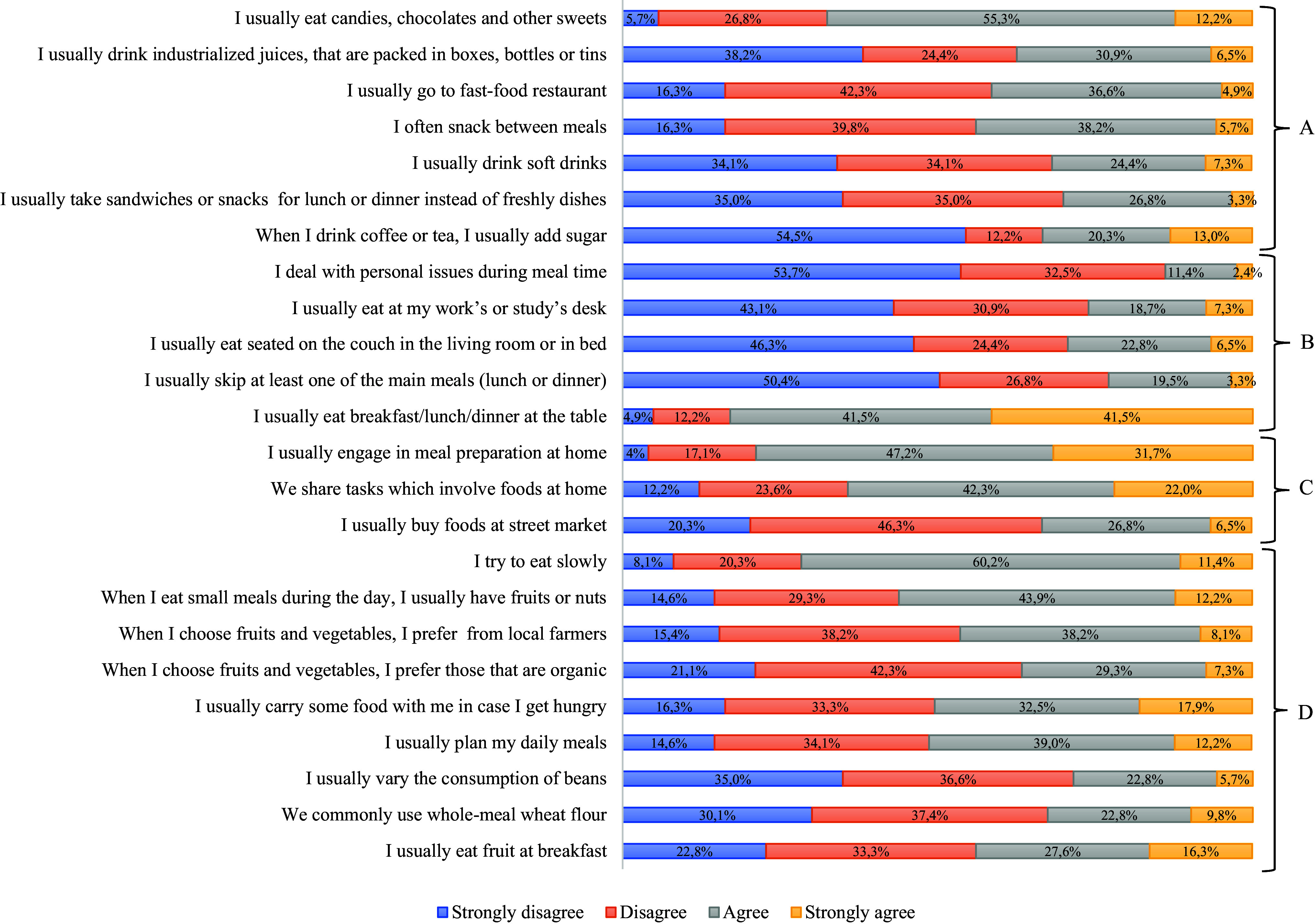
The lifestyle of the population has undergone significant changes due to the COVID-19 pandemic, which could have influenced alterations in dietary habits and overall well-being among workers. This study aimed to evaluate healthy eating practices and their relationship with the workers' quality of life and physical activity during the COVID-19 pandemic. This was a cross-sectional investigation involving workers in the city of Curitiba, southern Brazil. The study was conducted through the application of an online questionnaire. The data were evaluated using non-parametric tests and fitting a logistic regression model. A total of 123 workers participated in the study, most of them male (53.2%), aged between 31 and 40 years (42.2%), with a predominance of workers with postgraduate degrees (62.6%, = 77), and the majority of workers (68.2%, = 84) were performing their professional activities remotely for at least one day during the week, and 73.2% ( = 90). It was observed that 52.8% had excellent healthy eating practices, and the older their age and the greater the practice of physical activity (time and frequency), the better the workers' healthy eating practices. When assessing quality of life, the lowest average score for healthy eating practices was in the domain of social relationships. A direct relationship of older age, social relationships, and the practice of physical activity with the best individuals' healthy eating practices was detected. Considering that remote work continues to be adopted post-pandemic, evaluating the dietary practices, physical activity, and quality of life of workers is necessary to understand this new labour phenomenon.
由于 COVID-19 大流行,人们的生活方式发生了重大变化,这可能影响了工人的饮食习惯和整体健康。本研究旨在评估健康饮食习惯及其与 COVID-19 大流行期间工人生活质量和体力活动的关系。这是一项涉及巴西南部库里提巴市工人的横断面研究。通过应用在线问卷进行了这项研究。使用非参数检验和拟合逻辑回归模型对数据进行了评估。共有 123 名工人参与了这项研究,其中大多数是男性(53.2%),年龄在 31 至 40 岁之间(42.2%),以具有研究生学历者为主(62.6%, = 77),大多数工人(68.2%, = 84)每周至少有一天远程从事专业活动,73.2%( = 90)。观察到 52.8%的工人有极好的健康饮食习惯,年龄越大、体力活动时间和频率越高,工人的健康饮食习惯就越好。在评估生活质量时,健康饮食习惯的平均得分最低的领域是社会关系。发现年龄较大、社会关系和体力活动实践与最佳个人健康饮食习惯之间存在直接关系。考虑到远程工作在大流行后仍在继续采用,评估工人的饮食实践、体力活动和生活质量是必要的,以了解这种新的劳动现象。