Department of Behavioral Sciences, School of Social Sciences and Humanities, National University of Sciences and Technology, Islamabad, Pakistan.
Institute for Health Equity and Social Justice, Northeastern University, Boston, Massachusetts, United States of America.
PLoS One. 2024 Sep 30;19(9):e0308981. doi: 10.1371/journal.pone.0308981. eCollection 2024.
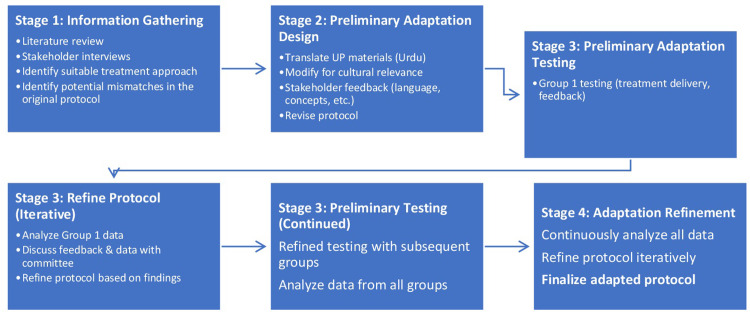
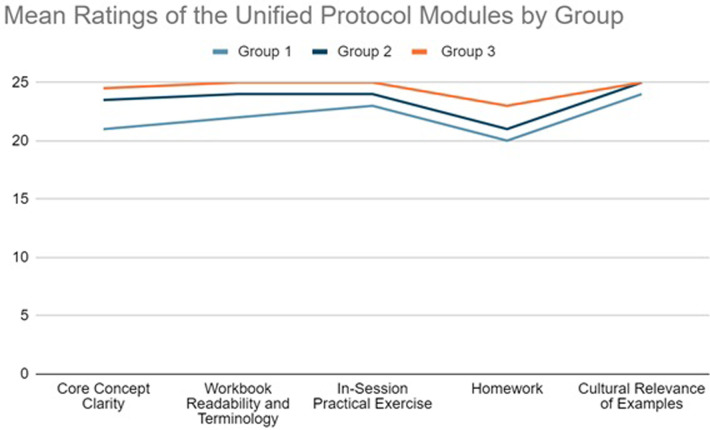
The access to evidence-based treatments for mental health problems is limited in low-resource settings. Transdiagnostic approaches, such as the Unified Protocol (UP), are a potential solution for these settings because they are multi-problem focused, modular, flexible, and have low complexity. This study aimed to adapt UP to the mental health context of an urban speciality clinic in Pakistan using a four-step process of heuristic framework. The study employed an iterative and stakeholder-based approach to align the protocol with local values, language, and needs. Primarily, the proposed modifications focus on language use, matching literacy level, graphical illustrations, and relevance of examples. A multi-method approach including expert review, cognitive interviewing, and adaptation testing ensured cultural equivalence. Participants diagnosed with depression and anxiety were provided culturally adapted treatment (N = 15) at the testing phase. Findings indicated that the participants not only experienced significant reductions in symptoms of depression and anxiety but also found the culturally adapted UP to be easy to understand, culturally relevant, and engaging. This study provides evidence that the UP can be culturally adapted and used in the mental health context of Pakistan. The findings suggest that the UP is a promising intervention for individuals with depression and anxiety in low-resource settings.
在资源匮乏的环境中,获得心理健康问题的循证治疗的机会有限。跨诊断方法,如统一方案(UP),是这些环境的潜在解决方案,因为它们多问题为重点,模块化,灵活,复杂性低。本研究旨在使用启发式框架的四步过程,将 UP 适应巴基斯坦一个城市专业诊所的心理健康环境。该研究采用迭代和利益相关者为基础的方法,使该方案与当地价值观、语言和需求保持一致。主要的修改集中在语言使用、匹配文化程度、图形说明和例子的相关性上。一种包括专家审查、认知访谈和适应测试的多方法方法确保了文化等效性。在测试阶段,为被诊断为抑郁和焦虑的参与者提供了文化适应的治疗(N=15)。研究结果表明,参与者不仅经历了抑郁和焦虑症状的显著减轻,而且还发现文化适应的 UP 易于理解、具有文化相关性和吸引力。这项研究提供了证据表明,UP 可以进行文化适应,并在巴基斯坦的心理健康环境中使用。研究结果表明,UP 是一种有前途的干预措施,适用于资源匮乏环境中患有抑郁和焦虑症的个体。