Institute of Molecular Physical Science, ETH Zürich, Vladimir-Prelog-Weg 2, Zürich, Switzerland.
ETH Zurich, Department of Health Sciences and Technology, Zurich, Switzerland.
Nat Commun. 2024 Sep 30;15(1):8448. doi: 10.1038/s41467-024-52681-z.
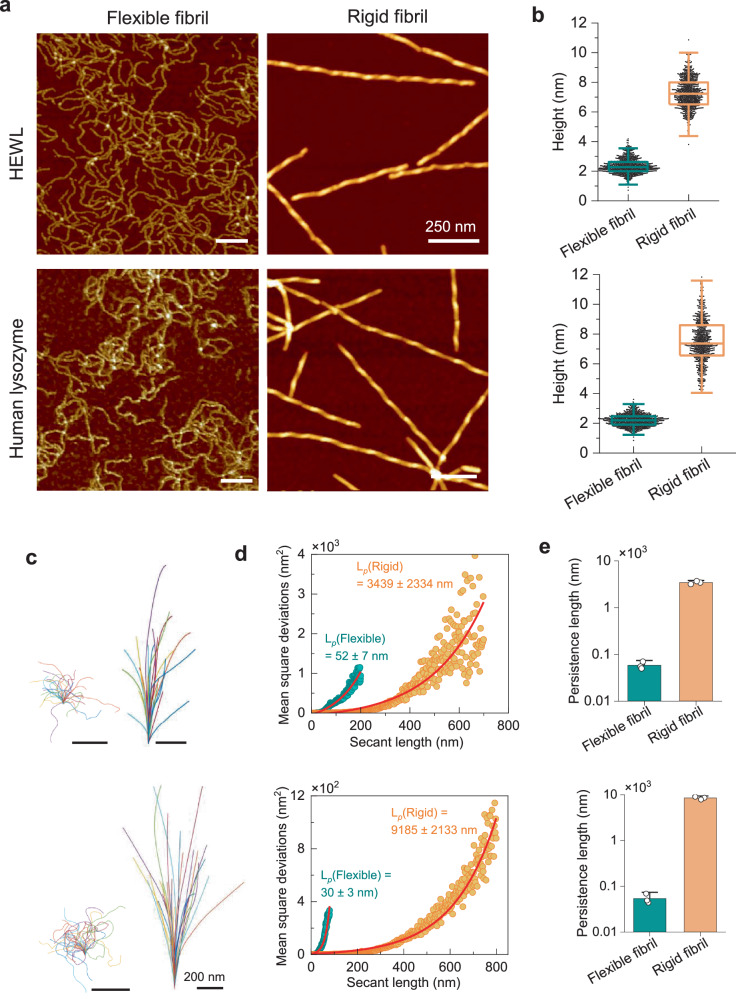
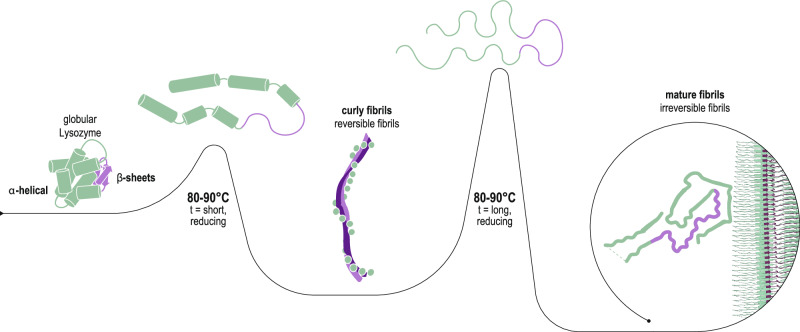
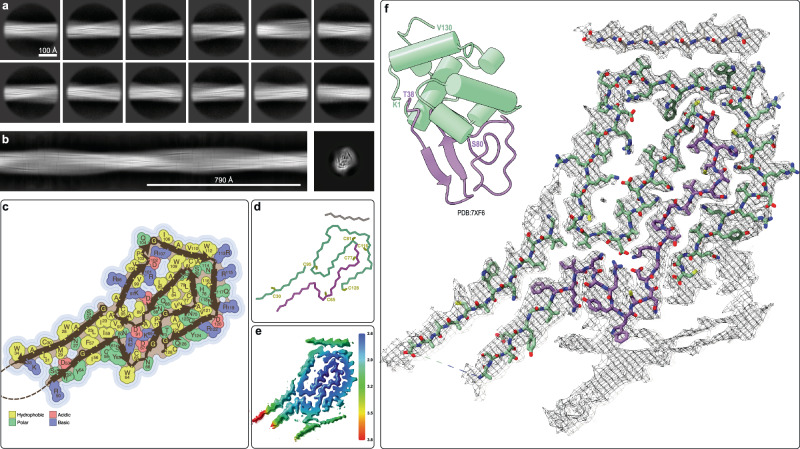
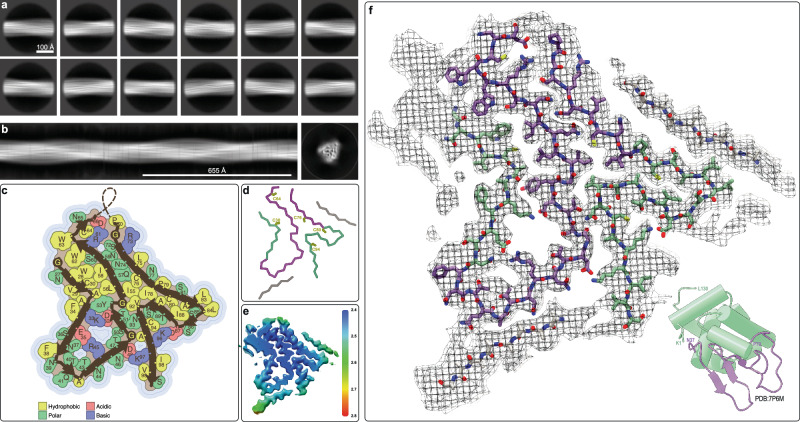
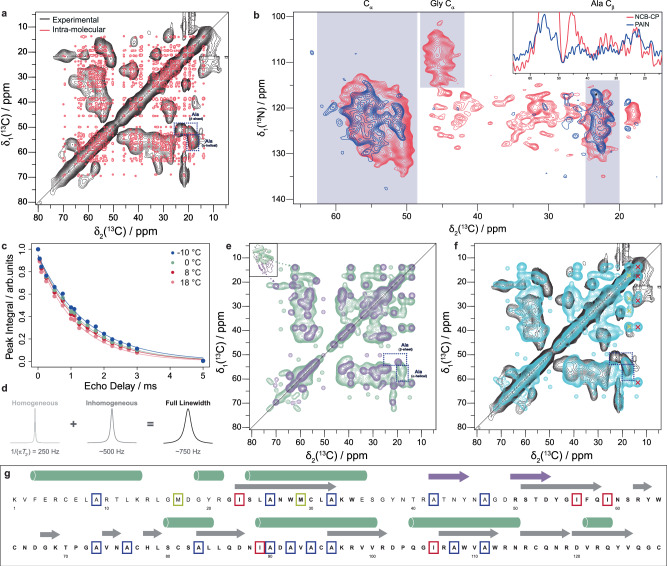
Reversible and irreversible amyloids are two diverging cases of protein (mis)folding associated with the cross-β motif in the protein folding and aggregation energy landscape. Yet, the molecular origins responsible for the formation of reversible vs irreversible amyloids have remained unknown. Here we provide evidence at the atomic level of distinct folding motifs for irreversible and reversible amyloids derived from a single protein sequence: human lysozyme. We compare the 2.8 Å structure of irreversible amyloid fibrils determined by cryo-electron microscopy helical reconstructions with molecular insights gained by solid-state NMR spectroscopy on reversible amyloids. We observe a canonical cross-β-sheet structure in irreversible amyloids, whereas in reversible amyloids, there is a less-ordered coexistence of β-sheet and helical secondary structures that originate from a partially unfolded lysozyme, thus carrying a "memory" of the original folded protein precursor. We also report the structure of hen egg-white lysozyme irreversible amyloids at 3.2 Å resolution, revealing another canonical amyloid fold, and reaffirming that irreversible amyloids undergo a complete conversion of the native protein into the cross-β structure. By combining atomic force microscopy, cryo-electron microscopy and solid-state NMR, we show that a full unfolding of the native protein precursor is a requirement for establishing irreversible amyloid fibrils.
可还原和不可还原的淀粉样蛋白是与蛋白质折叠和聚集能量景观中的交叉-β基序相关的两种不同的蛋白质(错误)折叠情况。然而,导致可还原和不可还原淀粉样蛋白形成的分子起源仍然未知。在这里,我们在原子水平上提供了来自单个蛋白质序列(人溶菌酶)的不可还原和可还原淀粉样蛋白的不同折叠基序的证据。我们将通过冷冻电子显微镜螺旋重建确定的不可还原淀粉样纤维的 2.8Å 结构与通过固态 NMR 光谱获得的可还原淀粉样蛋白的分子见解进行比较。我们观察到不可还原淀粉样蛋白中存在典型的交叉-β-片层结构,而在可还原淀粉样蛋白中,β-片层和螺旋二级结构的共存程度较低,这源于部分展开的溶菌酶,因此携带原始折叠蛋白前体的“记忆”。我们还报告了 3.2Å 分辨率的鸡卵清溶菌酶不可逆淀粉样蛋白的结构,揭示了另一种典型的淀粉样蛋白折叠,并再次证实不可逆淀粉样蛋白会将天然蛋白质完全转化为交叉-β 结构。通过结合原子力显微镜、冷冻电子显微镜和固态 NMR,我们表明天然蛋白质前体的完全展开是建立不可逆淀粉样纤维的要求。