Telomeres and Telomerase Group-Fundacion Humanismo y Ciencia, Molecular Oncology Program, Spanish National Cancer Centre (CNIO), Melchor Fernández Almagro 3, Madrid, E-28029, Spain.
Confocal Microscopy Unit, Biotechnology Program, Spanish National Cancer Centre (CNIO), Melchor Fernández Almagro 3, Madrid, E-28029, Spain.
Exp Mol Med. 2024 Oct;56(10):2216-2230. doi: 10.1038/s12276-024-01318-8. Epub 2024 Oct 1.
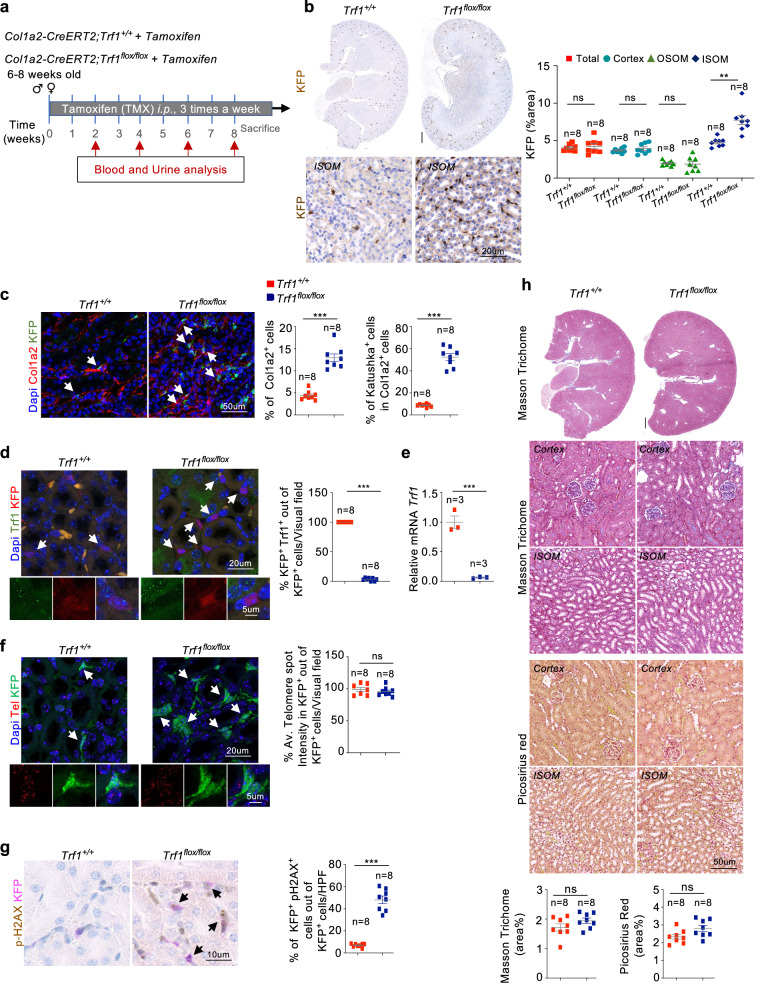
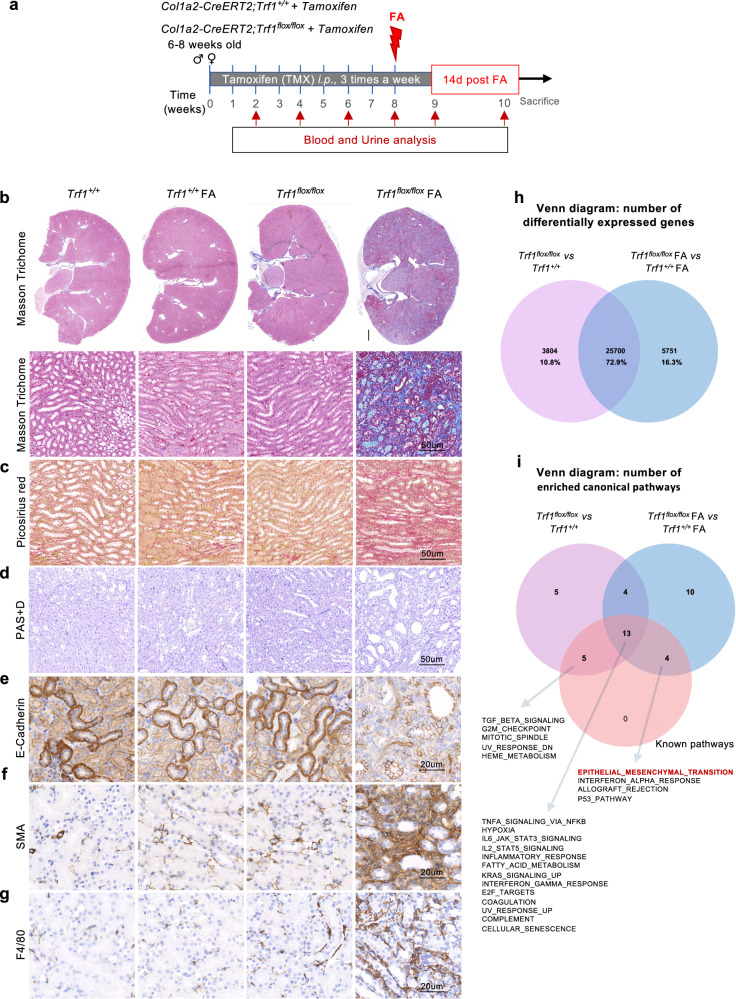
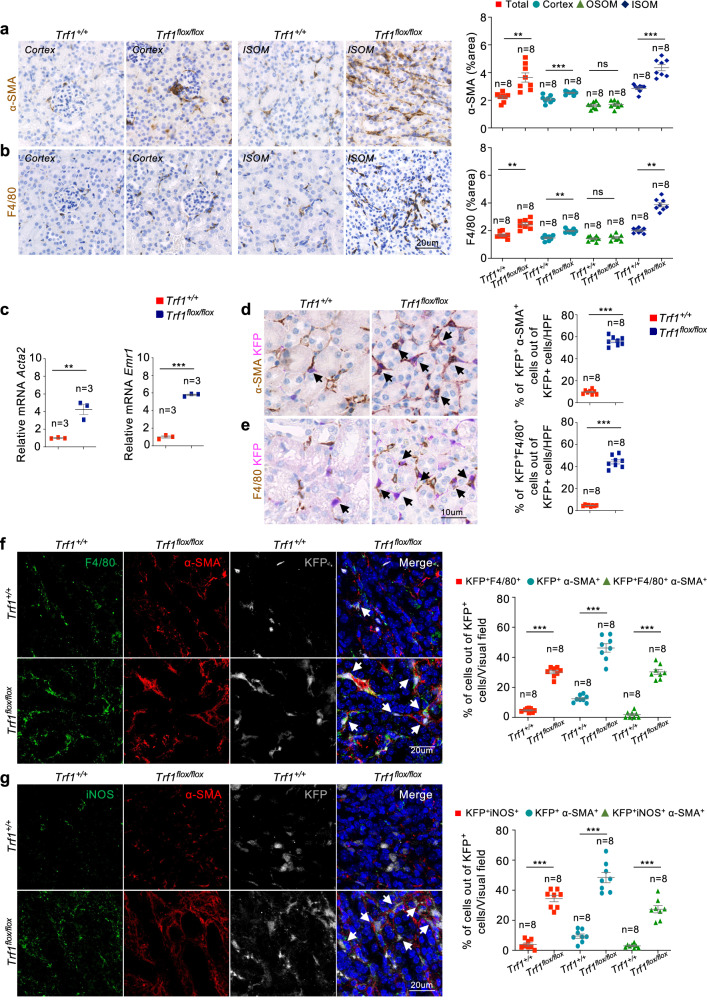
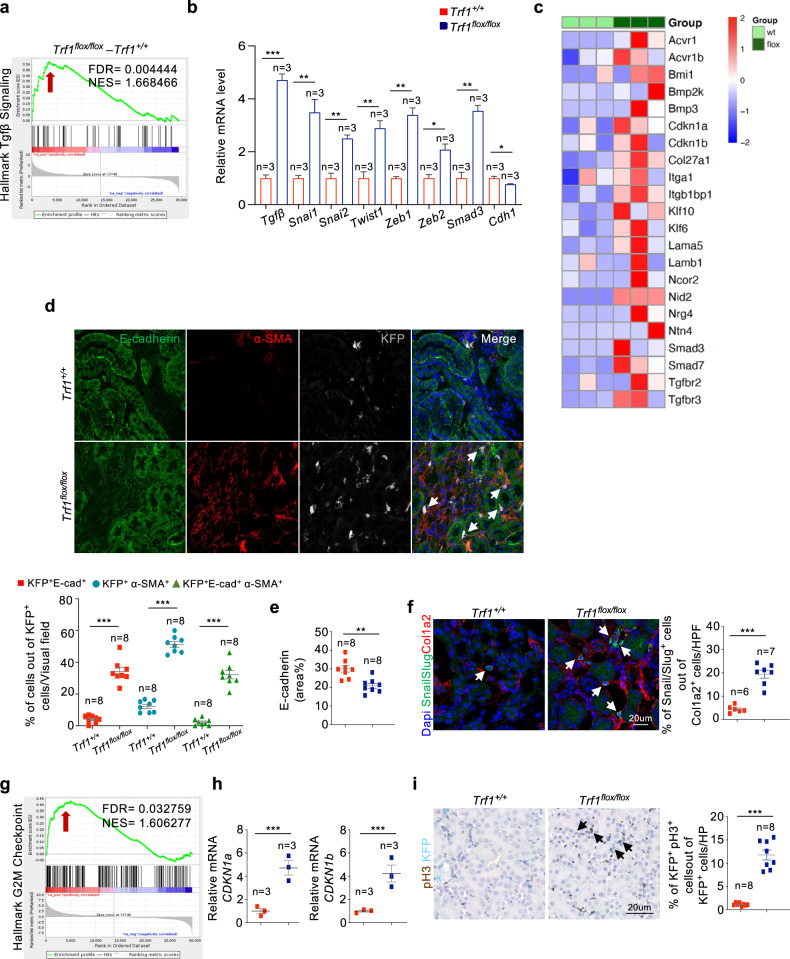
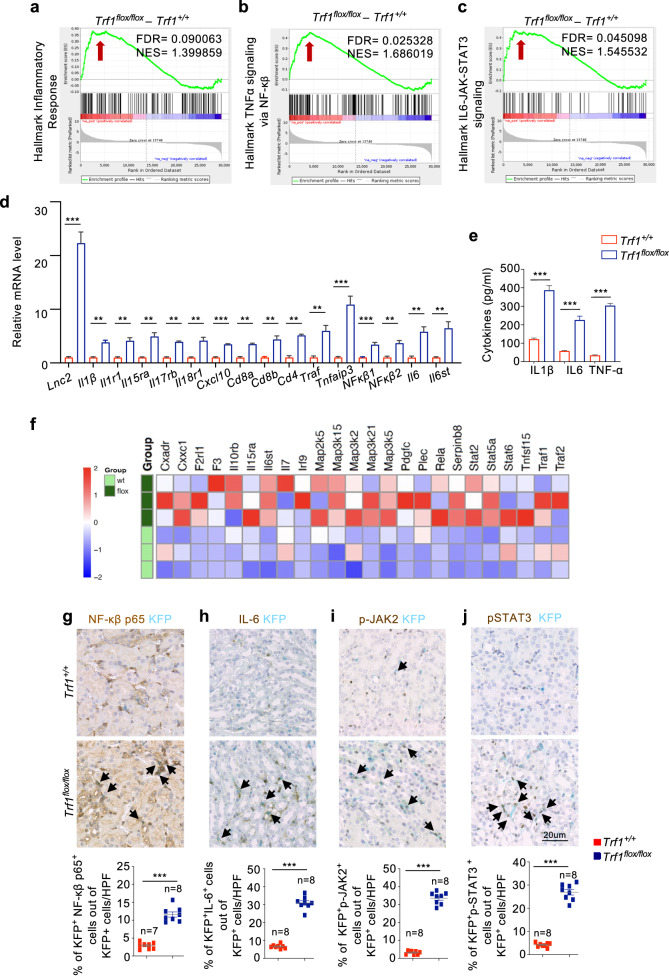
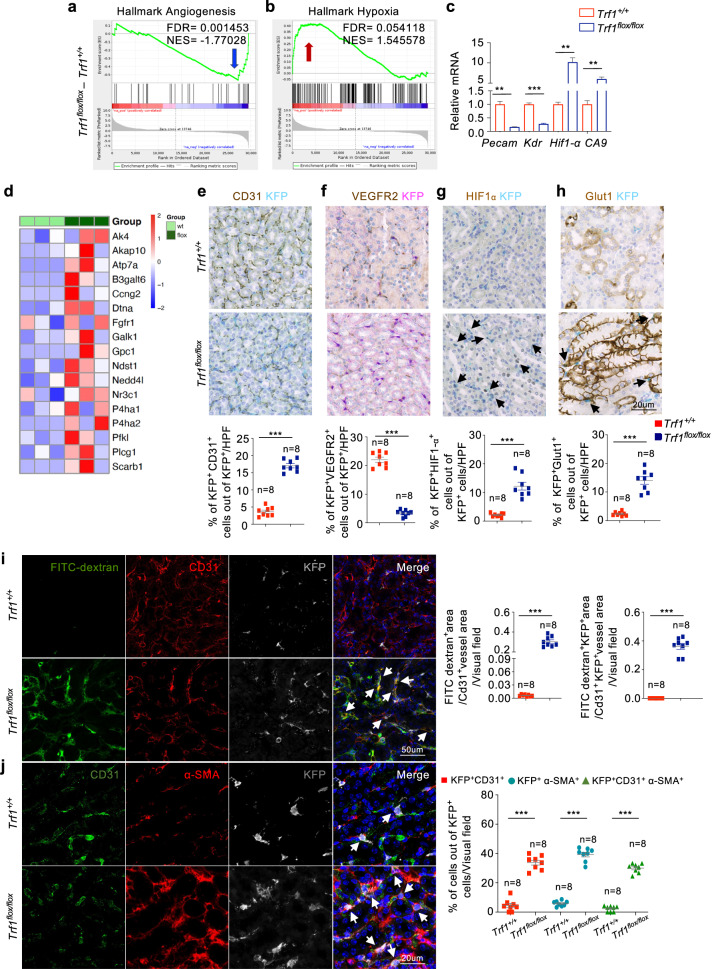
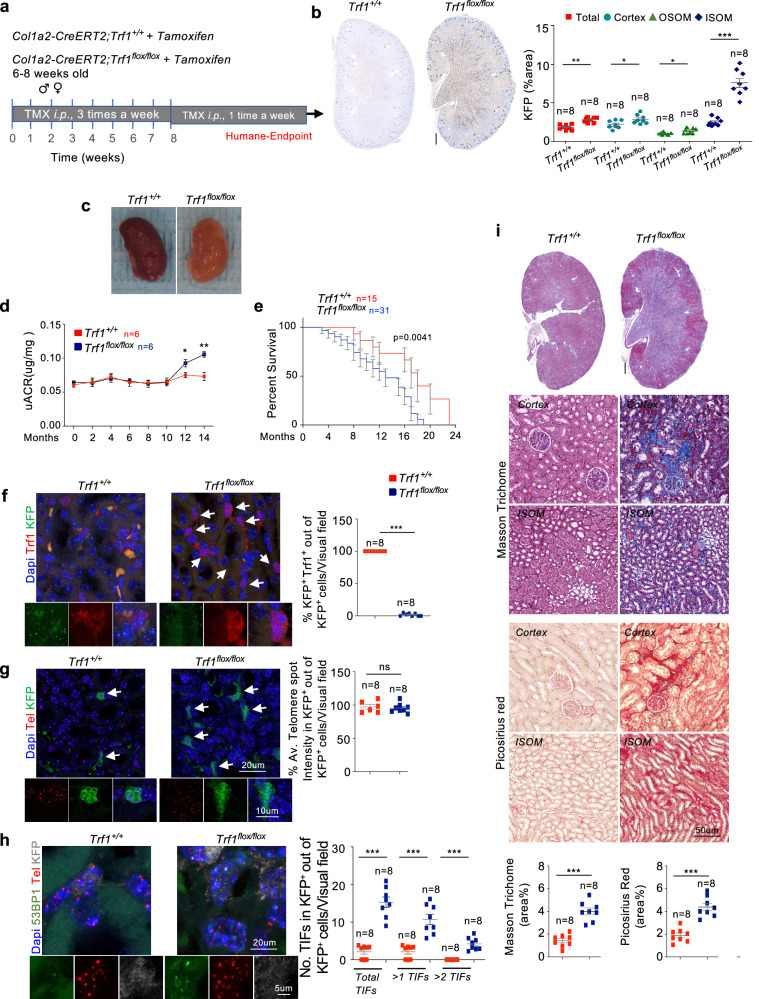
Tubulointerstitial fibrosis associated with chronic kidney disease (CKD) represents a global health care problem. We previously reported that short and dysfunctional telomeres lead to interstitial renal fibrosis; however, the cell-of-origin of kidney fibrosis associated with telomere dysfunction is currently unknown. We induced telomere dysfunction by deleting the Trf1 gene encoding a telomere-binding factor specifically in renal fibroblasts in both short-term and long-term life-long experiments in mice to identify the role of fibroblasts in renal fibrosis. Short-term Trf1 deletion in renal fibroblasts was not sufficient to trigger kidney fibrosis but was sufficient to induce inflammatory responses, ECM deposition, cell cycle arrest, fibrogenesis, and vascular rarefaction. However, long-term persistent deletion of Trf1 in fibroblasts resulted in kidney fibrosis accompanied by an elevated urinary albumin-to-creatinine ratio (uACR) and a decrease in mouse survival. These cellular responses lead to the macrophage-to-myofibroblast transition (MMT), endothelial-to-mesenchymal transition (EndMT), and partial epithelial-to-mesenchymal transition (EMT), ultimately causing kidney fibrosis at the humane endpoint (HEP) when the deletion of Trf1 in fibroblasts is maintained throughout the lifespan of mice. Our findings contribute to a better understanding of the role of dysfunctional telomeres in the onset of the profibrotic alterations that lead to kidney fibrosis.
与慢性肾脏病(CKD)相关的肾小管间质纤维化是一个全球性的医疗保健问题。我们之前曾报道过,短而功能失调的端粒会导致间质肾纤维化;然而,与端粒功能障碍相关的肾脏纤维化的细胞起源目前尚不清楚。我们通过在短期和长期的终生实验中特异性删除编码端粒结合因子的 Trf1 基因,在小鼠的肾成纤维细胞中诱导端粒功能障碍,以确定成纤维细胞在肾纤维化中的作用。短期 Trf1 在肾成纤维细胞中的缺失不足以引发肾脏纤维化,但足以引发炎症反应、细胞外基质沉积、细胞周期停滞、纤维化和血管稀疏。然而,成纤维细胞中 Trf1 的长期持续缺失会导致肾脏纤维化,同时伴有尿白蛋白/肌酐比值(uACR)升高和小鼠存活率下降。这些细胞反应导致巨噬细胞向肌成纤维细胞转化(MMT)、内皮细胞向间充质细胞转化(EndMT)和部分上皮细胞向间充质细胞转化(EMT),最终导致当在整个小鼠寿命中维持成纤维细胞中 Trf1 的缺失时,达到人类终点(HEP)出现肾脏纤维化。我们的研究结果有助于更好地理解功能失调的端粒在导致肾脏纤维化的促纤维化改变中的作用。