Department of Urology, Second Hospital of Shanxi Medical University, Taiyuan, Shanxi Province, China.
Key Laboratory of Cellular Physiology at Shanxi Medical University, Ministry of Education, Taiyuan, Shanxi Province, China.
BMC Nephrol. 2023 Aug 8;24(1):231. doi: 10.1186/s12882-023-03285-0.
Cellular senescence plays an essential role in the development and progression of end-stage renal disease (ESRD). However, the detailed mechanisms phenomenon remains unclear.
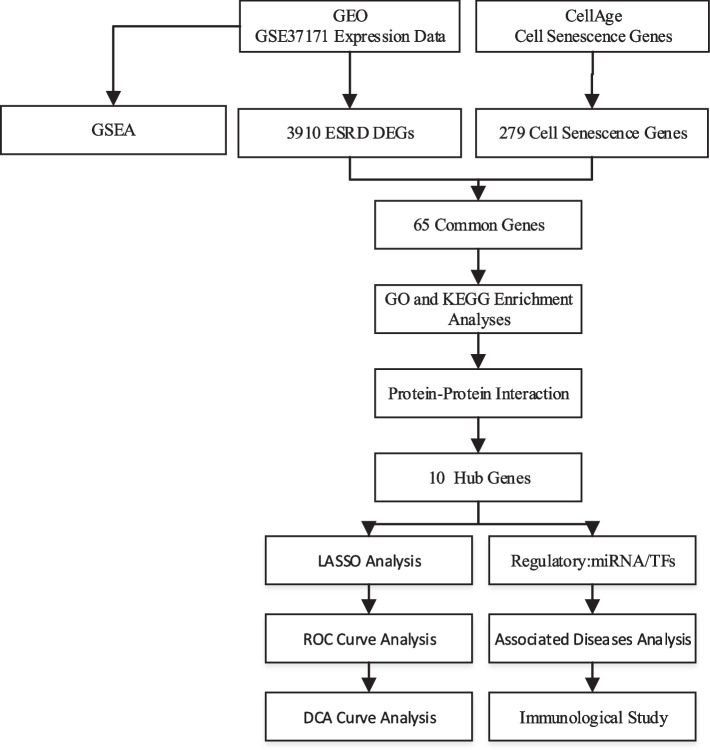
The mRNA expression profiling dataset GSE37171 was taken from the Gene Expression Omnibus (GEO) database. The cell senescence-associated hub genes were selected by applying protein-protein interaction (PPI), followed by correlation analysis, gene interaction analysis, Gene Ontology (GO), and Kyoto Encyclopedia of Genes and Genomes (KEGG) pathway enrichment analysis. We next explored the relationships of hub genes with miRNAs, TFs, and diseases. The absolute abundance of eight immune cells and two stromal cells were calculated by MCPcount and the correlation of hub genes with these ten cells was analyzed. Lasso was used to selecting for trait genes. ROC curves and DCA decision curves were used to assess the accuracy and predictive power of the trait genes.
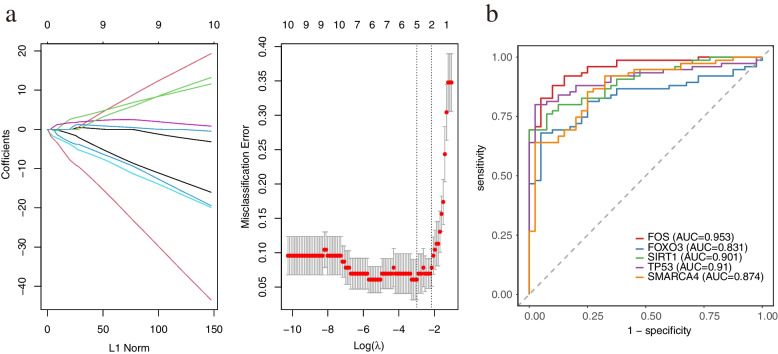
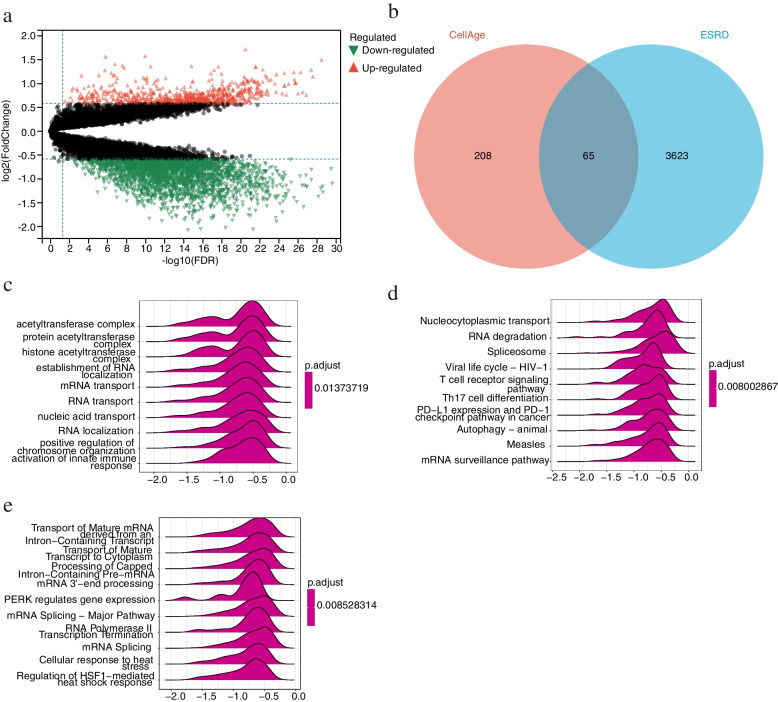
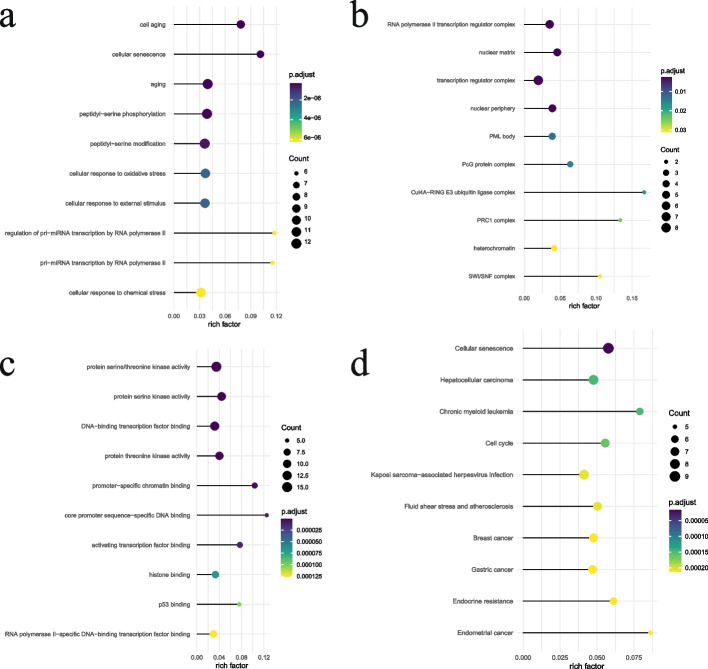
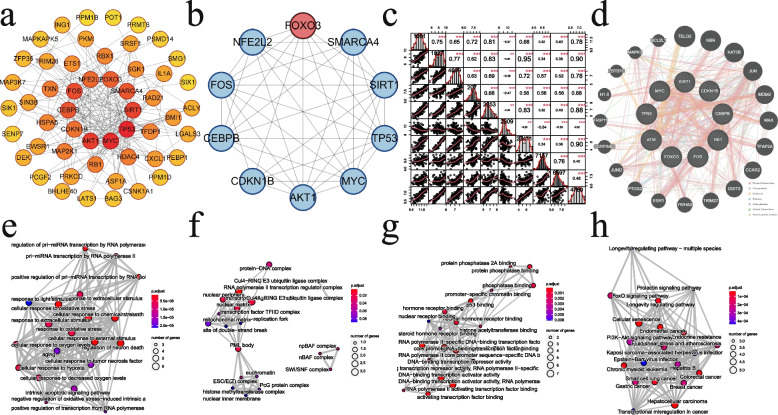
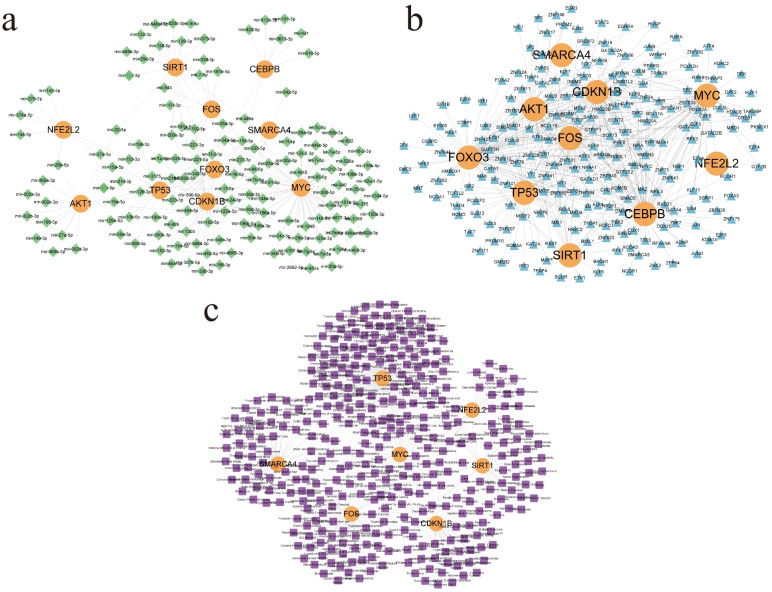
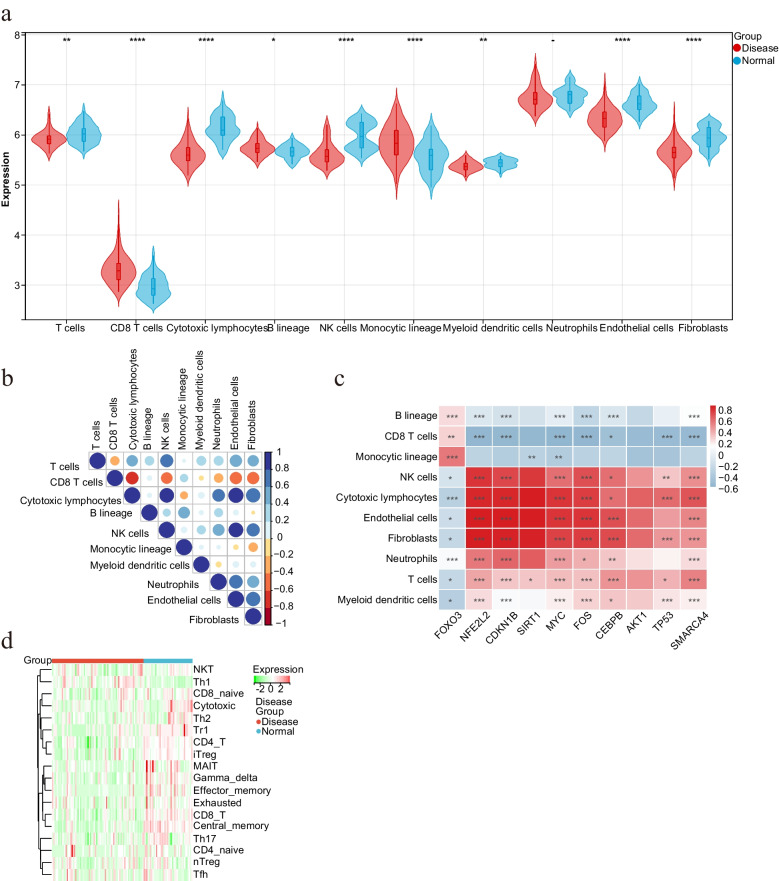
A total of 65 cellular senescence signature genes were identified among patients and controls. The PPI network screened out ten hub genes. GO and KEGG indicated that ten hub genes were associated with ESRD progression. Transcription factor gene interactions and common regulatory networks of miRNAs were also identified in the datasets. The hub genes were significantly correlated with immune cells and stromal cells. Then the lasso model was constructed to screen out the five most relevant signature genes (FOS, FOXO3, SIRT1, TP53, SMARCA4). The area under the ROC curve (AUC) showed that these five characteristic genes have good resolving power for the diagnostic model.
Our findings suggested that cellular senescence-associated genes played an important role in the development of ESRD and immune regulation.
细胞衰老在终末期肾病(ESRD)的发展和进展中起着至关重要的作用。然而,其详细机制尚不清楚。
从基因表达综合数据库(GEO)中获取 mRNA 表达谱数据集 GSE37171。通过蛋白质-蛋白质相互作用(PPI)选择细胞衰老相关的枢纽基因,然后进行相关性分析、基因互作分析、GO 和 KEGG 通路富集分析。接着,我们探索了枢纽基因与 miRNAs、TFs 和疾病的关系。通过 MCPcount 计算了 8 种免疫细胞和 2 种基质细胞的绝对丰度,并分析了枢纽基因与这 10 种细胞的相关性。Lasso 用于选择特征基因。ROC 曲线和 DCA 决策曲线用于评估特征基因的准确性和预测能力。
在患者和对照中确定了 65 个细胞衰老特征基因。PPI 网络筛选出了 10 个枢纽基因。GO 和 KEGG 表明,这 10 个枢纽基因与 ESRD 进展有关。还在数据集中鉴定了转录因子基因相互作用和 miRNA 的常见调控网络。枢纽基因与免疫细胞和基质细胞显著相关。然后构建了lasso 模型来筛选出五个最相关的特征基因(FOS、FOXO3、SIRT1、TP53、SMARCA4)。ROC 曲线下面积(AUC)表明,这五个特征基因对诊断模型具有良好的分辨能力。
我们的研究结果表明,细胞衰老相关基因在 ESRD 的发生和免疫调节中起重要作用。