The Center for Applied Health Sciences, Canfield, OH, USA.
AG1, Research, Nutrition, and Innovation, Carson City, NV, USA.
J Int Soc Sports Nutr. 2024 Dec;21(1):2409682. doi: 10.1080/15502783.2024.2409682. Epub 2024 Oct 1.
This study aimed to examine the effect of a commercially available multi-ingredient powder (AG1) on the gut microbiome and assess the impact of AG1 on GI tolerability and other clinical safety markers in healthy men and women.
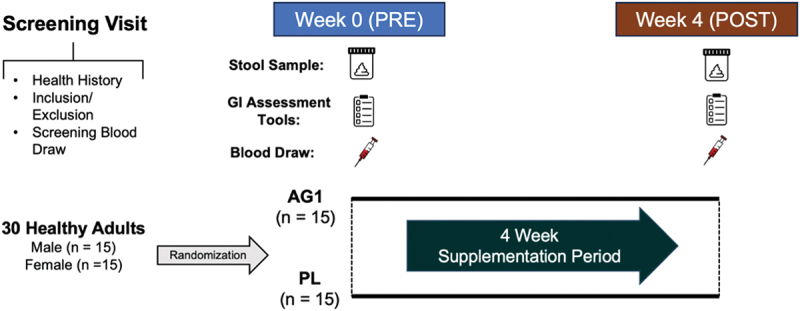
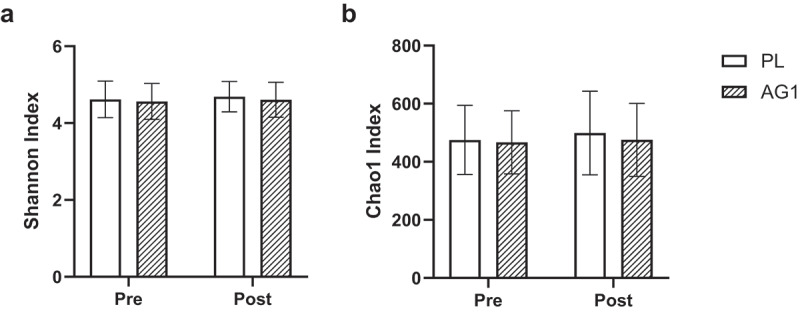
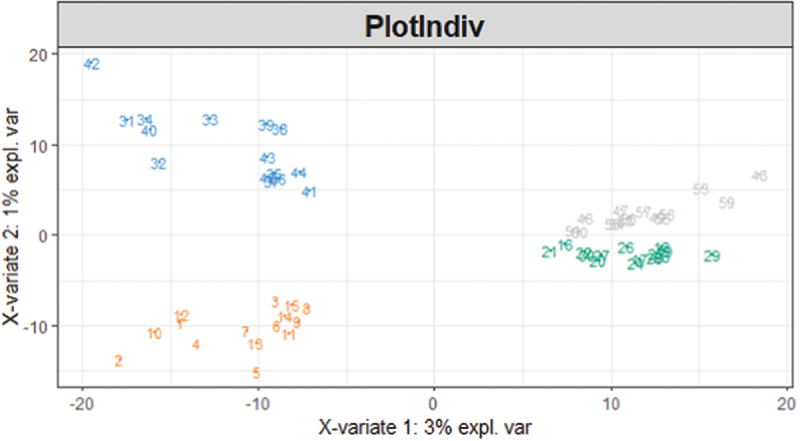
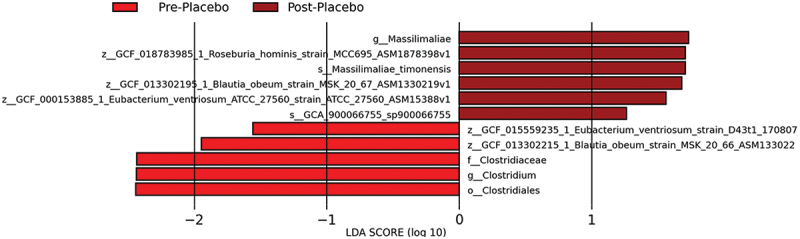
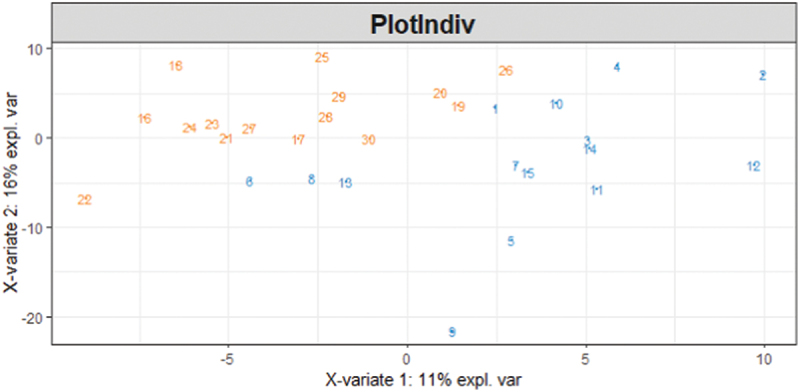
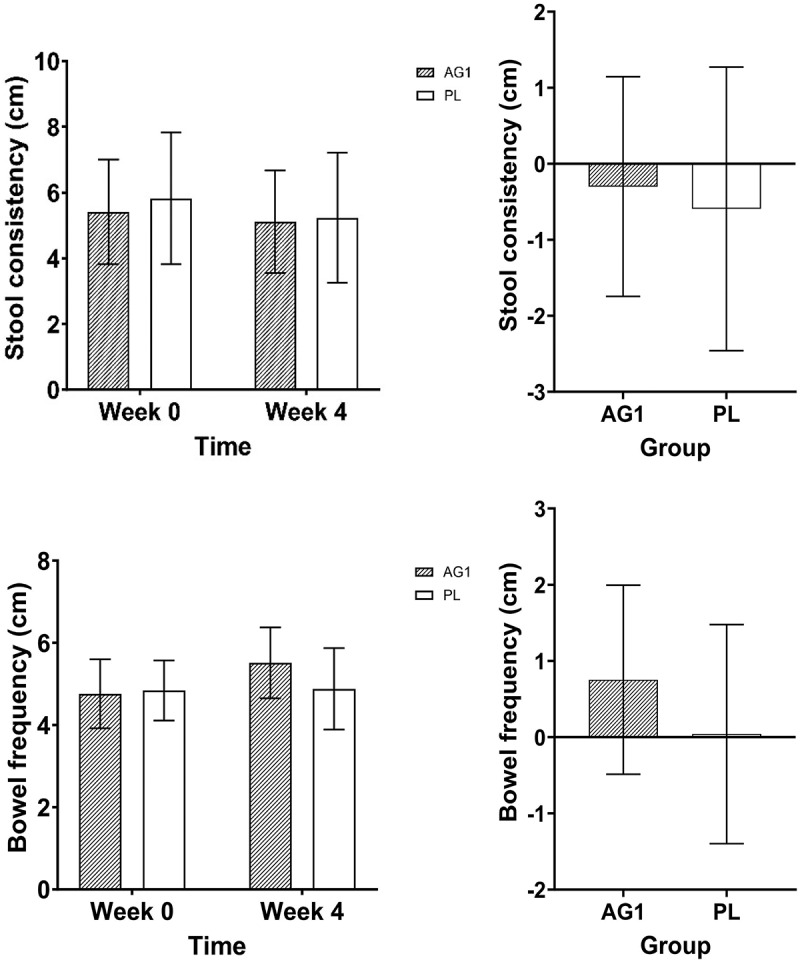
Using a double-blind, randomized, two-arm, placebo-controlled, parallel design, we examined a 4-week daily supplementation regimen of AG1 vs. placebo (PL). Fifteen men and 15 women provided stool samples for microbiome analysis, questionnaires for digestive quality of life (DQLQ), and completed visual analog scales (VAS) and Bristol stool charts to assess stool consistency and bowel frequency before and after the 4-week intervention. Participant's blood work (CBC, CMP, and lipid panel) was also assessed before and after the 4-week intervention. Alpha diversity was determined by Shannon and Chao1 index scores and evaluated by a two-way ANOVA, beta diversity in taxonomic abundances and functional pathways was visualized using partial least squares-discriminant analyses and statistically evaluated by PERMANOVA. To identify key biomarkers, specific feature differences in taxonomic relative abundance and normalized functional pathway counts were analyzed by linear discriminant analysis (LDA) effect size (LEfSe). Questionnaires, clinical safety markers, and hemodynamics were evaluated by mixed factorial ANOVAs with repeated measures. This study was registered on clinicaltrials.gov (NCT06181214).
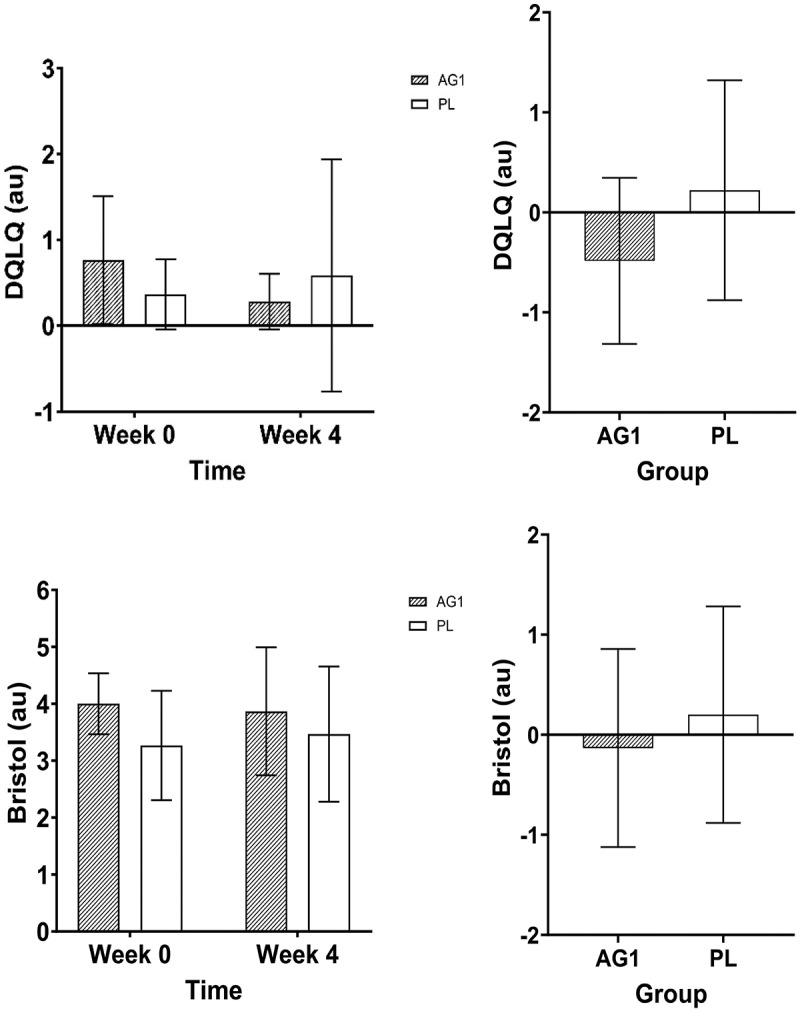
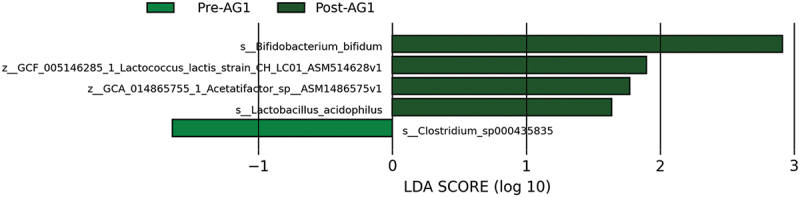
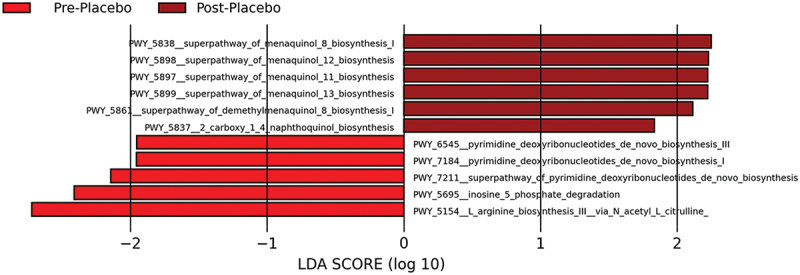
AG1 supplementation enriched two probiotic taxa ( and ) that likely stem from the probiotics species that exist in the product, as well as CH_LC01 and sp900066565 ASM1486575v1 while reducing sp000435835. Regarding community function, AG1 showed an enrichment of two functional pathways while diminishing none. Alternatively, the PL enriched six, but diminished five functional pathways. Neither treatment negatively impacted the digestive quality of life via DQLQ, bowel frequency via VAS, or stool consistency via VAS and Bristol. However, there may have been a greater improvement in the DQLQ score (+62.5%, = 0.058, d = 0.73) after four weeks of AG1 supplementation compared to a reduction (-50%) in PL. Furthermore, AG1 did not significantly alter clinical safety markers following supplementation providing evidence for its safety profile.
AG1 can be consumed safely by healthy adults over four weeks with a potential beneficial impact in their digestive symptom quality of life.
本研究旨在探究一种市售多成分粉末(AG1)对肠道微生物组的影响,并评估 AG1 对健康男性和女性的胃肠道耐受性和其他临床安全性标志物的影响。
采用双盲、随机、双臂、安慰剂对照、平行设计,我们研究了为期 4 周的每日补充 AG1 与安慰剂(PL)的方案。15 名男性和 15 名女性提供粪便样本进行微生物组分析,使用消化质量问卷(DQLQ),并在 4 周干预前后完成视觉模拟量表(VAS)和布里斯托尔粪便图表,以评估粪便稠度和排便频率。还在 4 周干预前后评估了参与者的血液检查(CBC、CMP 和血脂谱)。使用 Shannon 和 Chao1 指数评分确定 alpha 多样性,并通过双向方差分析进行评估,使用偏最小二乘判别分析可视化分类群丰度和功能途径的 beta 多样性,并通过 PERMANOVA 进行统计学评估。为了识别关键生物标志物,通过线性判别分析(LDA)效应大小(LEfSe)分析分类群相对丰度和归一化功能途径计数的特定特征差异。通过混合因子方差分析和重复测量评估问卷、临床安全性标志物和血液动力学。该研究在 clinicaltrials.gov 上注册(NCT06181214)。
AG1 补充剂富集了两种益生菌属(和),这可能源自产品中存在的益生菌物种,以及 CH_LC01 和 sp900066565 ASM1486575v1,同时减少了 sp000435835。关于群落功能,AG1 显示出两种功能途径的富集,而没有减少。相反,PL 富集了六种,但减少了五种功能途径。两种处理都没有通过 DQLQ 降低消化生活质量,通过 VAS 降低排便频率,或通过 VAS 和布里斯托尔降低粪便稠度。然而,与 PL 相比,AG1 补充四周后 DQLQ 评分可能有更大的改善(增加 62.5%,=0.058,d=0.73)。此外,AG1 补充后临床安全性标志物没有显著改变,这为其安全性提供了证据。
健康成年人可以安全地食用 AG1 超过四周,对其消化症状生活质量可能有有益影响。