School of Medicine, University of Pittsburgh, Pittsburgh, PA, USA.
Rehab Neural Engineering Labs, University of Pittsburgh, Pittsburgh, PA, USA.
Nat Commun. 2024 Oct 1;15(1):8461. doi: 10.1038/s41467-024-52477-1.
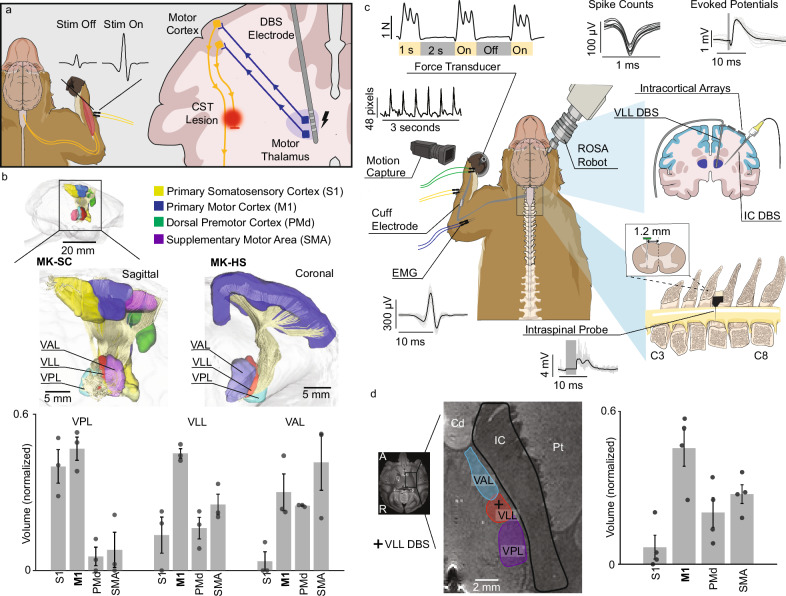
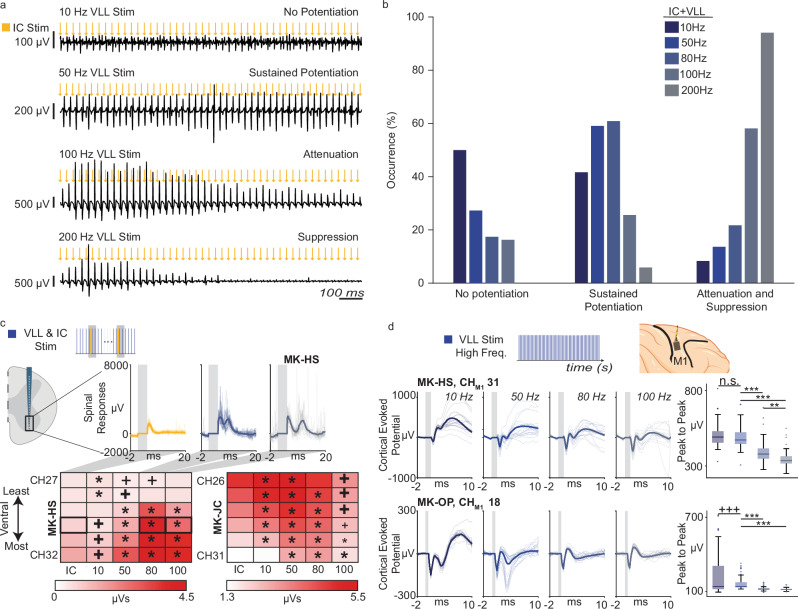
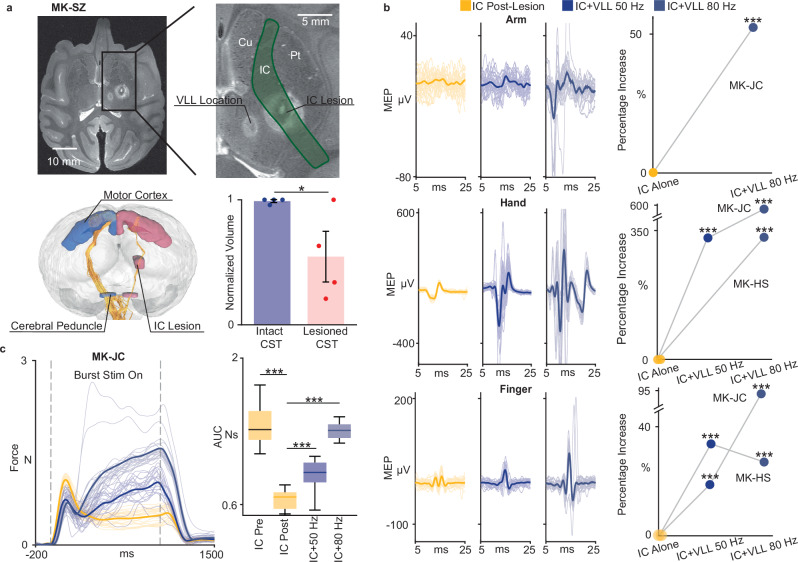
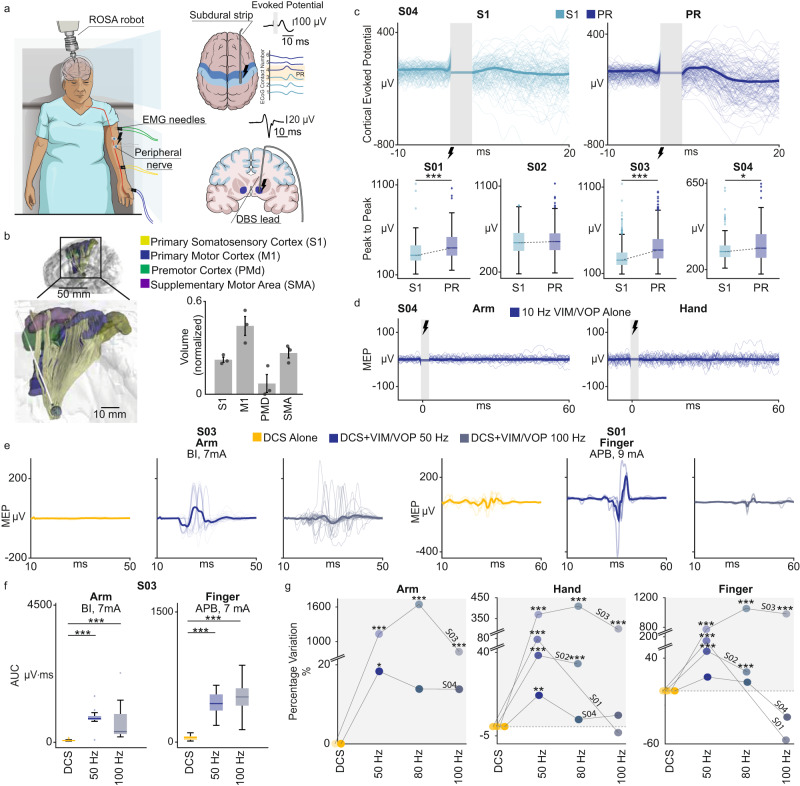
Cerebral white matter lesions prevent cortico-spinal descending inputs from effectively activating spinal motoneurons, leading to loss of motor control. However, in most cases, the damage to cortico-spinal axons is incomplete offering a potential target for therapies aimed at improving volitional muscle activation. Here we hypothesize that, by engaging direct excitatory connections to cortico-spinal motoneurons, stimulation of the motor thalamus could facilitate activation of surviving cortico-spinal fibers thereby immediately potentiating motor output. To test this hypothesis, we identify optimal thalamic targets and stimulation parameters that enhance upper-limb motor-evoked potentials and grip forces in anesthetized monkeys. This potentiation persists after white matter lesions. We replicate these results in humans during intra-operative testing. We then design a stimulation protocol that immediately improves strength and force control in a patient with a chronic white matter lesion. Our results show that electrical stimulation targeting surviving neural pathways can improve motor control after white matter lesions.
脑白质病变会阻止皮质脊髓下行传入有效地激活脊髓运动神经元,导致运动控制丧失。然而,在大多数情况下,皮质脊髓轴突的损伤并不完全,这为旨在改善随意肌肉激活的治疗提供了潜在目标。在这里,我们假设通过激活皮质脊髓运动神经元的直接兴奋性连接,刺激运动丘脑可以促进存活的皮质脊髓纤维的激活,从而立即增强运动输出。为了验证这一假设,我们在麻醉猴子中确定了最佳的丘脑靶点和刺激参数,以增强上肢运动诱发电位和握力。这种增强在白质病变后仍然存在。我们在术中测试中在人类中复制了这些结果。然后,我们设计了一种刺激方案,可以立即改善一名慢性白质病变患者的力量和力控制。我们的结果表明,针对存活神经通路的电刺激可以改善白质病变后的运动控制。