Haji Sayran Hamad, Ganjo Aryan R, Faraj Tola A, Fatah Mohammed H, Smail Sakar B
Department of Clinical Analysis, College of Pharmacy, Hawler Medical University, Erbil, Iraq.
Medical Research Center of, Hawler Medical University, Erbil, Iraq.
BMC Microbiol. 2024 Oct 1;24(1):379. doi: 10.1186/s12866-024-03530-y.
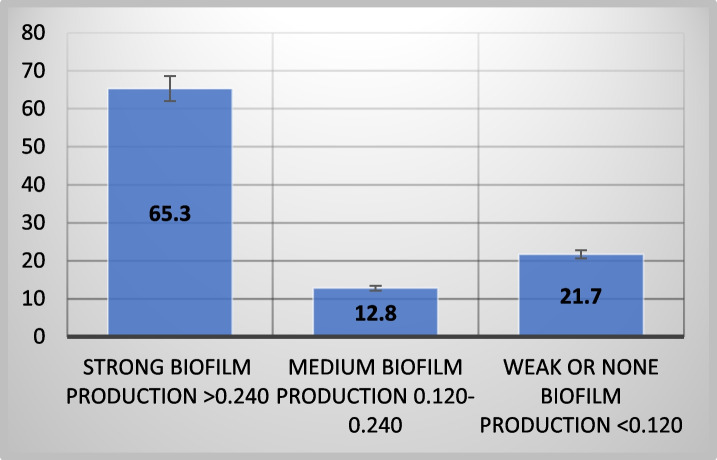
The emergence of Multidrug-resistant (MDR) bacteria are becoming a major worldwide health concern, encouraging the development effective alternatives to conventional antibiotics. The study identified P. aeruginosa and assessed its antimicrobial sensitivity using the Vitek-2 system. Carbapenem-resistant genes were detected through Polymerase chain reaction (PCR). MDR- P. aeruginosa isolates were used to biosynthesize titanium dioxide nanoparticles (TiONPs) and characterized using X-ray diffraction (XRD), Fourier-transform infrared spectroscopy (FTIR), transmission electron microscopy (TEM), field emission scanning electron microscopy (FE-SEM). A study involving 78 P. aeruginosa isolates revealed that 85.8% were MDR, with meropenem and amikacin showing effectiveness against 70% of the isolates. The most prevalent carbapenemase gene was bla, present in 83% of the isolates. Majority of the isolates formed biofilms, and biosynthesized TiONPs were able to reduce biofilm formation by 94%. TiONPs exhibited potent antibacterial action against MDR-Gram-negative bacilli pathogens and showed synergistic activity with antibiotics, particularly piperacillin, with a significant fold increase in areas (283%). A new local strain of P. aeruginosa, identified as ON678251 in the World GenBank, was found capable of producing TiONPs. Our findings demonstrate the potential of biosynthesized TiONPs to manage antibiotic resistance and regulate the formation of biofilms. This presents a promising direction for the creation of novel antimicrobial agents or substitutes for use in clinical settings, particularly in the management of isolates capable of resisting multiple drugs.
多重耐药(MDR)细菌的出现正成为全球主要的健康问题,这促使人们开发传统抗生素的有效替代品。该研究鉴定了铜绿假单胞菌,并使用Vitek-2系统评估了其抗菌敏感性。通过聚合酶链反应(PCR)检测碳青霉烯耐药基因。利用多重耐药铜绿假单胞菌分离株生物合成二氧化钛纳米颗粒(TiONPs),并使用X射线衍射(XRD)、傅里叶变换红外光谱(FTIR)、透射电子显微镜(TEM)、场发射扫描电子显微镜(FE-SEM)对其进行表征。一项涉及78株铜绿假单胞菌分离株的研究表明,85.8%为多重耐药菌,美罗培南和阿米卡星对70%的分离株有效。最常见的碳青霉烯酶基因是bla,存在于83%的分离株中。大多数分离株形成生物膜,生物合成的TiONPs能够将生物膜形成减少94%。TiONPs对多重耐药革兰氏阴性杆菌病原体表现出强大的抗菌作用,并与抗生素,特别是哌拉西林表现出协同活性,面积显著增加(283%)。发现一种新的铜绿假单胞菌本地菌株,在世界基因库中被鉴定为ON678251,能够产生TiONPs。我们的研究结果证明了生物合成的TiONPs在管理抗生素耐药性和调节生物膜形成方面的潜力。这为开发新型抗菌剂或临床应用替代品,特别是在管理能够抵抗多种药物的分离株方面,提供了一个有前景的方向。