Mohammad Raza, Bansod Dhananjay W
International Institute for Population Sciences, Mumbai, 400088, India.
Department of Public Health and Mortality Studies, International Institute for Population Sciences, Mumbai, 400088, India.
BMC Public Health. 2024 Oct 1;24(1):2681. doi: 10.1186/s12889-024-20097-5.
Hypertension, a major non-communicable disease, is responsible for a significant number of global deaths, including approximately 17.9 million yearly. The Global Burden of Disease 2019 (GBD 2019) estimates that 19% of global deaths are attributed to elevated blood pressure. India, with a population of over 1.4 billion, is facing a serious challenge in combating this silent killer. This study aims to analyze the gender-based prevalence of hypertension in India and explore its associated risk factors using data from the fifth National Family Health Survey (NFHS-5).
NFHS-5 collected data from 636,699 households across all states and union territories. The study includes standardized blood pressure measurements for 17,08,241 individuals aged 15 and above. The data were analyzed using Stata, employing descriptive statistics for the assessment of the prevalence and binary logistic regression to identify predictors of hypertension.
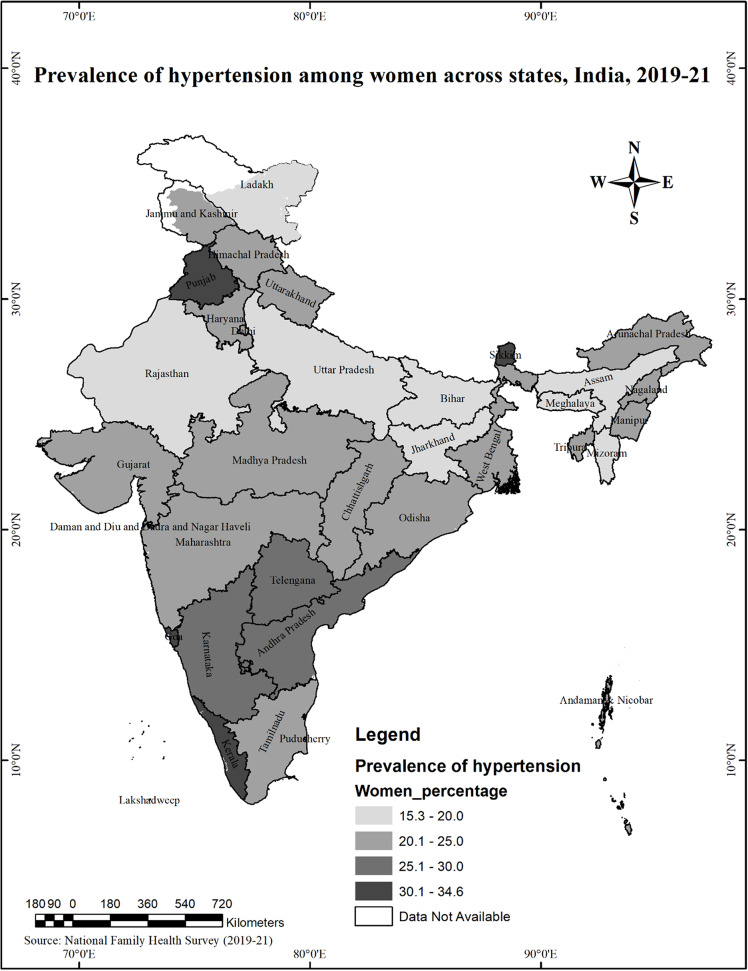
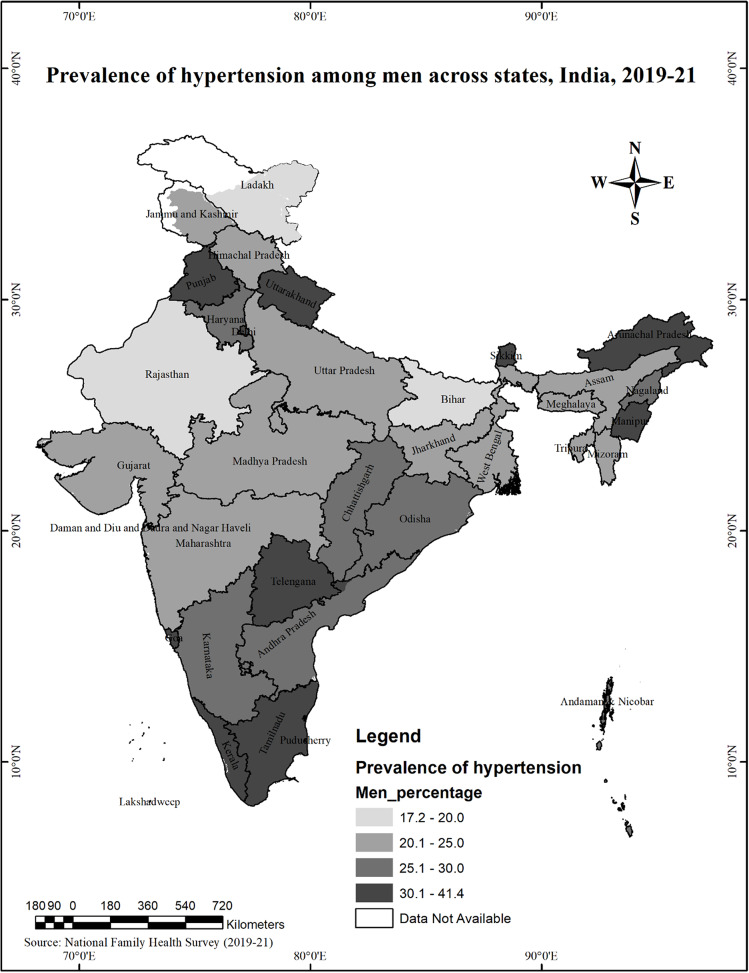
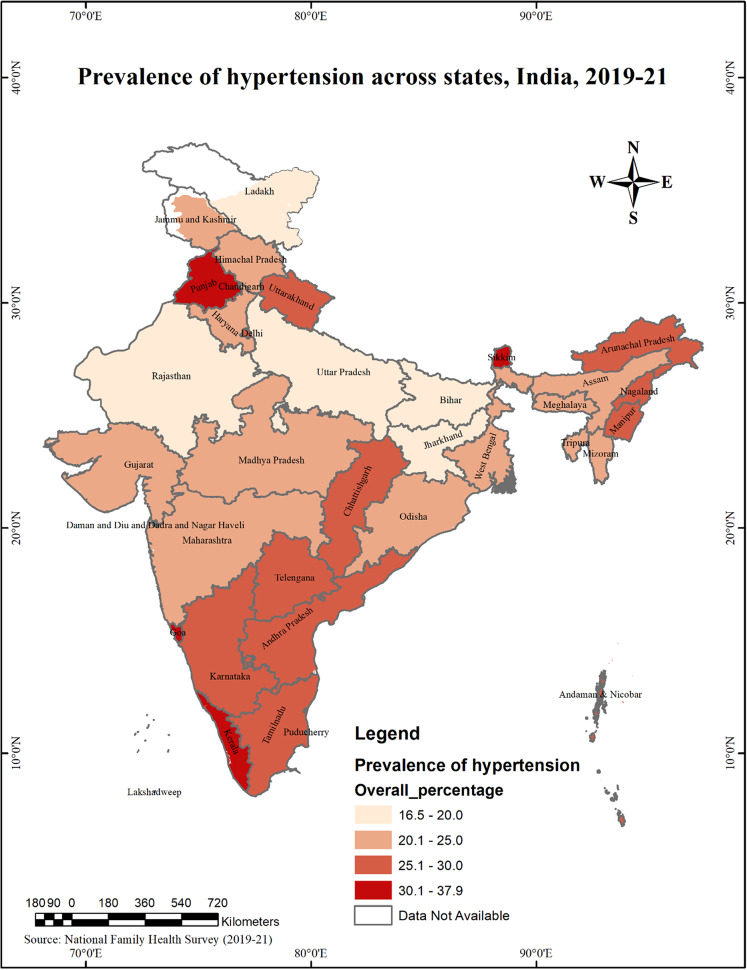
The study found the overall prevalence of hypertension in India to be 22.6%, with men (24.1%) having a higher prevalence than women (21.2%). Prevalence increased with age, reaching 48.4% in individuals aged 60 and above. Urban residents had a slightly higher prevalence (25%) than rural residents (21.4%), indicating the rapid spread of hypertension across all populations. Regional variations were observed, with the highest prevalence in Sikkim (37.9%) and the lowest in Rajasthan (16.5%). Increasing age, urban residence, belonging to certain religions (Muslim and other than Hindu or Muslim), and being classified as Scheduled Tribes (ST) were associated with a higher likelihood of hypertension. Conversely, belonging to Scheduled Castes (SC) or Other Backward Classes (OBC), being currently unmarried, and having higher education were associated with a lower likelihood of hypertension. Wealth index analysis revealed that those in the richest quintile were more likely to have hypertension. Behavioural risk factors, such as alcohol consumption, overweight, obesity, increased waist circumference, and high blood glucose levels, are positively associated with hypertension.
Hypertension is a significant health burden in India, affecting both men and women. Age is the strongest non-modifiable predictor for both men and women. However, ageing women have higher odds of hypertension than ageing men, and this distinction becomes much more evident in their older ages. Obese women, based on BMI, have higher odds of hypertension than men. However, hypertension prevalence is slightly higher among men who are overweight or obese compared to women. BMI, waist circumference, random glucose level, alcohol use, and education level emerged as major predictors. Health education and awareness campaigns are critical to control the growing burden of hypertension in India. Policymakers must focus on preventive measures, targeting lifestyle changes and improved healthcare access for both men and women. By addressing these risk factors, India can make significant progress in controlling hypertension and reducing its impact on public health.
高血压是一种主要的非传染性疾病,在全球导致大量死亡,每年约有1790万人死亡。《2019年全球疾病负担》(GBD 2019)估计,全球19%的死亡归因于血压升高。印度人口超过14亿,在对抗这个无声杀手方面面临严峻挑战。本研究旨在利用第五次全国家庭健康调查(NFHS - 5)的数据,分析印度高血压基于性别的患病率,并探索其相关风险因素。
NFHS - 5收集了所有邦和联邦属地636,699户家庭的数据。该研究包括对1708241名15岁及以上个体的标准化血压测量。使用Stata对数据进行分析,采用描述性统计评估患病率,并使用二元逻辑回归识别高血压的预测因素。
研究发现印度高血压的总体患病率为22.6%,男性(24.1%)的患病率高于女性(21.2%)。患病率随年龄增长而增加,60岁及以上个体中达到48.4%。城市居民的患病率(25%)略高于农村居民(21.4%),表明高血压在所有人群中迅速蔓延。观察到地区差异,锡金邦患病率最高(37.9%),拉贾斯坦邦最低(16.5%)。年龄增长、城市居住、属于某些宗教(穆斯林以及非印度教或穆斯林)以及被归类为部落民(ST)与高血压的可能性较高相关。相反,属于在册种姓(SC)或其他落后阶层(OBC)、目前未婚以及受过高等教育与高血压的可能性较低相关。财富指数分析显示,最富有的五分之一人群患高血压的可能性更大。行为风险因素,如饮酒、超重、肥胖、腰围增加和血糖水平升高,与高血压呈正相关。
高血压是印度的一项重大健康负担,对男性和女性均有影响。年龄是男性和女性最强的不可改变的预测因素。然而,老年女性患高血压的几率高于老年男性,这种差异在她们更高的年龄段更为明显。基于BMI,肥胖女性患高血压的几率高于男性。然而,超重或肥胖男性的高血压患病率略高于女性。BMI、腰围、随机血糖水平、饮酒和教育水平成为主要预测因素。健康教育和宣传活动对于控制印度日益增长的高血压负担至关重要。政策制定者必须专注于预防措施,针对生活方式的改变以及改善男性和女性获得医疗保健的机会。通过解决这些风险因素,印度在控制高血压及其对公共卫生的影响方面可以取得重大进展。