Lutambi Angelina M, Mnyagatwa Petro M, Busunge Amos J, Dodo Elvis B, Mwingá Gerald P, Nagai Honest T, Mkama Yusuph J, Chilongani Joseph E, Kapyolo Eliakimu P, Matemba Lucas E, Emidi Basiliana
Dodoma Medical Research Centre, National Institute for Medical Research, Dodoma, Tanzania, United Republic of
Dodoma Medical Research Centre, National Institute for Medical Research, Dodoma, Tanzania, United Republic of.
BMJ Open. 2025 Jun 19;15(6):e094387. doi: 10.1136/bmjopen-2024-094387.
We aimed to estimate prevalence and identify determinants of hypertension in adults aged 15-49 years in Tanzania.
We analysed cross-sectional survey data from the 2022 Tanzania Demographic and Health Survey and Malaria Indicator Survey conducted between February and July 2022. Descriptive statistical analysis, logistic regression, machine learning and geospatial methods were used to estimate prevalence and determine determinants of hypertension.
Tanzania.
A total of 13 385 participants aged 15-49 years were included in the analysis.
The primary outcome variable was hypertension, defined as either systolic blood pressure (BP)≥140 and/or diastolic BP≥90 mm Hg or under anti-hypertensive drugs.
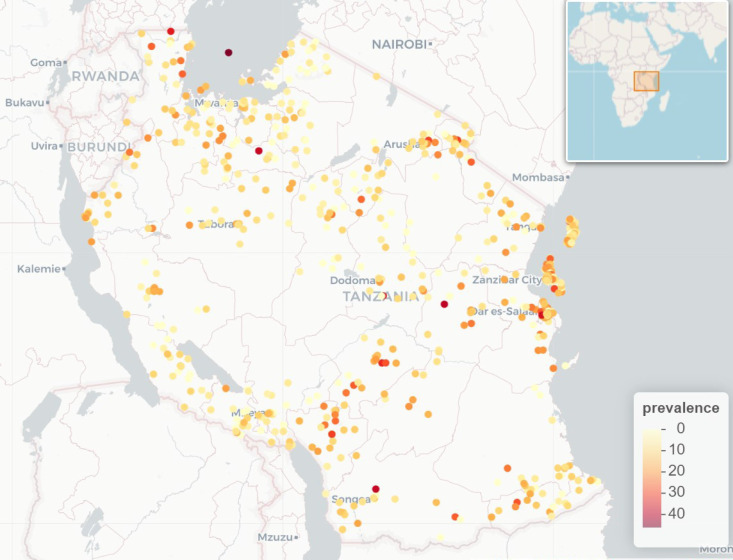
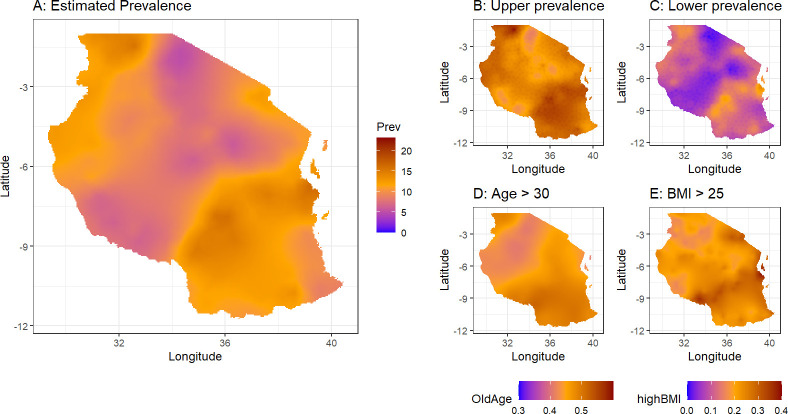
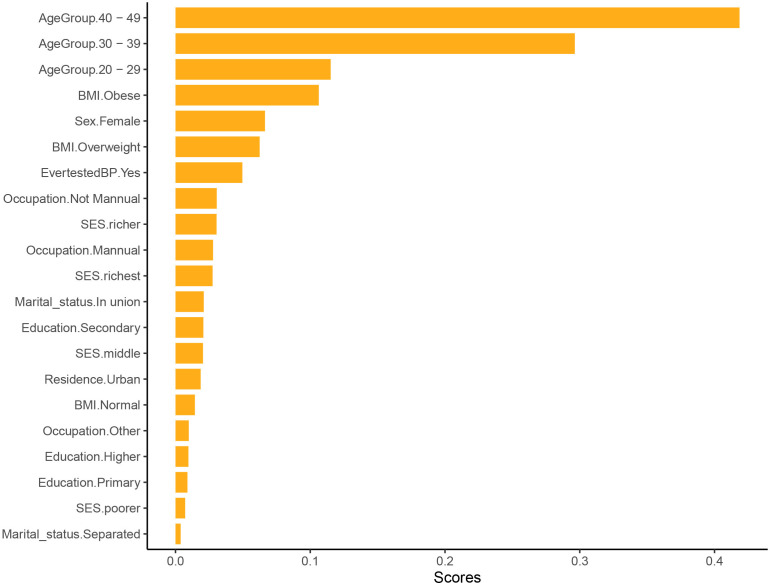
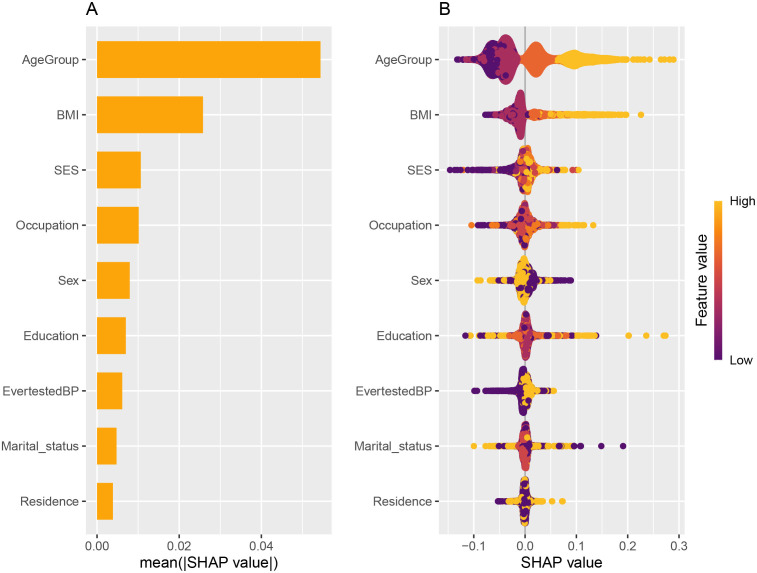
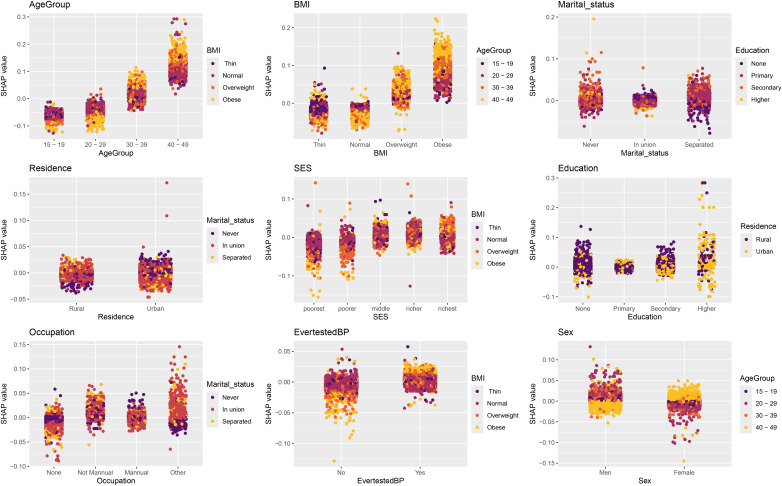
The prevalence of hypertension among adults of reproductive age was 11% (95% CIs 10.09 to 11.56) in Tanzania, varying significantly across risk factors. Prevalence was high in people aged 40-49 (22.11%, 95% CI 20.07 to 24.29) and obese (23.69%, 95% CI 20.67 to 27.00). The mean prevalence of hypertension was also high in the southern, eastern, western, southern highlands, north-west and north-eastern part of the country, correlating with the spatial distribution of older age (30-49) and higher body mass index (BMI) (≥25). Individuals aged 40-49 had nearly six times (adjusted OR (AOR): 5.68, 95% CI 4.10 to 7.83) the odds of hypertension relative to those aged 15-19. Obese individuals had higher odds (AOR: 2.88, 95% CI 2.01 to 4.13) compared with overweight individuals (AOR: 1.93, 95% CI 1.36 to 2.74). Machine learning results showed age and BMI as the most important determinants of hypertension and that significant interactions between risk factors exist.
The prevalence of hypertension varied across risk factors and the strongest determinants of hypertension in adults of reproductive age were age and BMI.
我们旨在估计坦桑尼亚15至49岁成年人高血压的患病率,并确定其决定因素。
我们分析了2022年2月至7月进行的2022年坦桑尼亚人口与健康调查以及疟疾指标调查的横断面调查数据。使用描述性统计分析、逻辑回归、机器学习和地理空间方法来估计患病率并确定高血压的决定因素。
坦桑尼亚。
共有13385名年龄在15至49岁之间的参与者纳入分析。
主要结局变量为高血压,定义为收缩压(BP)≥140和/或舒张压≥90 mmHg或正在服用抗高血压药物。
坦桑尼亚育龄成年人高血压患病率为11%(95%置信区间10.09至11.56),因风险因素不同而有显著差异。40至49岁人群(22.11%,95%置信区间20.07至24.29)和肥胖人群(23.69%,95%置信区间20.67至27.00)的患病率较高。该国南部、东部、西部、南部高地、西北部和东北部的高血压平均患病率也较高,这与老年(30至49岁)和较高体重指数(BMI)(≥25)的空间分布相关。40至49岁的个体患高血压的几率相对于15至19岁的个体高出近六倍(调整后比值比(AOR):5.68,95%置信区间4.10至7.83)。与超重个体(AOR:1.93,95%置信区间1.36至2.74)相比,肥胖个体的几率更高(AOR:2.88,95%置信区间2.01至4.13)。机器学习结果显示年龄和BMI是高血压最重要的决定因素,且风险因素之间存在显著相互作用。
高血压患病率因风险因素而异,育龄成年人高血压的最强决定因素是年龄和BMI。