Floricel Florin I, Reichel Paula E, Dickson Najla, Fleyshman Sofia, Reichel Christoph, Elshoff Jan-Peer
UCB Pharma, Monheim am Rhein, Germany.
Institute of Nutritional Medicine, University of Lübeck and University Hospital Schleswig-Holstein, Lübeck, Germany.
Epilepsia Open. 2024 Dec;9(6):2230-2240. doi: 10.1002/epi4.13045. Epub 2024 Oct 2.
The objective of this study is to evaluate possible long-term effects of treatment with brivaracetam (BRV) on body weight in children with epilepsy.
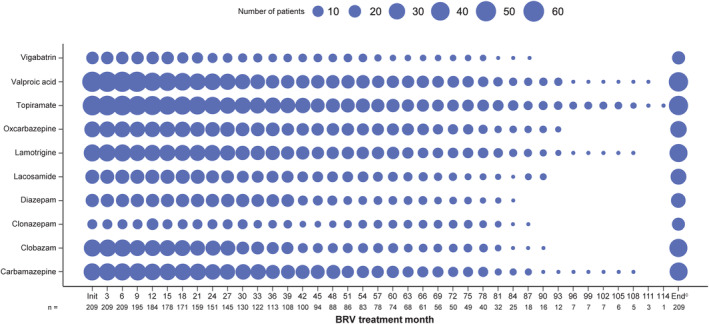
Post hoc analysis of data from patients (aged 1 month to <17 years) with ≥6 months of BRV treatment in a long-term, open-label trial (N01266 [NCT01364597]). Outcomes included body weight and body mass index (BMI) over time (z-score growth curves), and treatment-emergent adverse events (TEAEs). Previous/ongoing medical conditions that may affect body weight (gastrointestinal and metabolic/nutritional disorders); concomitant antiseizure medications (ASMs) were also evaluated.
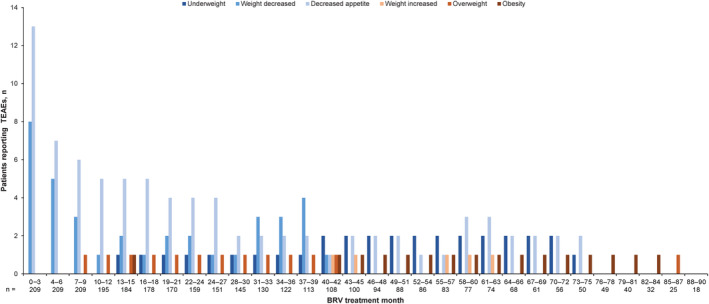
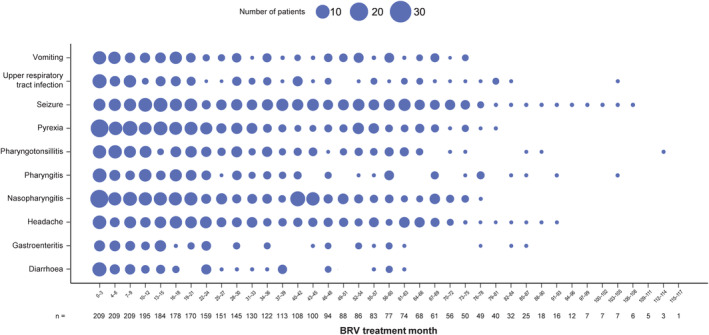
Two hundred nine patients (mean [standard deviation] age 7.9 [4.6] years) were analyzed. Most (154 [73.7%]) had focal-onset seizures. At study initiation, median (range) BRV dose was 1.0 (0.4-7.5) mg/kg/day. Overall, 189 (90.4%) patients had a previous or ongoing medical condition (gastrointestinal disorders: 43 [20.6%]; metabolism/nutritional disorders: 26 [12.4%]). Most patients followed z-score curves for body weight and BMI during BRV treatment, although there were outliers in both directions. Incidences of appetite/weight-change TEAEs were low. Twenty-three (11.0%) patients had a TEAE of decreased appetite and 14 (6.7%) had a TEAE of weight decreased.
Long-term adjunctive BRV was well tolerated in growing children with no indication of detrimental effects on body weight.
Brivaracetam is an antiseizure medication (ASM) used to treat seizures in people with epilepsy. Some ASMs can lead to changes in people's appetite and weight. Knowing the effect a drug has on appetite and weight is particularly important in children. We looked at 209 children with epilepsy taking brivaracetam and studied changes in their body weight and body mass index over time. The number of reported side effects related to appetite or weight change was low. There was no apparent long-term effect on their body weight, even when taking their medical history and use of other ASMs into account.
本研究的目的是评估用布瓦西坦(BRV)治疗对癫痫患儿体重可能产生的长期影响。
对一项长期开放标签试验(N01266 [NCT01364597])中接受BRV治疗≥6个月的患者(年龄1个月至<17岁)的数据进行事后分析。结局包括随时间变化的体重和体重指数(BMI)(z评分生长曲线)以及治疗中出现的不良事件(TEAE)。还评估了可能影响体重的既往/正在存在的医疗状况(胃肠道和代谢/营养障碍);同时使用的抗癫痫药物(ASM)。
分析了209例患者(平均[标准差]年龄7.9 [4.6]岁)。大多数(154例[73.7%])有局灶性发作。在研究开始时,BRV的中位(范围)剂量为1.0(0.4 - 7.5)mg/kg/天。总体而言,189例(90.4%)患者有既往或正在存在的医疗状况(胃肠道疾病:43例[20.6%];代谢/营养障碍:26例[12.4%])。大多数患者在BRV治疗期间体重和BMI遵循z评分曲线,尽管在两个方向上都有异常值。食欲/体重变化TEAE的发生率较低。23例(11.0%)患者出现食欲下降的TEAE,14例(6.7%)患者出现体重下降的TEAE。
长期辅助使用BRV在正在成长的儿童中耐受性良好,没有对体重产生有害影响的迹象。
布瓦西坦是一种用于治疗癫痫患者癫痫发作的抗癫痫药物(ASM)。一些ASM会导致人们食欲和体重的变化。了解一种药物对食欲和体重的影响在儿童中尤为重要。我们观察了209例服用布瓦西坦的癫痫患儿,并研究了他们体重和体重指数随时间的变化。报告的与食欲或体重变化相关的副作用数量较少。即使考虑到他们的病史和其他ASM的使用情况,对他们的体重也没有明显的长期影响。