Malik Zahida, Broadley Sarah, Herkelrath Sebastian J C, Newbrook Daniel W, Kemp Liam, Rutt George, Gál Zoltán A, Blandy Jack N, Hadermann Joke, Davies Daniel W, Smyth Robert D, Scanlon David O, Huang Ruomeng, Clarke Simon J, Hyett Geoffrey
School of Chemistry, Faculty of Engineering and Physical Sciences, Highfield Campus, University of Southampton Southampton SO17 1BJ UK
Department of Chemistry, University of Oxford, Inorganic Chemistry Lab South Parks Road Oxford OX1 3QR UK.
J Mater Chem C Mater. 2024 Sep 19;12(43):17574-17586. doi: 10.1039/d4tc02458c. eCollection 2024 Nov 7.
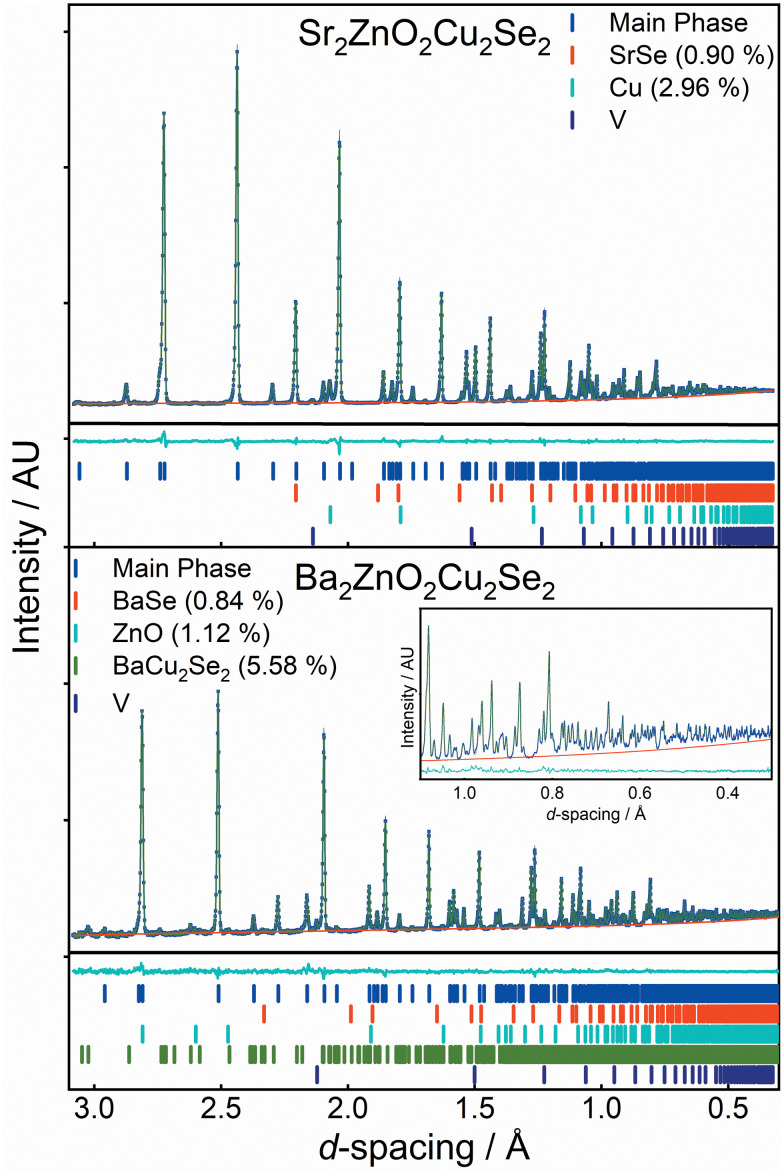
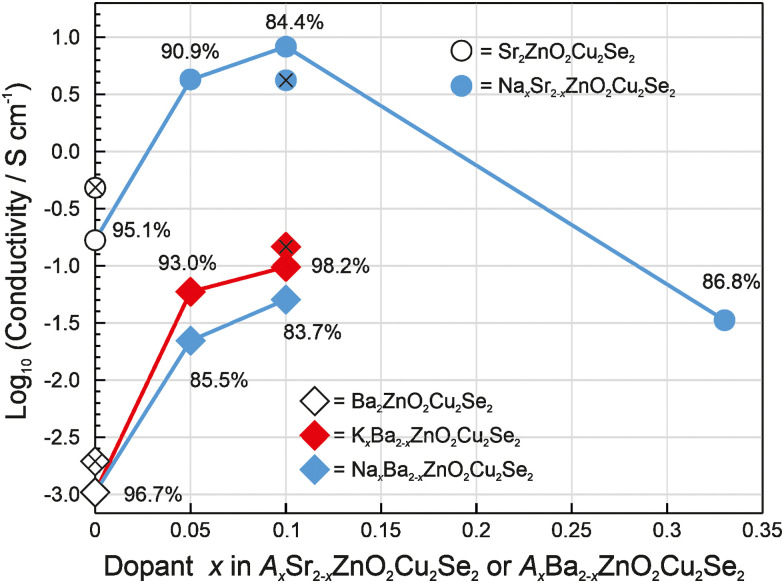
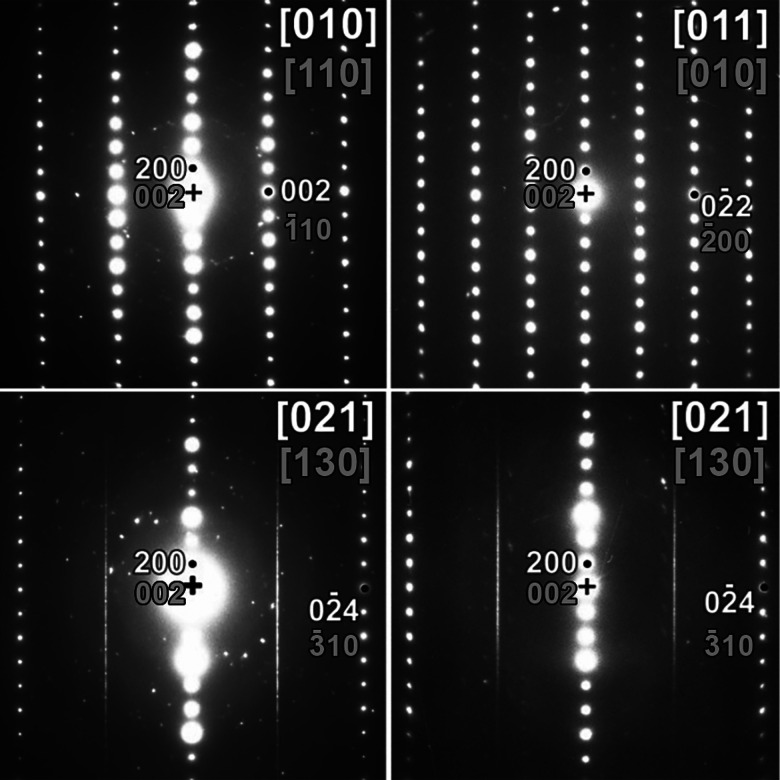
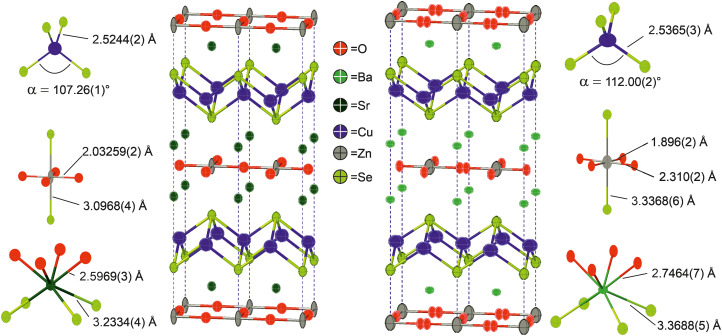
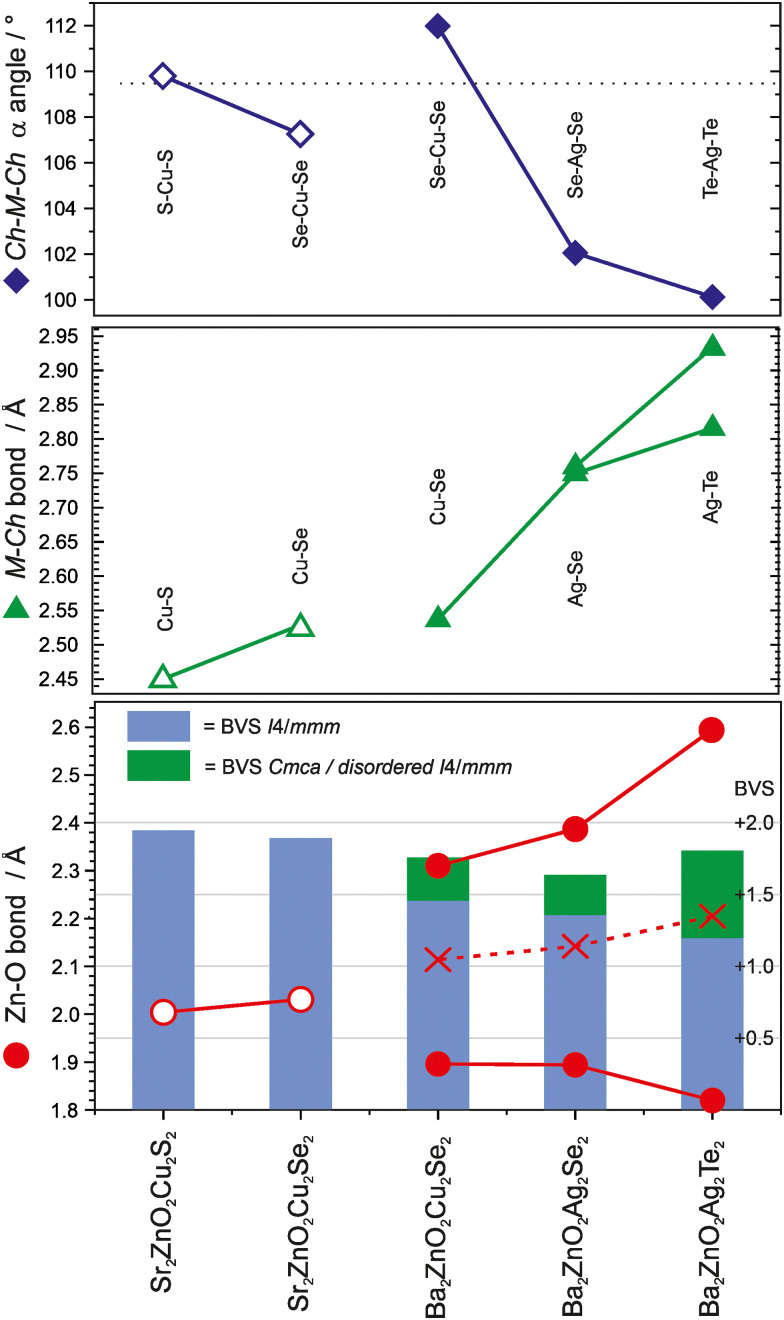
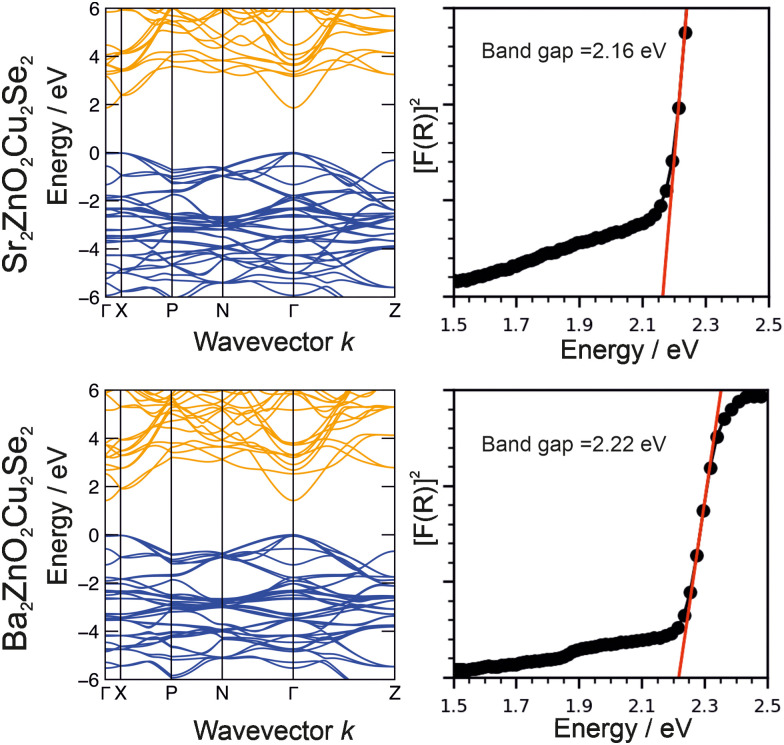
The optoelectronic properties of two layered copper oxyselenide compounds, with nominal composition SrZnOCuSe and BaZnOCuSe, have been investigated to determine their suitability as p-type conductors. The structure, band gaps and electrical conductivity of pristine and alkali-metal-doped samples have been determined. We find that the strontium-containing compound, SrZnOCuSe, adopts the expected tetragonal structure with 4/ symmetry, and has a band gap of 2.16 eV, and a room temperature conductivity of 4.8 × 10 S cm. The conductivity of the compound could be increased to 4.2 S cm when sodium doped to a nominal composition of NaSrZnOCuSe. In contrast, the barium containing material was found to have a small zinc oxide deficiency, with a sample dependent compositional range of BaZn O CuSe where 0.01 < < 0.06, as determined by single crystal X-ray diffraction and powder neutron diffraction. The barium-containing structure could also be modelled using the tetragonal 4/ structure, but significant elongation of the oxygen displacement ellipsoid along the Zn-O bonds in the average structure was observed. This indicated that the oxide ion position was better modelled as a disordered split site with a displacement to change the local zinc coordination from square planar to linear. Electron diffraction data confirmed that the oxide site in BaZn O CuSe does not adopt a long range ordered arrangement, but also that the idealised 4/ structure with an unsplit oxide site was not consistent with the extra reflections observed in the electron diffractograms. The band gap and conductivity of BaZn O CuSe were determined to be 2.22 eV and 2.0 × 10 S cm respectively. The conductivity could be increased to 1.5 × 10 S cm with potassium doping in KBaZn O CuSe. Hall measurements confirmed that both materials were p-type conductors with holes as the dominant charge carriers.
研究了两种标称组成为SrZnOCuSe和BaZnOCuSe的层状氧硒化铜化合物的光电特性,以确定它们作为p型导体的适用性。已测定了原始样品和碱金属掺杂样品的结构、带隙和电导率。我们发现,含锶化合物SrZnOCuSe具有预期的四方结构,空间群为4/,带隙为2.16 eV,室温电导率为4.8×10 S/cm。当掺杂钠至标称组成NaSrZnOCuSe时,该化合物的电导率可提高到4.2 S/cm。相比之下,发现含钡材料存在少量氧化锌缺陷,通过单晶X射线衍射和粉末中子衍射确定,其样品依赖的组成范围为BaZn₁₋ₓOCuSe,其中0.01 < x < 0.06。含钡结构也可以用四方4/结构建模,但在平均结构中观察到氧位移椭球沿Zn - O键有明显伸长。这表明氧化物离子位置更好地建模为无序分裂位点,其位移改变了局部锌的配位,从平面正方形变为线性。电子衍射数据证实,BaZn₁₋ₓOCuSe中的氧化物位点不采用长程有序排列,而且具有未分裂氧化物位点的理想化4/结构与电子衍射图中观察到的额外反射不一致。BaZn₁₋ₓOCuSe的带隙和电导率分别测定为2.22 eV和2.0×10 S/cm。在KBaZn₁₋ₓOCuSe中进行钾掺杂时,电导率可提高到1.5×10 S/cm。霍尔测量证实这两种材料都是以空穴为主要载流子的p型导体。