Department of Biology, University of Turku, Vesilinnantie 5, 20014, Turku, Finland.
Area of Toxicology, Faculty of Veterinary Medicine, University of Murcia, Campus Espinardo, 30100, Murcia, Spain.
Environ Sci Pollut Res Int. 2024 Nov;31(52):61950-61958. doi: 10.1007/s11356-024-35197-3. Epub 2024 Oct 3.
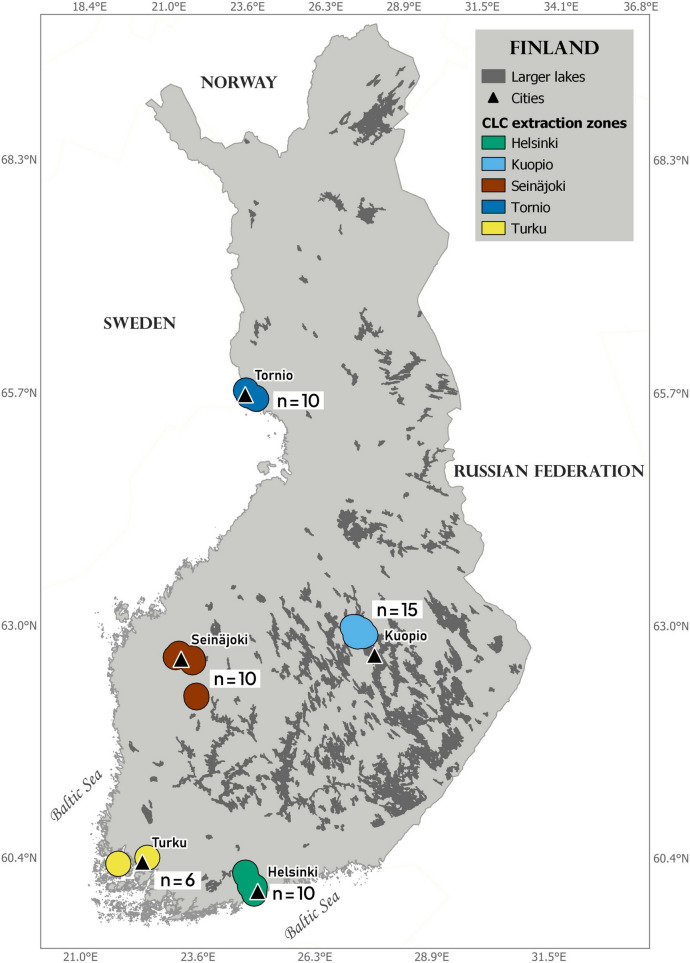
Neonicotinoids have been detected in farmland-associated birds and exposure to these insecticides has been linked to adverse effects. Even though neonicotinoids are mobile and persistent and have been detected in surface waters and aquatic invertebrates, there is a considerable lack of knowledge on their occurrence in waterbirds. Here we investigated the occurrence of seven neonicotinoids and some of their transformation products (imidacloprid, thiacloprid, thiamethoxam, acetamiprid, clothianidin, dinotefuran, nitenpyram, 6-chloronicotinic acid, hydroxy-imidacloprid, imidacloprid-urea, imidacloprid-olefin, thiamethoxam-urea, thiacloprid-amide, acetamiprid-acetate, and acetamiprid-desmethyl) in blood plasma of 51 incubating female common goldeneyes (Bucephala clangula). We collected samples from five different regions from southern to northern Finland encompassing rural and urban settings in coastal and inland areas. Surprisingly, none of the targeted neonicotinoids was found above the limit of detection in any of the samples. As neonicotinoid concentrations in wild birds can be very low, a likely reason for the nil results is that the LODs were too high; this and other possible reasons for the lack of detection of neonicotinoids in the goldeneyes are discussed. Our results suggest that neonicotinoid exposure in their breeding areas is currently not of major concern to female goldeneyes in Finland. Even though this study did not find any immediate danger of neonicotinoids to goldeneyes, further studies including surface water, aquatic invertebrates, and other bird species could elucidate potential indirect food chain effects.
新烟碱类农药已在农田鸟类中被检出,接触这些杀虫剂与不良影响有关。尽管新烟碱类农药具有流动性和持久性,并已在地表水和水生无脊椎动物中被检出,但关于它们在水鸟中的存在情况,人们的了解还相当有限。在这里,我们调查了 7 种新烟碱类农药及其部分转化产物(吡虫啉、噻虫啉、噻虫嗪、噻虫胺、噻虫砜、呋虫胺、吡虫清、6-氯烟碱、羟基吡虫啉、吡虫啉-脲、吡虫啉-烯烃、噻虫嗪-脲、噻虫啉酰胺、噻虫胺-乙酸盐和噻虫胺-去甲基)在 51 只正在孵化的普通秋沙鸭(Bucephala clangula)雌性血液中的存在情况。我们从芬兰南部到北部的五个不同地区收集了样本,涵盖了沿海和内陆的农村和城市环境。令人惊讶的是,在任何样本中都没有发现目标新烟碱类农药的浓度超过检测限。由于野生鸟类中的新烟碱类农药浓度可能非常低,因此没有检测到新烟碱类农药的一个可能原因是检测限太高;本文讨论了导致秋沙鸭中未检测到新烟碱类农药的其他可能原因。我们的研究结果表明,目前在芬兰,新烟碱类农药对其繁殖地区的秋沙鸭的暴露情况不是一个主要问题。尽管本研究没有发现新烟碱类农药对秋沙鸭的直接危险,但包括地表水、水生无脊椎动物和其他鸟类在内的进一步研究可以阐明潜在的间接食物链效应。