Cancer Biology, Vanderbilt University School of Medicine, Nashville, Tennessee, USA.
Pathology, Microbiology, and Immunology, Vanderbilt University School of Medicine, Nashville, Tennessee, USA.
J Immunother Cancer. 2024 Oct 3;12(10):e009129. doi: 10.1136/jitc-2024-009129.
Immune checkpoint blockade (ICB) therapies are an important treatment for patients with advanced cancers; however, only a subset of patients with certain types of cancer achieve durable remission. Cancer vaccines are an attractive strategy to boost patient immune responses, but less is known about whether and how immunization can induce long-term tumor immune reprogramming and arrest cancer progression. We developed a clinically relevant genetic cancer mouse model in which hepatocytes sporadically undergo oncogenic transformation. We compared how tumor-specific CD8 T cells (TST) differentiated in mice with early sporadic lesions as compared with late lesions and tested how immunotherapeutic strategies, including vaccination and ICB, impact TST function and liver cancer progression.
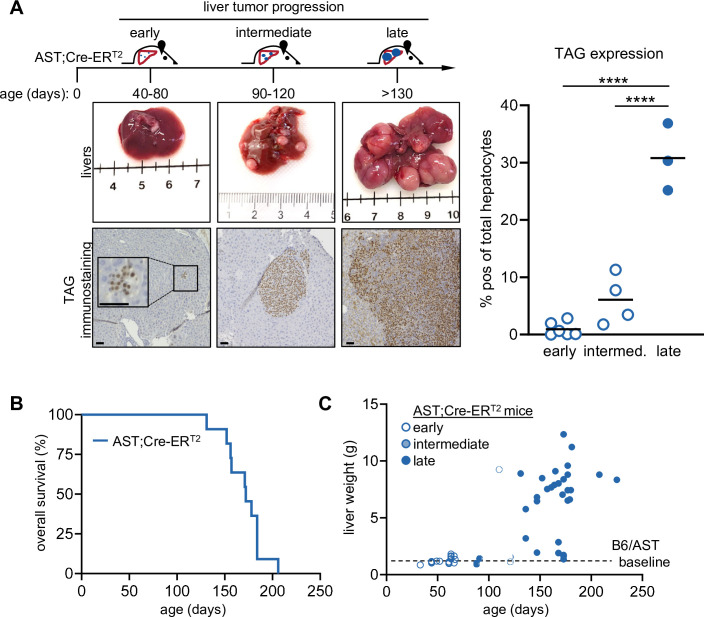
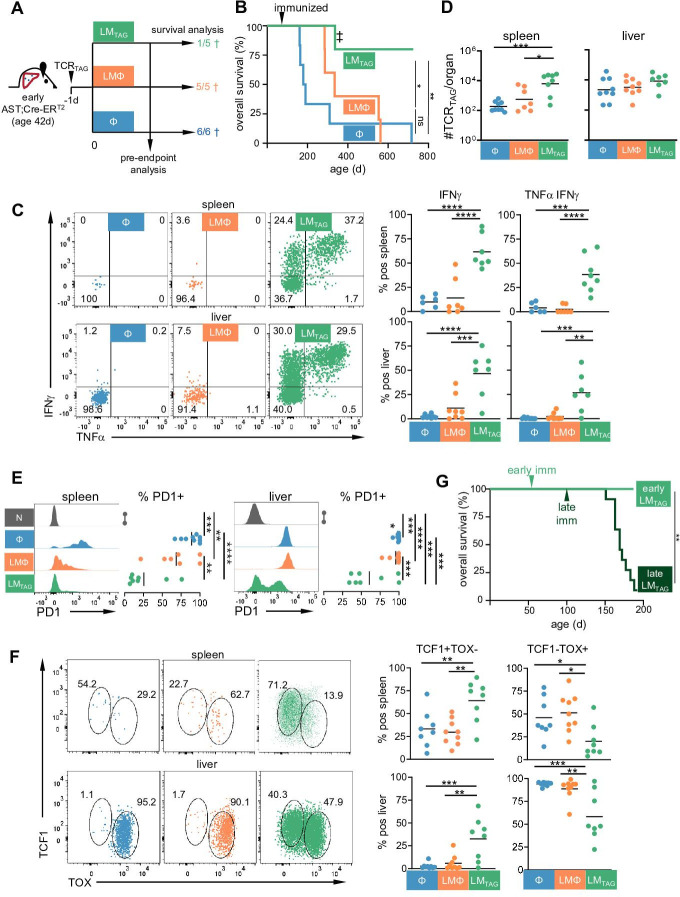
Mice with a germline floxed allele of the SV40 large T antigen (TAG) undergo spontaneous recombination and activation of the TAG oncogene, leading to rare early cancerous TAG-expressing lesions that inevitably progress to established liver cancer. We assessed the immunophenotype (CD44, PD1, TCF1, and TOX expression) and function (TNFα and IFNγ cytokine production) of tumor/TAG-specific CD8 T cells in mice with early and late liver lesions by flow cytometry. We vaccinated mice, either alone or in combination with ICB, to test whether these immunotherapeutic interventions could stop liver cancer progression and improve survival.
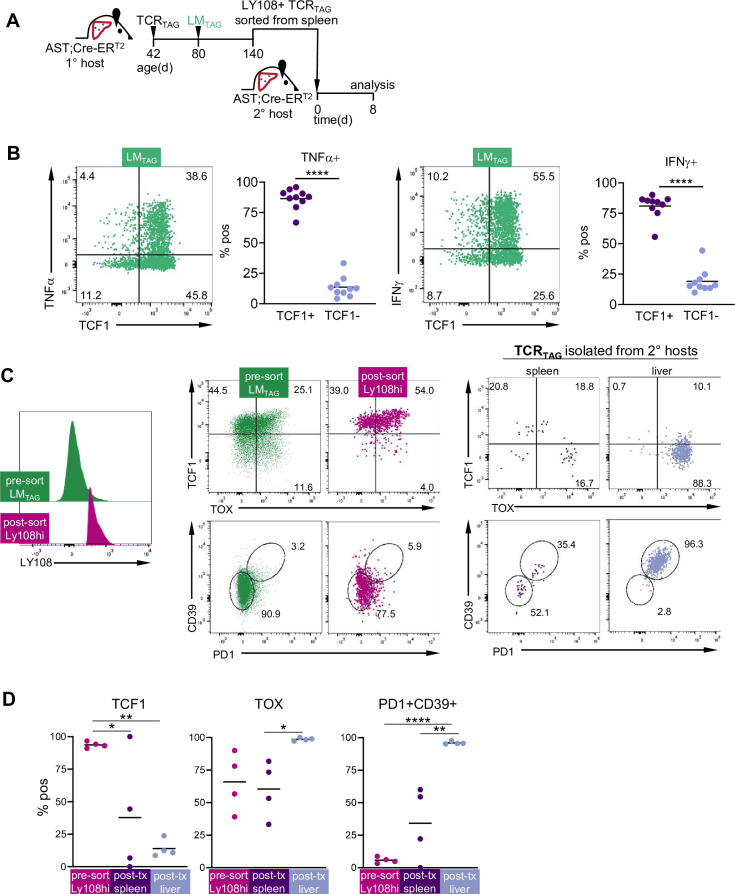
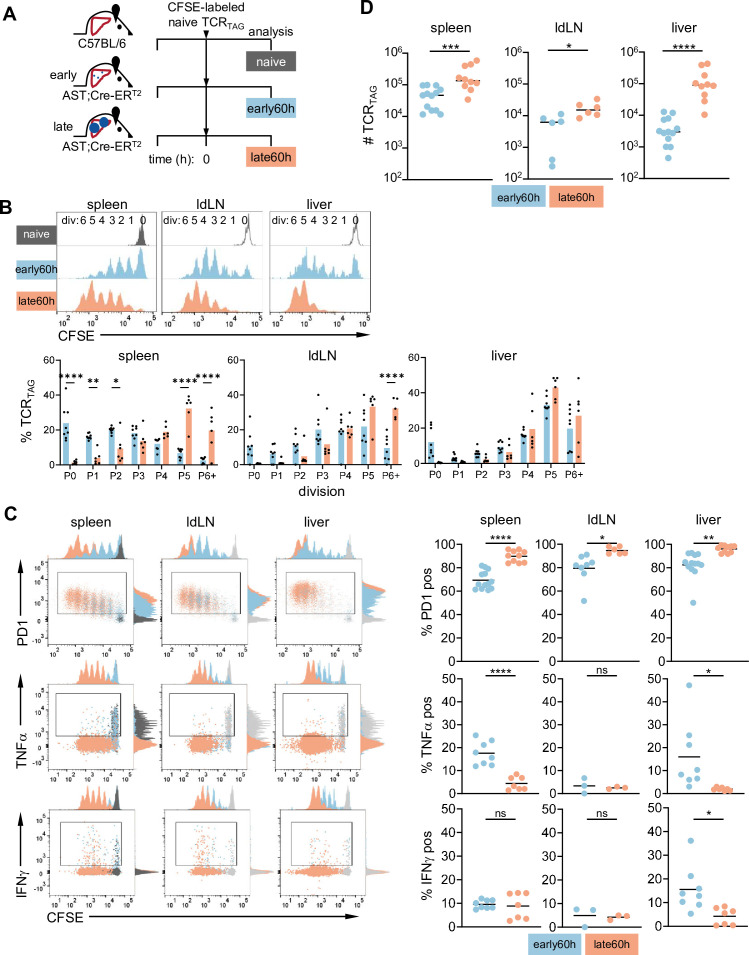
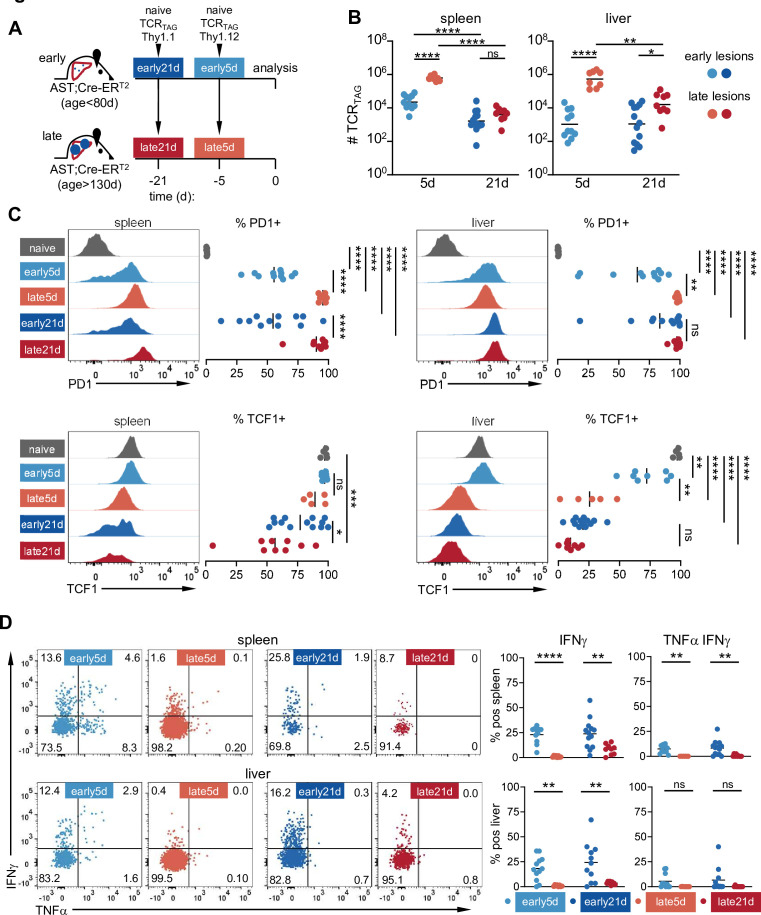
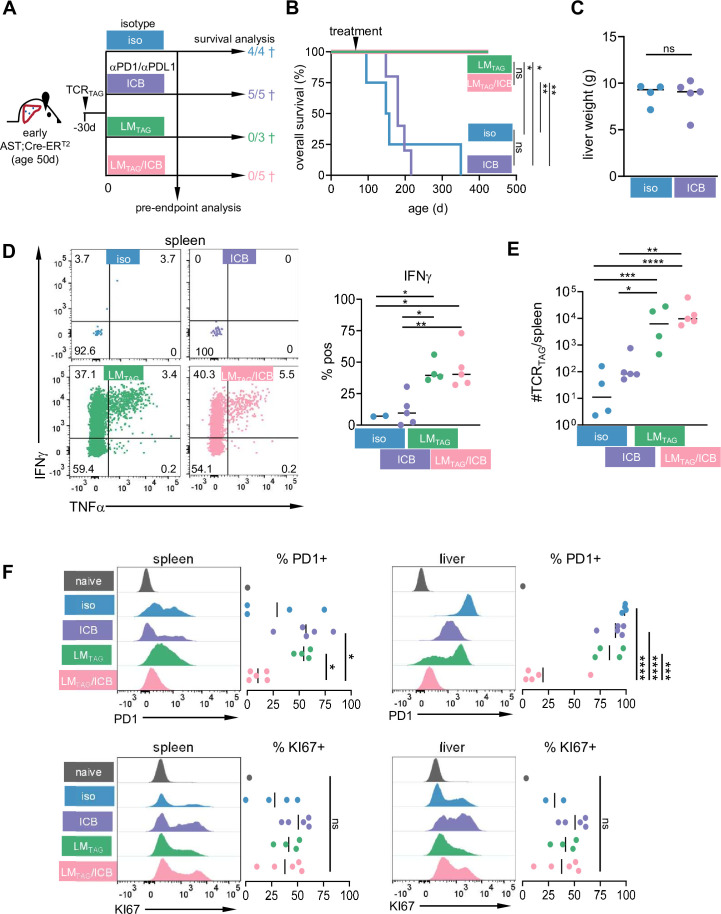
In mice with early lesions, a subset of TST were PD1 TCF1 TOX and could produce IFNγ while TST present in mice with late liver cancers were PD1 TCF1 TOX and unable to make effector cytokines. Strikingly, vaccination with attenuated TAG epitope-expressing (LM) blocked liver cancer development and led to a population of TST that were PD1-heterogeneous, TCF1 TOX and polyfunctional cytokine producers. Vaccine-elicited TCF1+TST could self-renew and differentiate, establishing them as progenitor TST. In contrast, ICB administration did not slow cancer progression or improve LM vaccine efficacy.
Vaccination, but not ICB, generated a population of functional progenitor TST and halted cancer progression in a clinically relevant model of sporadic liver cancer. In patients with early cancers or at high risk of cancer recurrence, immunization may be the most effective strategy.
免疫检查点阻断 (ICB) 疗法是治疗晚期癌症患者的重要手段;然而,只有某些类型癌症的一部分患者能获得持久缓解。癌症疫苗是一种增强患者免疫反应的有吸引力的策略,但对于免疫接种是否以及如何诱导长期肿瘤免疫重编程和阻止癌症进展知之甚少。我们开发了一种临床相关的遗传癌症小鼠模型,其中肝细胞偶尔会发生致癌转化。我们比较了在早期散发性病变和晚期病变中分化的肿瘤特异性 CD8 T 细胞 (TST) 的差异,并测试了免疫治疗策略,包括疫苗接种和 ICB,如何影响 TST 功能和肝癌进展。
具有 SV40 大 T 抗原 (TAG) 种系 floxed 等位基因的小鼠会自发重组并激活 TAG 致癌基因,导致罕见的早期癌性 TAG 表达病变,这些病变不可避免地进展为已建立的肝癌。我们通过流式细胞术评估了早期和晚期肝病变小鼠中肿瘤/TAG 特异性 CD8 T 细胞的免疫表型(CD44、PD1、TCF1 和 TOX 表达)和功能(TNFα 和 IFNγ 细胞因子产生)。我们单独或联合 ICB 对小鼠进行疫苗接种,以测试这些免疫治疗干预是否可以阻止肝癌进展并提高生存率。
在早期病变的小鼠中,TST 的一部分是 PD1 TCF1 TOX,能够产生 IFNγ,而在晚期肝癌小鼠中存在的 TST 是 PD1 TCF1 TOX,无法产生效应细胞因子。引人注目的是,用减毒的 TAG 表位表达疫苗(LM)接种可阻止肝癌的发展,并导致一群 TST 是 PD1 异质性、TCF1 TOX 和多功能细胞因子产生者。疫苗诱导的 TCF1+TST 可以自我更新和分化,将其确立为祖 TST。相比之下,ICB 给药不会减缓癌症进展或提高 LM 疫苗的疗效。
疫苗接种,但不是 ICB,产生了一群功能祖 TST,并在临床相关的散发性肝癌模型中阻止了癌症进展。在早期癌症或癌症复发风险高的患者中,免疫接种可能是最有效的策略。