Meermeier Erin W, Bergsagel P Leif, Chesi Marta
Department of Immunology, Mayo Clinic, Scottsdale, Arizona, USA.
Department of Medicine, Mayo Clinic, Scottsdale, Arizona, USA.
Annu Rev Cancer Biol. 2024 Jun;8:351-371. doi: 10.1146/annurev-cancerbio-061421-014236. Epub 2024 Jan 11.
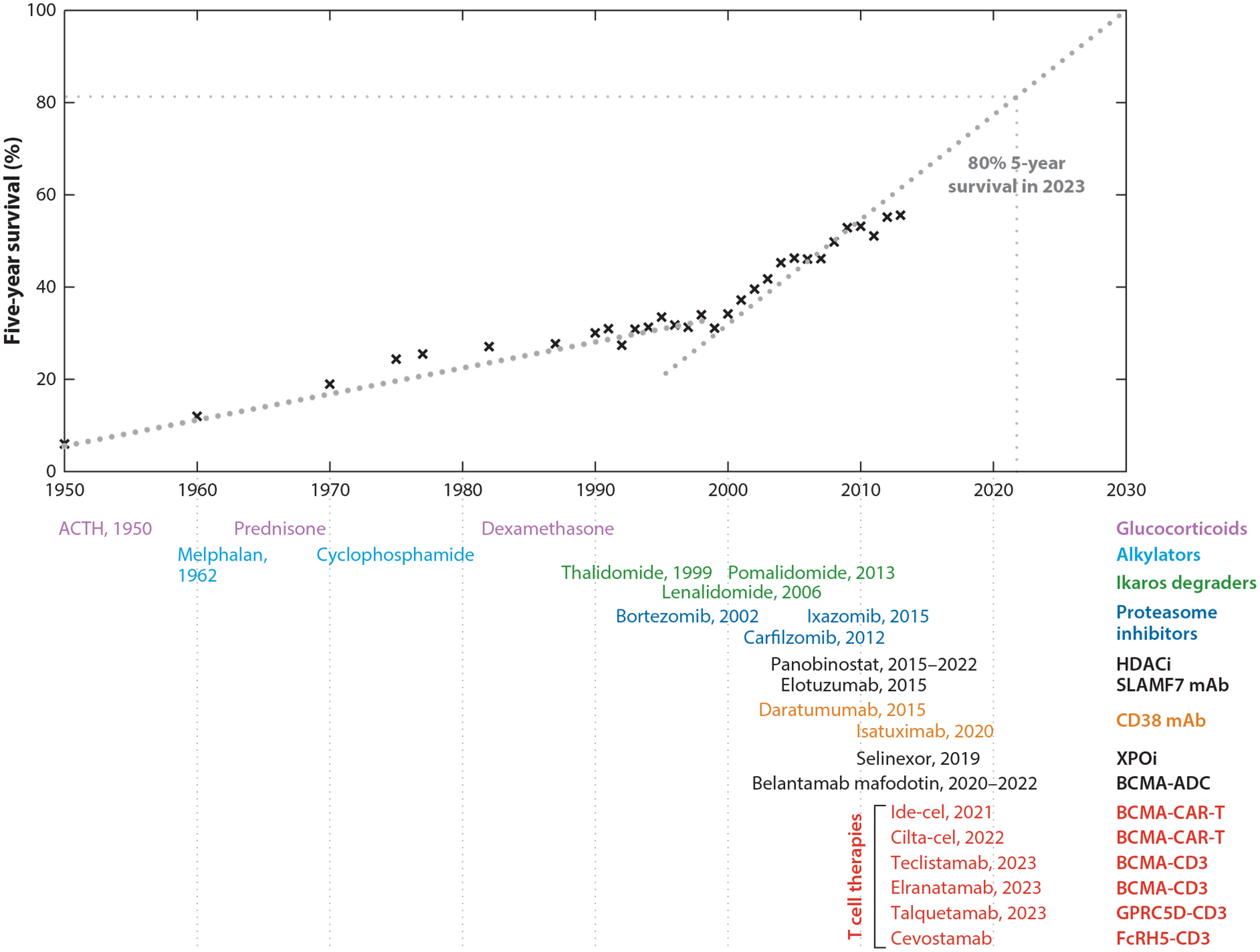
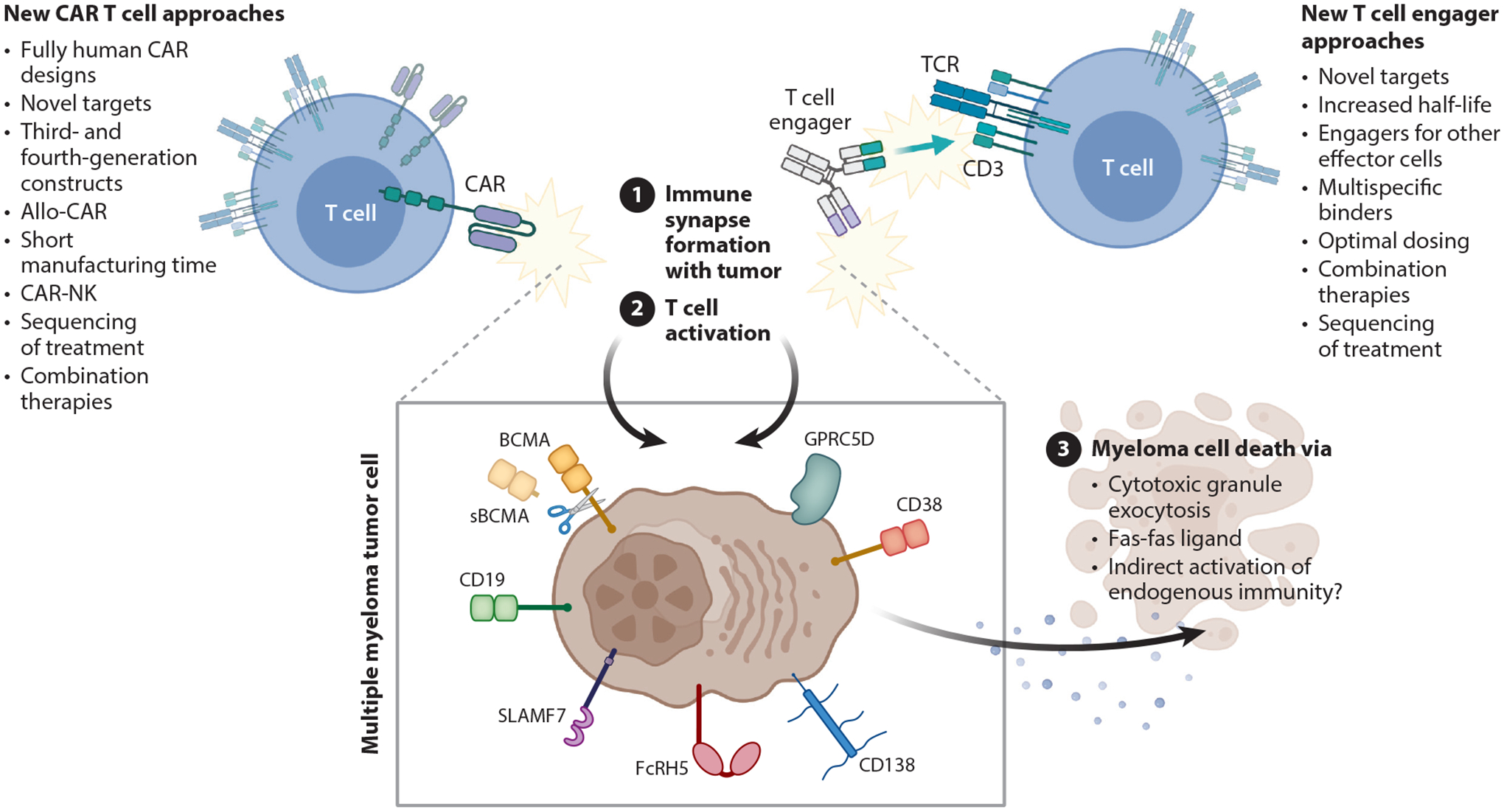
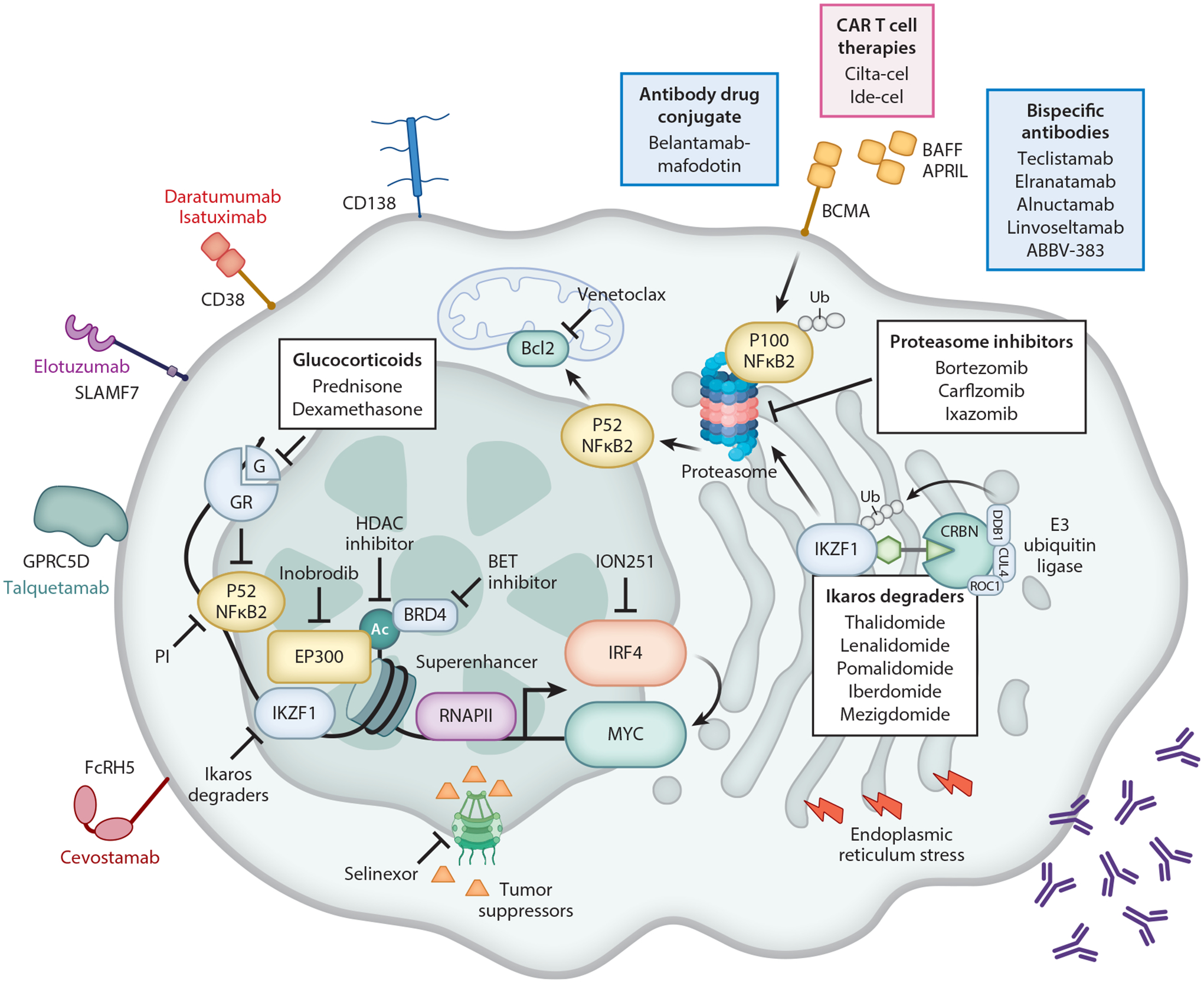
Recent therapeutic advances have significantly improved the outcome for patients with multiple myeloma (MM). The backbone of successful standard therapy is the combination of Ikaros degraders, glucocorticoids, and proteasome inhibitors that interfere with the integrity of myeloma-specific superenhancers by directly or indirectly targeting enhancer-bound transcription factors and coactivators that control expression of MM dependency genes. T cell engagers and chimeric antigen receptor T cells redirect patients' own T cells onto defined tumor antigens to kill MM cells. They have induced complete remissions even in end-stage patients. Unfortunately, responses to both conventional therapy and immunotherapy are not durable, and tumor heterogeneity, antigen loss, and lack of T cell fitness lead to therapy resistance and relapse. Novel approaches are under development to target myeloma-specific vulnerabilities, as is the design of multimodality immunological approaches, including and beyond T cells, that simultaneously recognize multiple epitopes to prevent antigen escape and tumor relapse.
近期的治疗进展显著改善了多发性骨髓瘤(MM)患者的治疗结果。成功的标准治疗方案的核心是伊卡罗斯降解剂、糖皮质激素和蛋白酶体抑制剂的联合使用,这些药物通过直接或间接靶向与增强子结合的转录因子和共激活因子来干扰骨髓瘤特异性超级增强子的完整性,而这些转录因子和共激活因子控制着MM依赖基因的表达。T细胞衔接器和嵌合抗原受体T细胞将患者自身的T细胞重定向到特定的肿瘤抗原上以杀死MM细胞。它们甚至在晚期患者中也诱导了完全缓解。不幸的是,对传统疗法和免疫疗法的反应都不持久,肿瘤异质性、抗原丢失和T细胞适应性不足导致治疗耐药和复发。目前正在开发针对骨髓瘤特异性弱点的新方法,同时也在设计多模式免疫方法,包括但不限于T细胞,这些方法可同时识别多个表位以防止抗原逃逸和肿瘤复发。