Sydney School of Veterinary Science, Faculty of Science, The University of Sydney, Camperdown, New South Wales, Australia.
Sydney School of Public Health, Faculty of Medicine and Health, The University of Sydney, Camperdown, New South Wales, Australia.
PLoS Negl Trop Dis. 2024 Oct 4;18(10):e0012510. doi: 10.1371/journal.pntd.0012510. eCollection 2024 Oct.
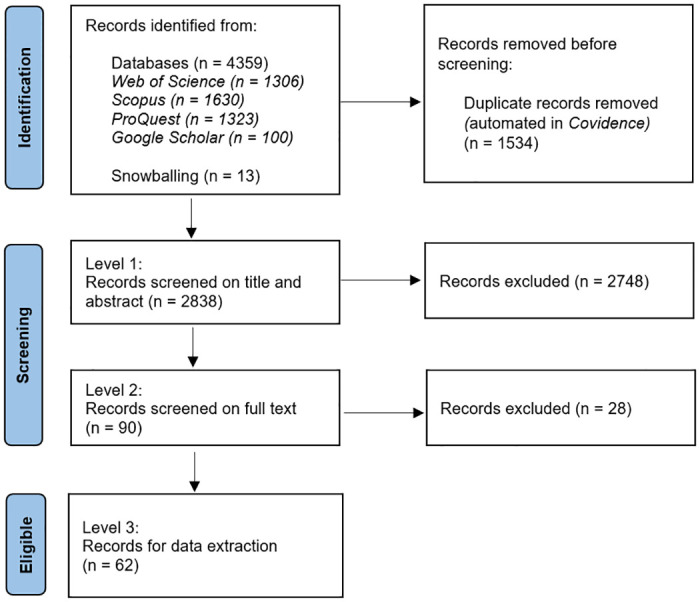
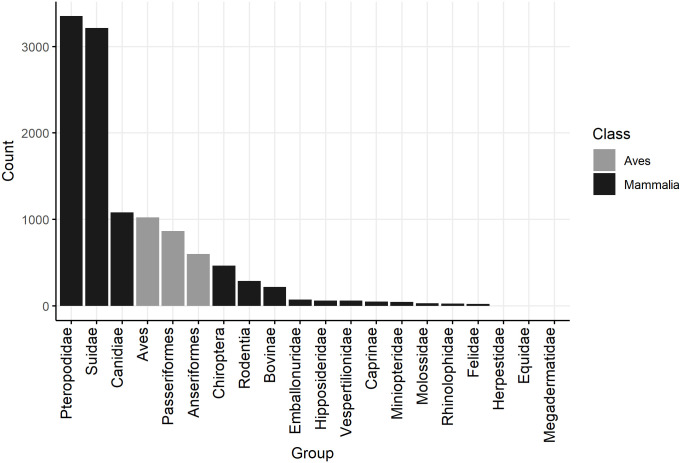
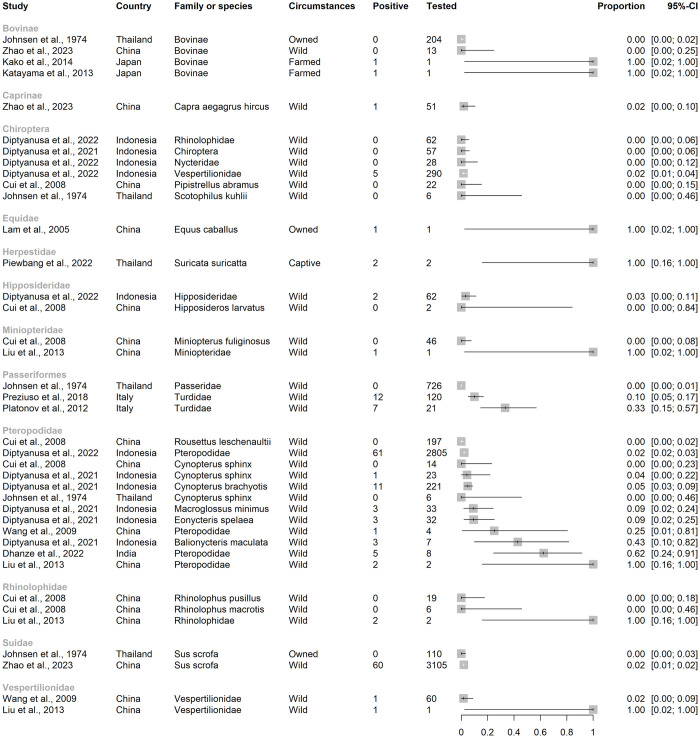
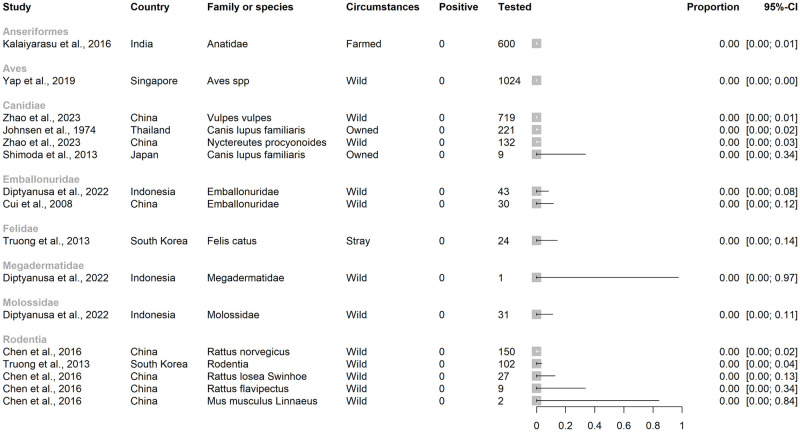
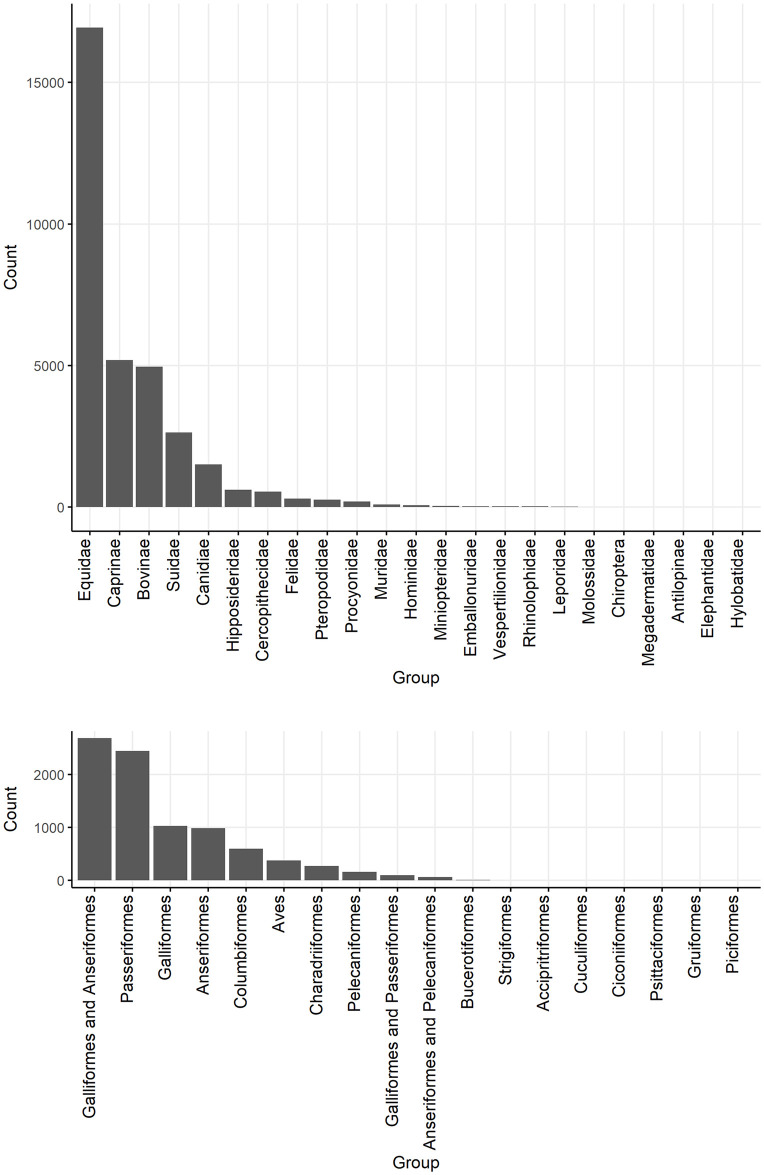
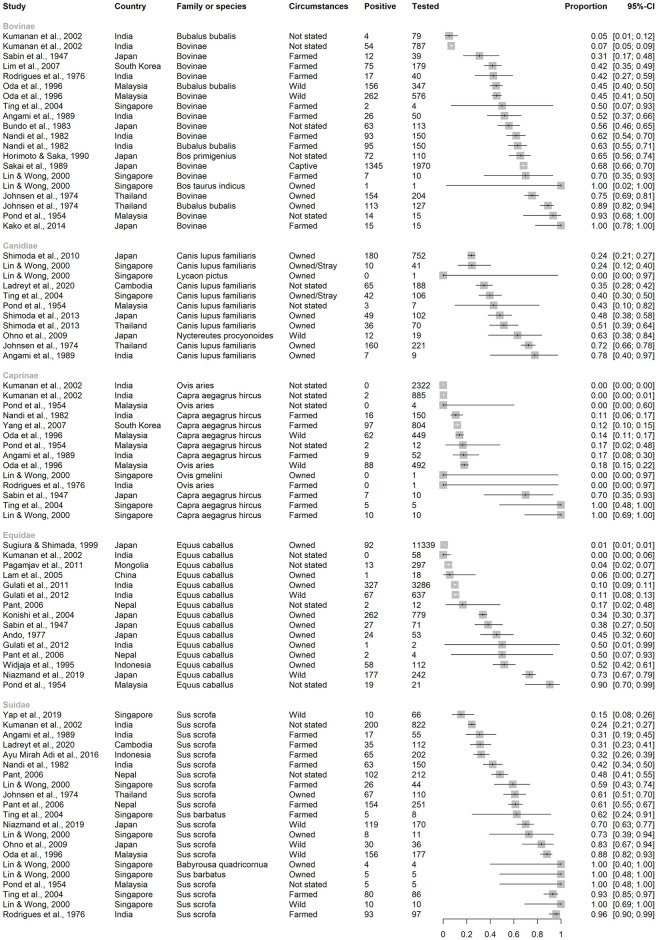
Japanese encephalitis virus (JEV) is the leading cause of human encephalitis in Asia. JEV is a vector-borne disease, mainly transmitted by Culex mosquitoes, with Ardeidae birds as maintenance hosts and pigs as amplifying hosts. Other vertebrate animal hosts have been suggested to play a role in the epidemiology of JEV. This scoping review followed PRISMA guidelines to identify species in which evidence of naturally occurring JEV infection was detected in vertebrates other than ardeid birds, pigs and people. Following systematic searches, 4372 records were screened, and data were extracted from 62 eligible studies. Direct evidence (virus, viral antigen or viral RNA) of JEV infection was identified in a variety of mammals and birds (not always identified to the species level), including bats, passerine birds (family Turdidae), livestock (cattle [Bos taurus] and a goat [Capra hircus]), carnivores (two meerkats [Suricata suricatta]), and one horse (Equus caballus). Bat families included Pteropodidae, Vespertilionidae, Rhinolophidae, Miniopteridae, Hipposideridae. Indirect evidence (antibodies) was identified in several mammalian and avian orders, as well as reported in two reptile species. However, a major limitation of the evidence of JEV infection identified in this review was diagnostic test accuracy, particularly for serological testing. Studies generally did not report diagnostic sensitivity or specificity which is critical given the potential for cross-reactivity in orthoflavivirus detection. We hypothesise that bats and passerine birds could play an underappreciated role in JEV epidemiology; however, development of diagnostic tests to differentiate JEV from other orthoflaviviruses will be essential for effective surveillance in these, as well as the companion and livestock species that could be used to evaluate JEV control measures in currently endemic regions.
日本脑炎病毒(JEV)是亚洲人类脑炎的主要病因。JEV 是一种虫媒病毒,主要通过库蚊传播,以鹭科鸟类为维持宿主,猪为扩增宿主。其他脊椎动物宿主也被认为在 JEV 的流行病学中发挥作用。本范围综述遵循 PRISMA 指南,以确定在除鹭科鸟类、猪和人以外的脊椎动物中检测到自然发生 JEV 感染的物种。经过系统搜索,筛选了 4372 条记录,并从 62 项合格研究中提取了数据。直接证据(病毒、病毒抗原或病毒 RNA)表明,多种哺乳动物和鸟类(并非总是鉴定到种级)存在 JEV 感染,包括蝙蝠、雀形目鸟类(画眉科)、牲畜(牛[Bos taurus]和山羊[Capra hircus])、食肉动物(两只猫鼬[Suricata suricatta])和一匹马(Equus caballus)。蝙蝠科包括翼手目、蝙蝠科、菊头蝠科、蝙蝠科、蹄蝠科。间接证据(抗体)在几个哺乳动物和鸟类目以及两个爬行动物物种中被发现。然而,本综述中确定的 JEV 感染证据的主要限制是诊断测试的准确性,特别是血清学测试。研究通常未报告诊断敏感性或特异性,鉴于在检测黄病毒时可能存在交叉反应,这一点至关重要。我们假设蝙蝠和雀形目鸟类可能在 JEV 流行病学中发挥被低估的作用;然而,开发能够区分 JEV 与其他黄病毒的诊断测试对于这些以及可能用于评估目前流行地区 JEV 控制措施的伴侣动物和牲畜物种的有效监测将是必不可少的。