Department of Medicine Surgery and Dentistry, Scuola Medica Salernitana, Neuroscience Section, University of Salerno, Salerno, Italy.
Department of Medicine, Surgery and Dentistry, "Scuola Medica Salernitana", Gastrointestinal Unit, University of Salerno, Salerno, Italy.
Sci Rep. 2024 Oct 4;14(1):23095. doi: 10.1038/s41598-024-74400-w.
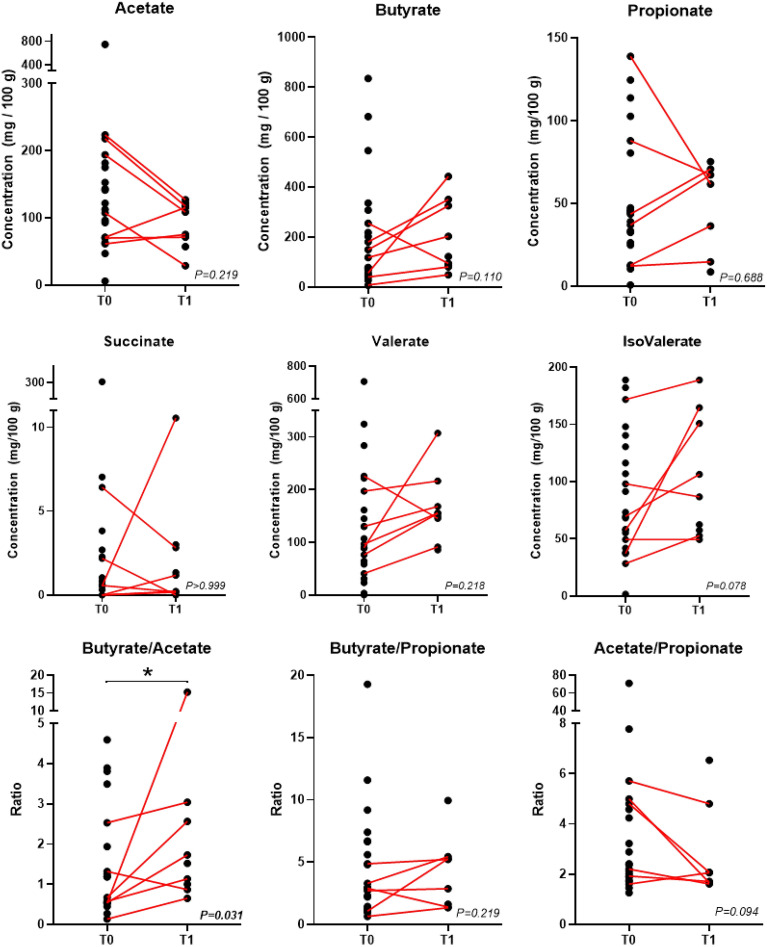
Gut microbiota changes and brain-gut-axis (BGA) dysregulation are common in people with Parkinson's Disease (PD). Probiotics and prebiotics are emerging as a potential therapeutic approach for PD patients. The aim of this paper was to assess the neurological and gastroenterological effects in PD patients with constipation after the administration of a synbiotic product, with a focus on behavioral and cognitive symptoms. We enrolled patients with stable PD who met diagnostic criteria for functional constipation and/or irritable bowel syndrome with constipation according to Rome IV Criteria. Patients received a synbiotic treatment (Enterolactis Duo, containing the probiotic strain Lacticaseibacillus paracasei DG and the prebiotic fiber inulin) for 12 weeks. A neurological and a gastroenterological evaluation were collected before and after the treatment. In addition, 16S rRNA gene profiling and short chain fatty acid quantification were performed to characterize the microbial ecosystem of fecal samples collected before (n = 22) and after (n = 9) the synbiotic administration. 30 patients were consecutively enrolled. After treatment, patients performed better in MDS-UPDRS part 1 (p = 0.000), SCOPA-AUT (p = 0.001), TAS-20 (p = 0.014), HAM-D (p = 0.026), DIFt (p = 0.003), PAS-A (p = 0.048). Gastroenterological evaluations showed improvements in PAC-SYM score (p < 0.001), number of complete bowel movement (p < 0.001) and BSFS (p < 0.001). After the synbiotic administration, we observed a significant increase in the abundance of the order Oscillospirales, as well as the Oscillospiraceae family and the species Faecalibacterium prausnitzii within this order in fecal samples. Synbiotic treatment demonstrates potential efficacy in ameliorating non-motor features in PD patients.
肠道微生物群的变化和脑-肠轴(BGA)失调在帕金森病(PD)患者中很常见。益生菌和益生元作为 PD 患者的一种潜在治疗方法正在出现。本文的目的是评估便秘 PD 患者使用共生产品后的神经和胃肠效果,重点关注行为和认知症状。我们招募了符合罗马 IV 标准的功能性便秘和/或便秘型肠易激综合征诊断标准的稳定 PD 患者。患者接受共生治疗(Enterolactis Duo,含有益生菌菌株 Lacticaseibacillus paracasei DG 和益生元纤维菊粉)12 周。在治疗前后收集神经和胃肠评估。此外,对治疗前后(n=22 和 n=9)收集的粪便样本进行 16S rRNA 基因谱分析和短链脂肪酸定量,以表征微生物生态系统。连续纳入 30 例患者。治疗后,患者在 MDS-UPDRS 第 1 部分(p=0.000)、SCOPA-AUT(p=0.001)、TAS-20(p=0.014)、HAM-D(p=0.026)、DIFt(p=0.003)、PAS-A(p=0.048)方面表现更好。胃肠评估显示 PAC-SYM 评分(p<0.001)、完全排便次数(p<0.001)和 BSFS(p<0.001)均有改善。共生治疗后,我们观察到粪便样本中 Oscillospirales 目、Oscillospiraceae 科以及该目中的 Faecalibacterium prausnitzii 物种的丰度显著增加。共生治疗显示出在改善 PD 患者非运动特征方面的潜在疗效。