Department of Health Outcomes and Biomedical Informatics, University of Florida, Gainesville, FL, USA.
Department of Pharmaceutical Outcomes and Policy, University of Florida, Gainesville, FL, USA.
Nat Commun. 2024 Oct 5;15(1):8653. doi: 10.1038/s41467-024-52960-9.
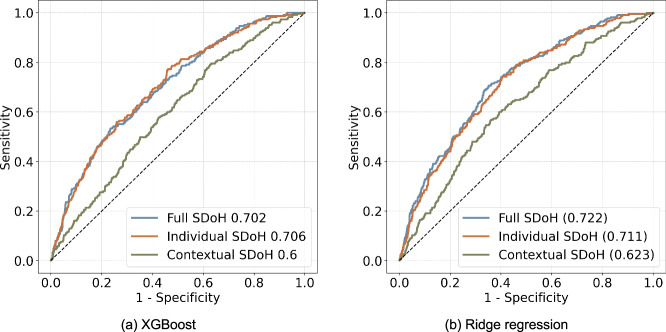
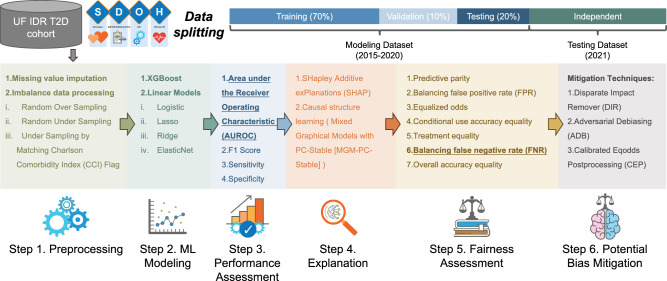
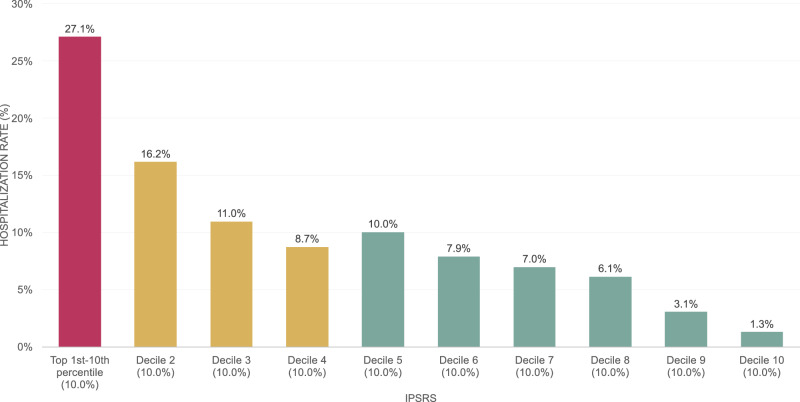
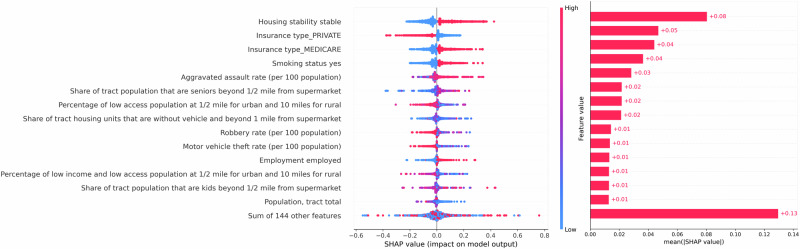
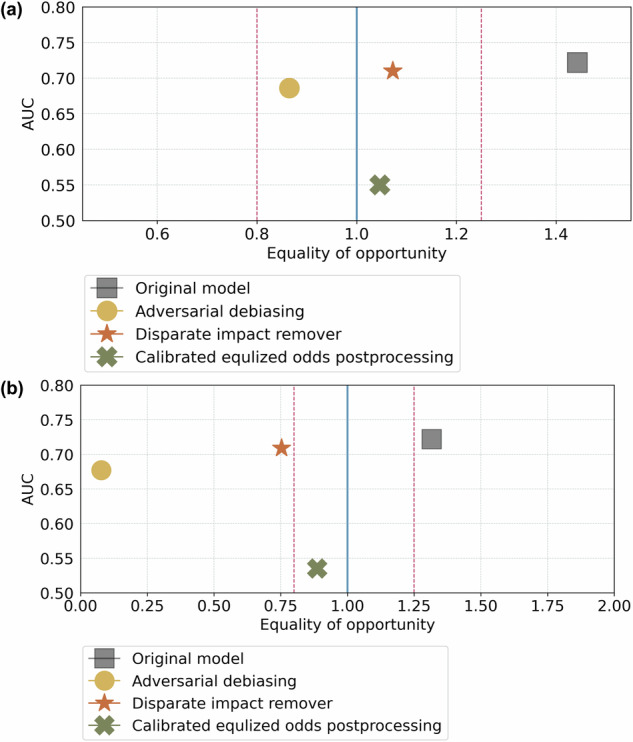
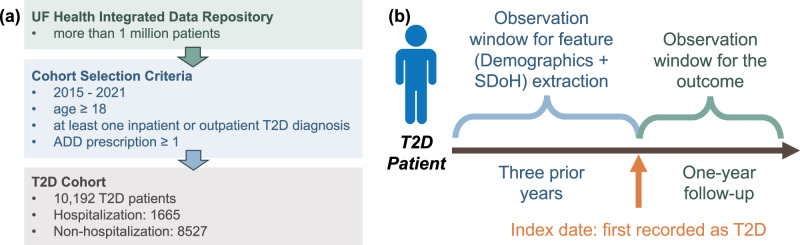
Racial and ethnic minorities bear a disproportionate burden of type 2 diabetes (T2D) and its complications, with social determinants of health (SDoH) recognized as key drivers of these disparities. Implementing efficient and effective social needs management strategies is crucial. We propose a machine learning analytic pipeline to calculate the individualized polysocial risk score (iPsRS), which can identify T2D patients at high social risk for hospitalization, incorporating explainable AI techniques and algorithmic fairness optimization. We use electronic health records (EHR) data from T2D patients in the University of Florida Health Integrated Data Repository, incorporating both contextual SDoH (e.g., neighborhood deprivation) and person-level SDoH (e.g., housing instability). After fairness optimization across racial and ethnic groups, the iPsRS achieved a C statistic of 0.71 in predicting 1-year hospitalization. Our iPsRS can fairly and accurately screen patients with T2D who are at increased social risk for hospitalization.
少数民族和族裔群体承受着不成比例的 2 型糖尿病(T2D)及其并发症负担,健康的社会决定因素(SDoH)被认为是造成这些差异的关键驱动因素。实施高效、有效的社会需求管理策略至关重要。我们提出了一种机器学习分析管道来计算个体化多社会风险评分(iPsRS),该评分可以识别出处于高社会住院风险的 T2D 患者,同时结合了可解释的人工智能技术和算法公平优化。我们使用了来自佛罗里达大学健康综合数据存储库的 T2D 患者的电子健康记录(EHR)数据,纳入了上下文 SDoH(例如,邻里贫困)和个体 SDoH(例如,住房不稳定)。在跨种族和族裔群体进行公平性优化后,iPsRS 在预测 1 年住院率方面的 C 统计量达到了 0.71。我们的 iPsRS 可以公平、准确地筛选出 T2D 患者中处于增加社会住院风险的患者。