Trinity College Dublin, Dublin, Ireland; Global Brain Health Institute, University of California San Francisco (UCSF), San Francisco, CA, USA; Global Brain Health Institute, Trinity College Dublin, Dublin, Ireland.
Latin American Brain Health Institute (BrainLat), Universidad Adolfo Ibanez, Santiago de Chile, Chile.
Lancet Healthy Longev. 2024 Oct;5(10):100616. doi: 10.1016/S2666-7568(24)00132-6. Epub 2024 Oct 3.
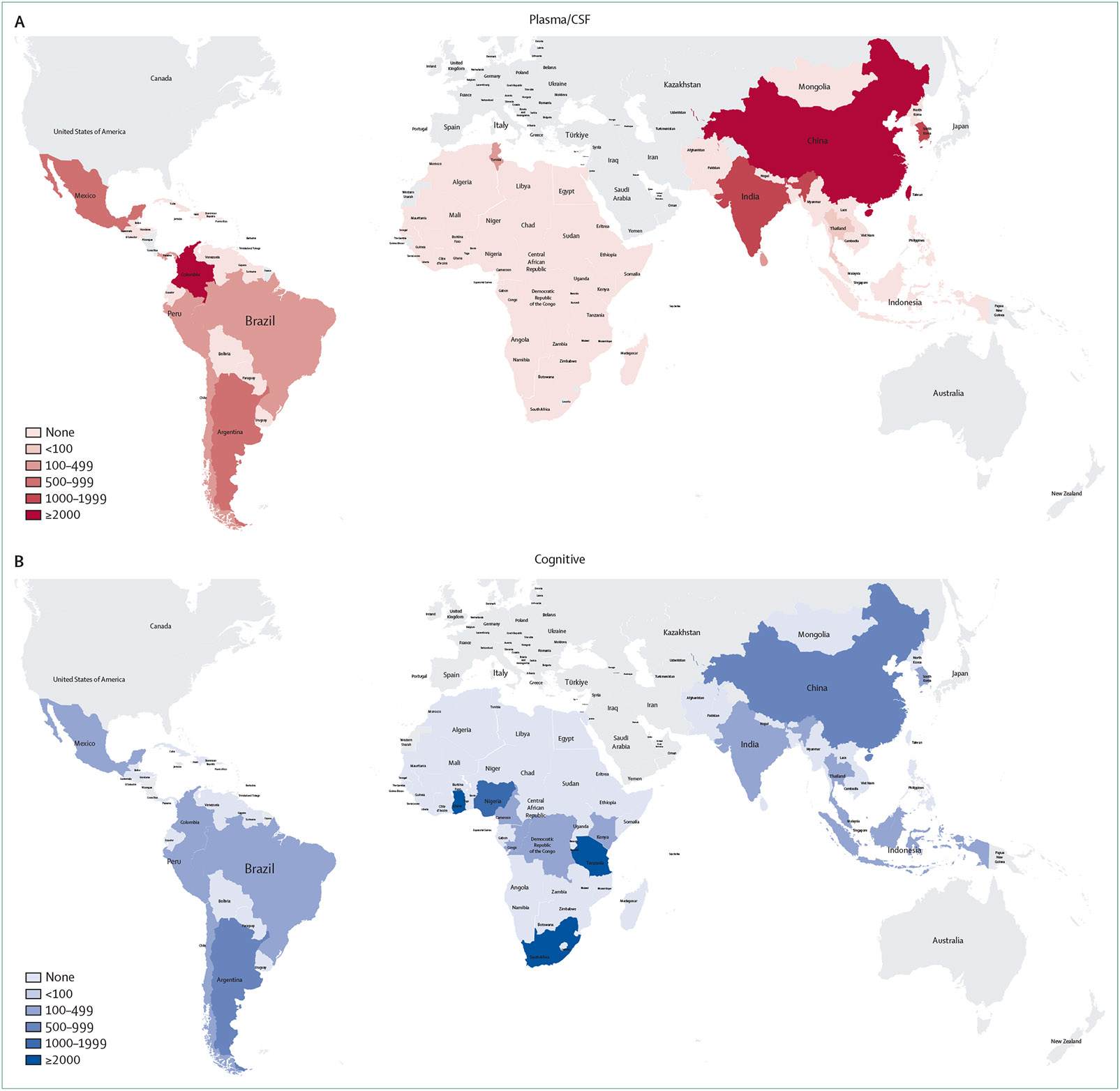
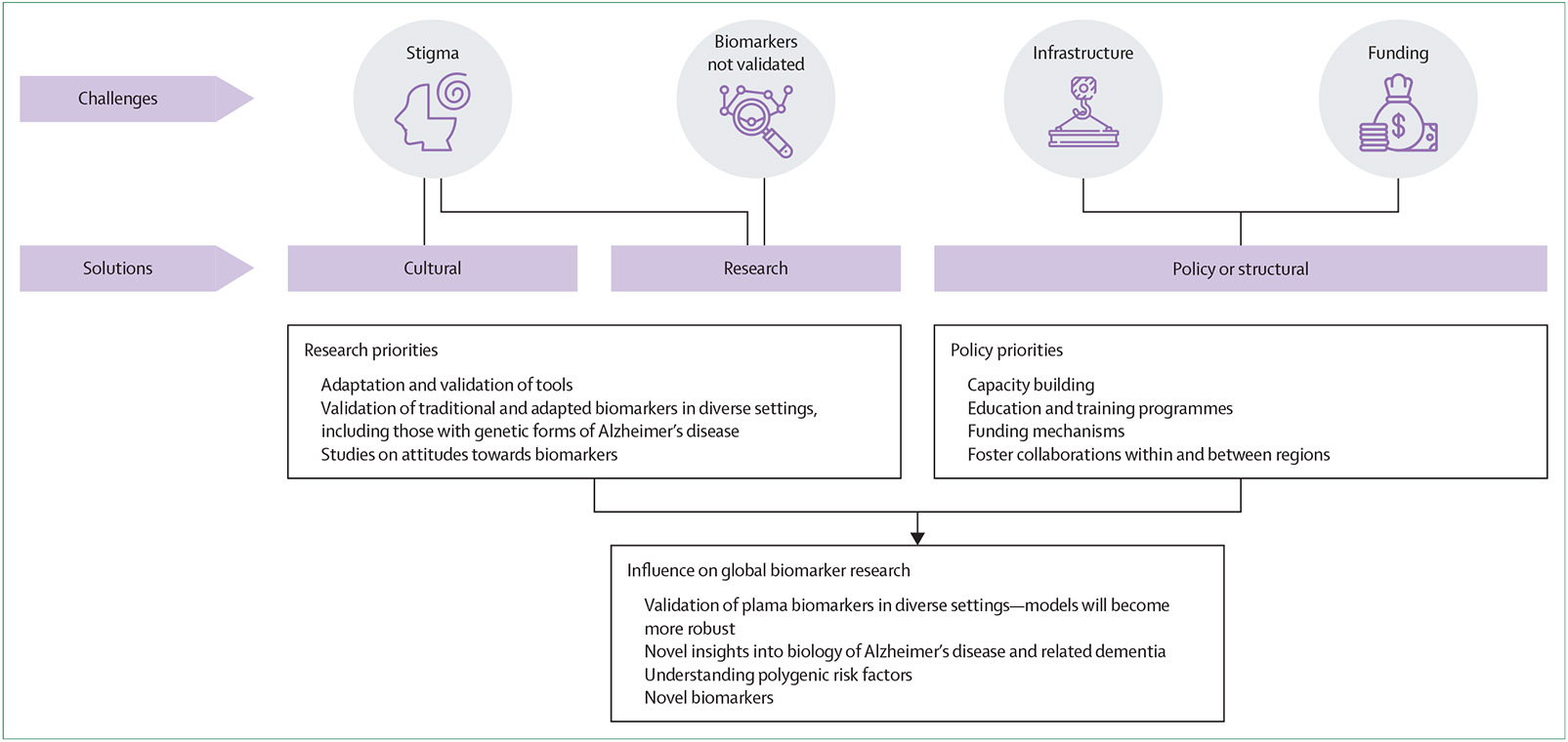
Research on neurodegenerative diseases has predominantly focused on high-income countries in the Global North. This Series paper describes the state of biomarker evidence for neurodegeneration in the Global South, including Latin America, Africa, and countries in south, east, and southeast Asia. Latin America shows growth in fluid biomarker and neuroimaging research, with notable advancements in genetics. Research in Africa focuses on genetics and cognition but there is a paucity of data on fluid and neuroimaging biomarkers. South and east Asia, particularly India and China, has achieved substantial progress in plasma, neuroimaging, and genetic studies. However, all three regions face several challenges in the form of a lack of harmonisation, insufficient funding, and few comparative studies both within the Global South, and between the Global North and Global South. Other barriers include scarce infrastructure, lack of knowledge centralisation, genetic and cultural diversity, sociocultural stigmas, and restricted access to tools such as PET scans. However, the diverse ethnic, genetic, economic, and cultural backgrounds in the Global South present unique opportunities for bidirectional learning, underscoring the need for global collaboration to enhance the understanding of dementia and brain health.
神经退行性疾病的研究主要集中在全球北方的高收入国家。本系列论文描述了全球南方(包括拉丁美洲、非洲以及南亚、东亚和东南亚国家)神经退行性变的生物标志物证据状况。拉丁美洲在液生物标志物和神经影像学研究方面显示出增长,遗传学方面取得了显著进展。非洲的研究侧重于遗传学和认知,但液生物标志物和神经影像学方面的数据匮乏。南亚和东亚,特别是印度和中国,在血浆、神经影像学和遗传研究方面取得了实质性进展。然而,所有三个地区都面临着一些挑战,包括缺乏协调、资金不足以及全球南方内部和全球北方与全球南方之间比较研究较少。其他障碍包括基础设施匮乏、知识集中程度低、遗传和文化多样性、社会文化耻辱以及获取 PET 扫描等工具受限。然而,全球南方多样化的种族、遗传、经济和文化背景为双向学习提供了独特的机会,强调需要全球合作来增强对痴呆症和大脑健康的理解。