Ghosh Anindita, Muley Arti, Bhat Sakshi, Ainapure Archana
Nutritional Sciences and Dietetics, Symbiosis Skills and Professional University, Pune, IND.
Nutrition and Dietetics, Symbiosis School of Culinary Arts, Pune, IND.
Cureus. 2024 Sep 5;16(9):e68730. doi: 10.7759/cureus.68730. eCollection 2024 Sep.
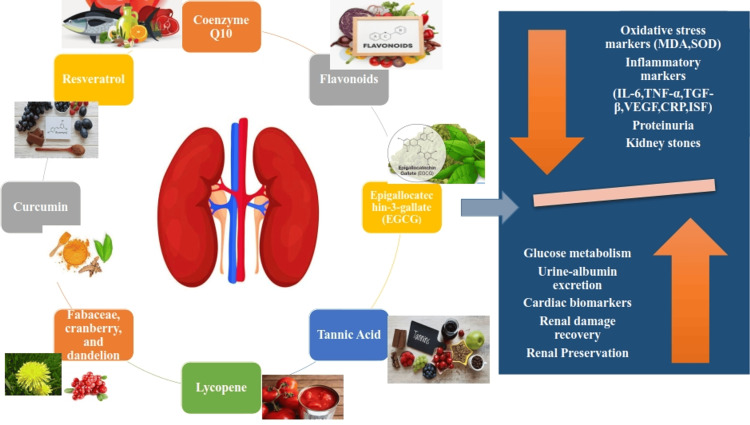
Chronic kidney disease (CKD) is a condition that is characterized by progressive loss of kidney function over time. A substantial increase in the burden of CKD is evident globally, attributed to multifactorial conditions like an expanding aging population, rising diabetes and hypertension rates, and more significant exposures to risk factors associated with the environment and lifestyle. Nutraceuticals are substances that are usually considered a food or an active part of a food that provides medical or health benefits, including the prevention and treatment of a disease. The aim is to review the positive role of nutraceuticals in managing CKD. A narrative review is generated, extracting the papers from databases like Web of Science, Scopus, ScienceDirect, ResearchGate, and PubMed. Animal and human trials focusing on the effect of different nutraceuticals on the initial stage of kidney disease, i.e., stages 1, 2, and 3 of CKD, were included. The review's outcome is understanding the effectiveness of nutraceuticals that have shown positive results in CKD conditions. Active compounds include ubiquinone, curcumin, nitrates, nitrites, lycopene, and resveratrol. These bioactive components are also beneficial for other comorbid conditions like diabetes, hypertension, and cardiovascular conditions that have an eminent adverse effect on CKD. Lycopene, coenzyme Q10 (CoQ10), resveratrol, curcumin, and flavonoids have positively impacted CKD complications. Nutraceuticals hold great promise for individuals with CKD in the coming years, offering diverse potential benefits. These include delivering vital antioxidant and anti-inflammatory support to alleviate oxidative stress and inflammation, helping to regulate blood pressure and lipid levels for improved cardiovascular health, promoting optimal renal function to sustain kidney health, assisting in maintaining electrolyte balance, warding off complications, influencing gut microbiota for enhanced digestive well-being, and ultimately elevating the overall quality of life, for those managing CKD.
慢性肾脏病(CKD)是一种随着时间推移肾功能逐渐丧失为特征的病症。全球范围内,CKD的负担显著增加,这归因于多种因素,如老龄化人口不断增加、糖尿病和高血压发病率上升,以及更多地暴露于与环境和生活方式相关的风险因素。营养保健品是通常被视为一种食物或食物的活性成分,具有医疗或健康益处,包括疾病的预防和治疗。目的是综述营养保健品在管理CKD方面的积极作用。通过叙述性综述,从科学网、Scopus、ScienceDirect、ResearchGate和PubMed等数据库中提取相关论文。纳入了关注不同营养保健品对肾脏病初期(即CKD 1、2和3期)影响的动物和人体试验。综述的结果是了解在CKD情况下已显示出积极效果的营养保健品的有效性。活性化合物包括泛醌、姜黄素、硝酸盐、亚硝酸盐、番茄红素和白藜芦醇。这些生物活性成分对其他合并症如糖尿病、高血压和心血管疾病也有益,而这些疾病对CKD有显著的不良影响。番茄红素、辅酶Q10(CoQ10)、白藜芦醇、姜黄素和类黄酮对CKD并发症有积极影响。未来几年,营养保健品对CKD患者具有巨大潜力,可带来多种潜在益处。这些益处包括提供重要的抗氧化和抗炎支持以减轻氧化应激和炎症,帮助调节血压和血脂水平以改善心血管健康,促进最佳肾功能以维持肾脏健康,协助维持电解质平衡,预防并发症,影响肠道微生物群以增强消化健康,最终提高CKD患者的整体生活质量。