Banerjee Dhrupad, Bhattacharya Arghya, Puri Abhijeet, Munde Shubham, Mukerjee Nobendu, Mohite Popat, Kazmi Syeda W, Sharma Abhishek, Alqahtani Taha, Shmrany Humood Al
Department of Microbiology, Ramakrishna Mission Vivekananda Centenary College, Rahara, Khardaha, West Bengal, India.
Department of Pharmacology, Bengal School of Technology (a college of pharmacy), Sugandha, West Bengal, India.
Int J Surg. 2024 Dec 1;110(12):7528-7545. doi: 10.1097/JS9.0000000000002111.
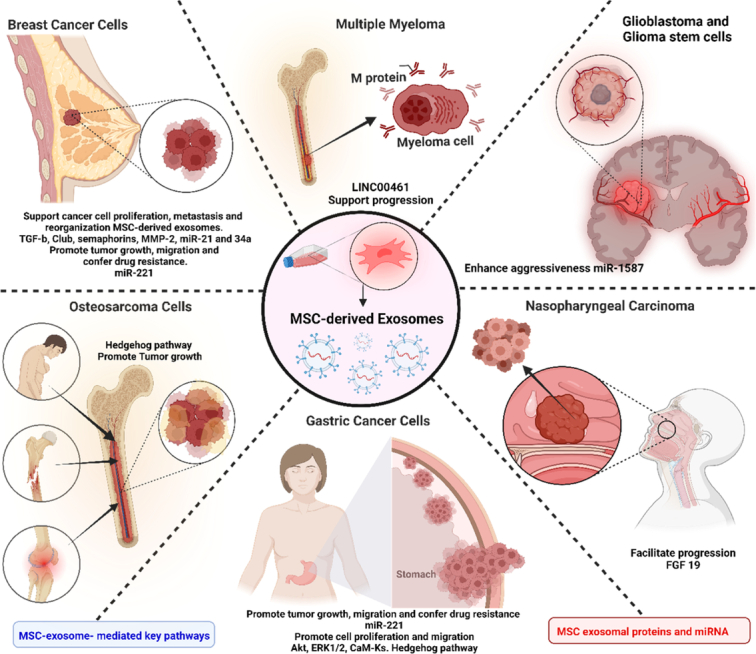
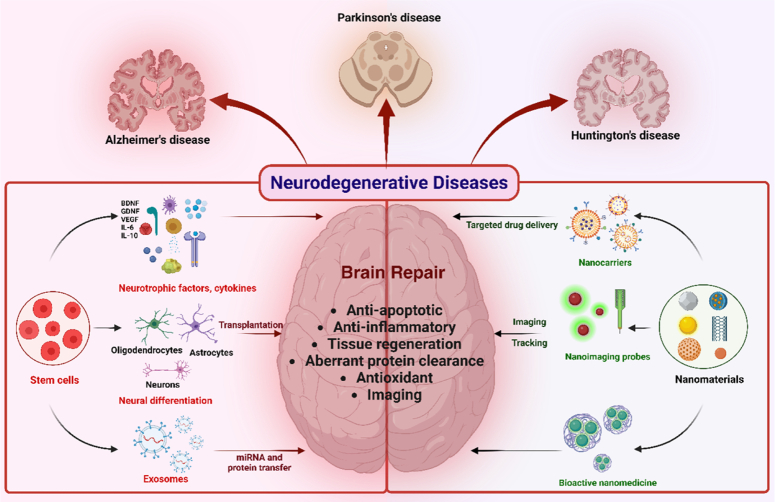
Stem cell therapy represents a transformative frontier in medical science, offering promising avenues for revolutionizing cancer treatment and advancing our understanding of neurobiology. This review explores innovative approaches in stem cell therapy that have the potential to reshape clinical practices and therapeutic outcomes in cancer and neurodegenerative diseases. In this dynamic and intriguing realm of cancer research, recent years witnessed a surge in attention toward understanding the intricate role of mesenchymal stem cells (MSCs). These cells, capable of either suppressing or promoting tumors across diverse experimental models, have been a focal point in the exploration of exosome-based therapies. Exosomes released by MSCs have played a pivotal role, in unraveling the nuances of paracrine signaling and its profound impact on cancer development. Recent studies have revealed the complex nature of MSC-derived exosomes, showcasing both protumor and antitumor effects. Despite their multifaceted involvement in tumor growth, these exosomes show significant promise in influencing both tumor development and chemosensitivity, acting as a pivotal factor that increases stem cells' potential for medicinal use. Endogenous MSCs, primarily originating from the bone marrow, exhibited a unique migratory response to damaged tissue sites. The genetic modification of stem cells, including MSCs, opened avenues for the precise delivery of therapeutic payloads in the milieu around the tumor (TME). Stem cell therapy offers groundbreaking potential for treating neurodegenerative and autoimmune disorders by regenerating damaged tissues and modulating immune responses. This approach aims to restore lost function and promote healing through targeted cellular interventions. In this review, we explored the molecular complexities of cancer and the potential for breakthroughs in personalized and targeted therapies. This analysis offers hope for transformative advancements in both cancer treatment and neurodegenerative disorders, highlighting the promise of precision medicine in addressing these challenging conditions.
干细胞疗法是医学科学中一个具有变革性的前沿领域,为革新癌症治疗方法和深化我们对神经生物学的理解提供了充满希望的途径。本综述探讨了干细胞疗法中的创新方法,这些方法有可能重塑癌症和神经退行性疾病的临床实践及治疗效果。在这个充满活力且引人入胜的癌症研究领域,近年来人们对了解间充质干细胞(MSCs)的复杂作用的关注度激增。这些细胞在各种实验模型中既能抑制肿瘤也能促进肿瘤生长,一直是基于外泌体疗法探索的焦点。间充质干细胞释放的外泌体在揭示旁分泌信号的细微差别及其对癌症发展的深远影响方面发挥了关键作用。最近的研究揭示了间充质干细胞衍生外泌体的复杂性质,展现出促肿瘤和抗肿瘤两种作用。尽管它们在肿瘤生长中有着多方面的参与,但这些外泌体在影响肿瘤发展和化疗敏感性方面显示出巨大潜力,是增加干细胞药用潜力的关键因素。内源性间充质干细胞主要源自骨髓,对受损组织部位表现出独特的迁移反应。包括间充质干细胞在内的干细胞基因改造为在肿瘤微环境(TME)周围精确递送治疗载荷开辟了道路。干细胞疗法通过再生受损组织和调节免疫反应,为治疗神经退行性疾病和自身免疫性疾病提供了开创性的潜力。这种方法旨在通过有针对性的细胞干预来恢复丧失的功能并促进愈合。在本综述中,我们探讨了癌症的分子复杂性以及个性化和靶向治疗取得突破的潜力。这一分析为癌症治疗和神经退行性疾病的变革性进展带来了希望,突出了精准医学在应对这些具有挑战性病症方面的前景。