Department of Anesthesiology/Critical Care Medicine, Shengli Clinical Medical College of Fujian Medical University, Fujian Provincial Key Laboratory of Critical Care Medicine, Fujian Provincial Hospital, Fuzhou University Affiliated Provincial Hospital, Fuzhou, Fujian, China.
Department of Anesthesiology/Critical Care Medicine, Shengli Clinical Medical College of Fujian Medical University, Fujian Provincial Key Laboratory of Critical Care Medicine, Fujian Provincial Hospital, Fuzhou University Affiliated Provincial Hospital, Fuzhou, Fujian, China.
Redox Biol. 2024 Nov;77:103387. doi: 10.1016/j.redox.2024.103387. Epub 2024 Oct 3.
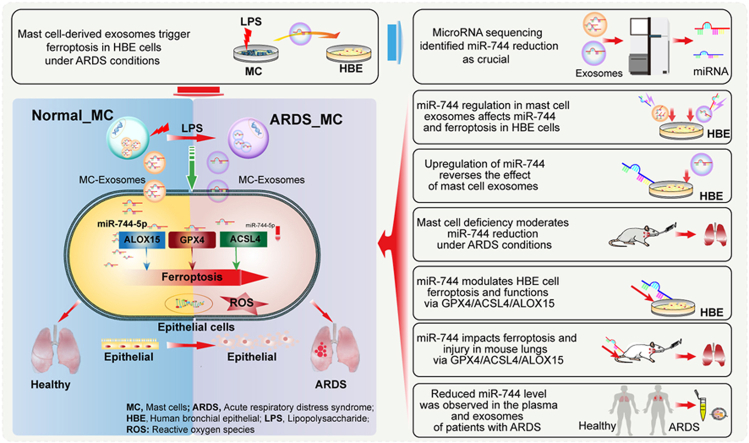
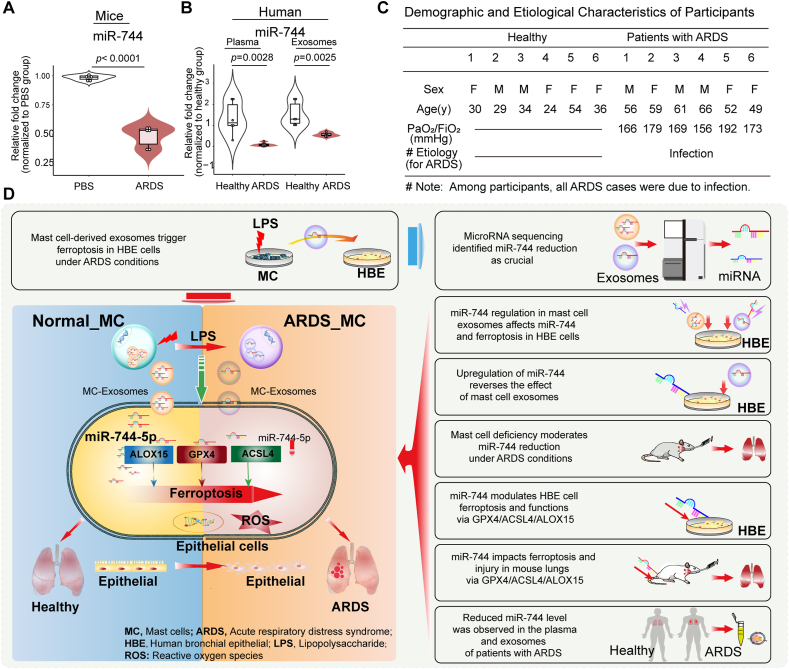
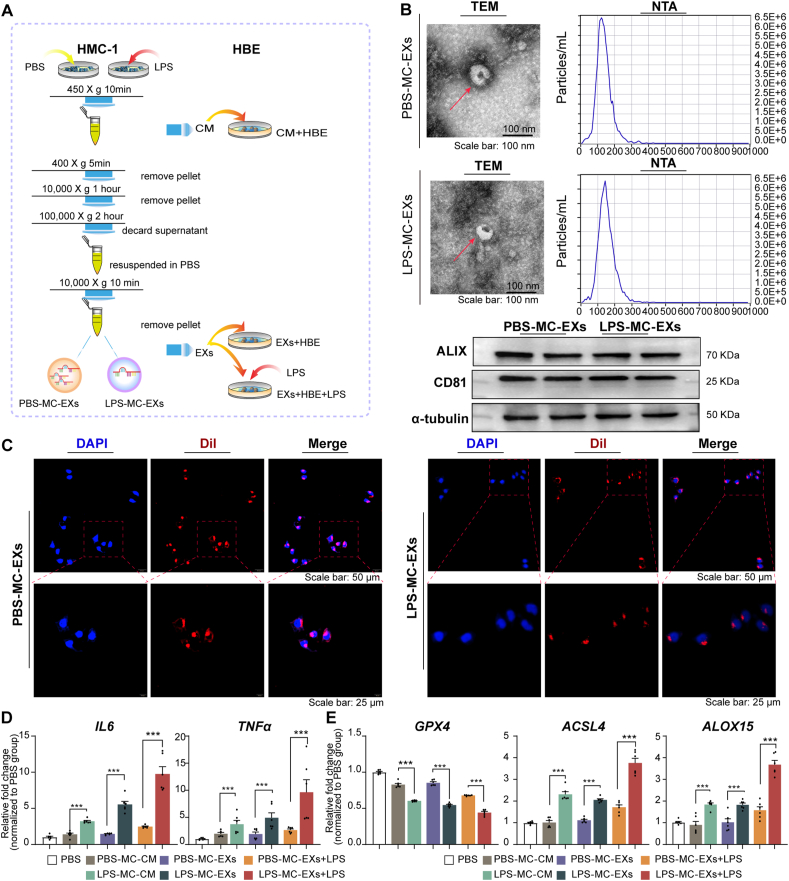
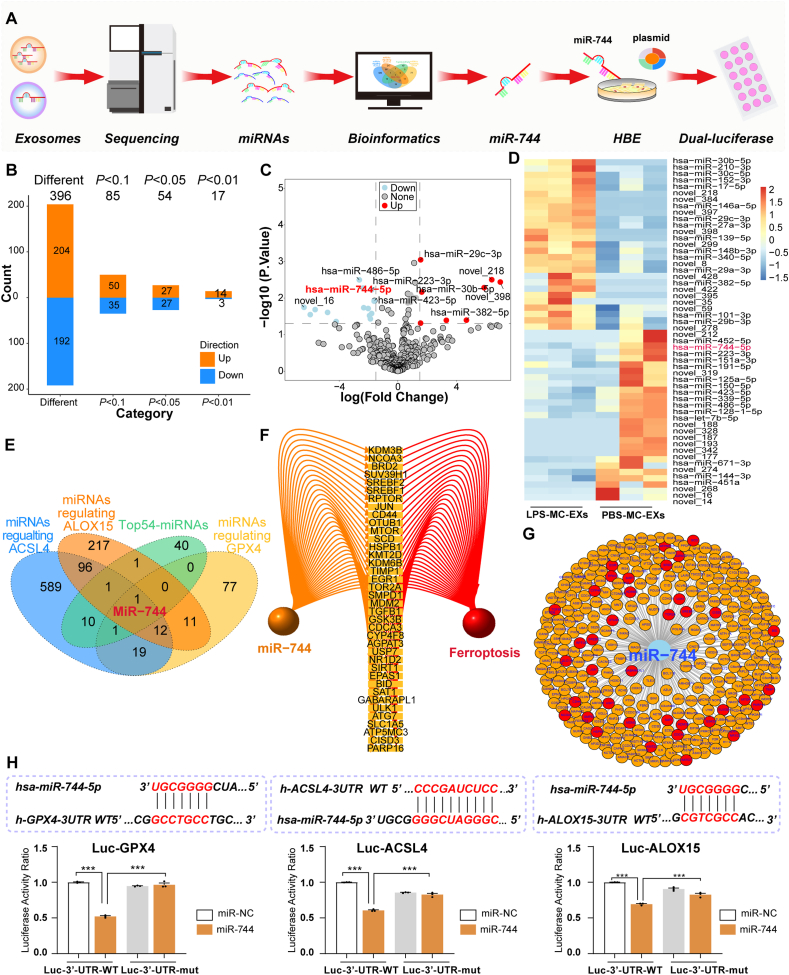
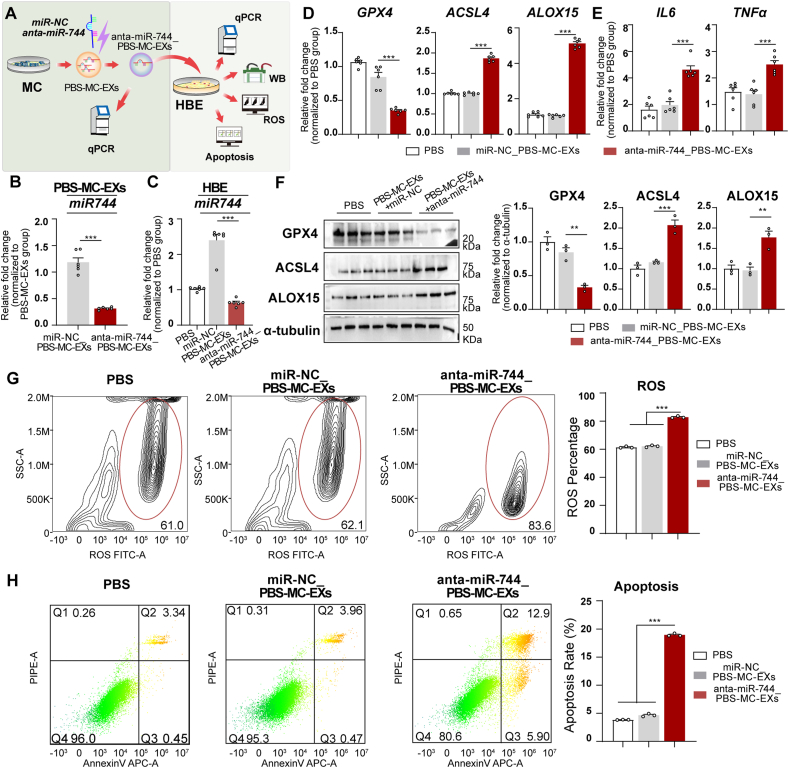
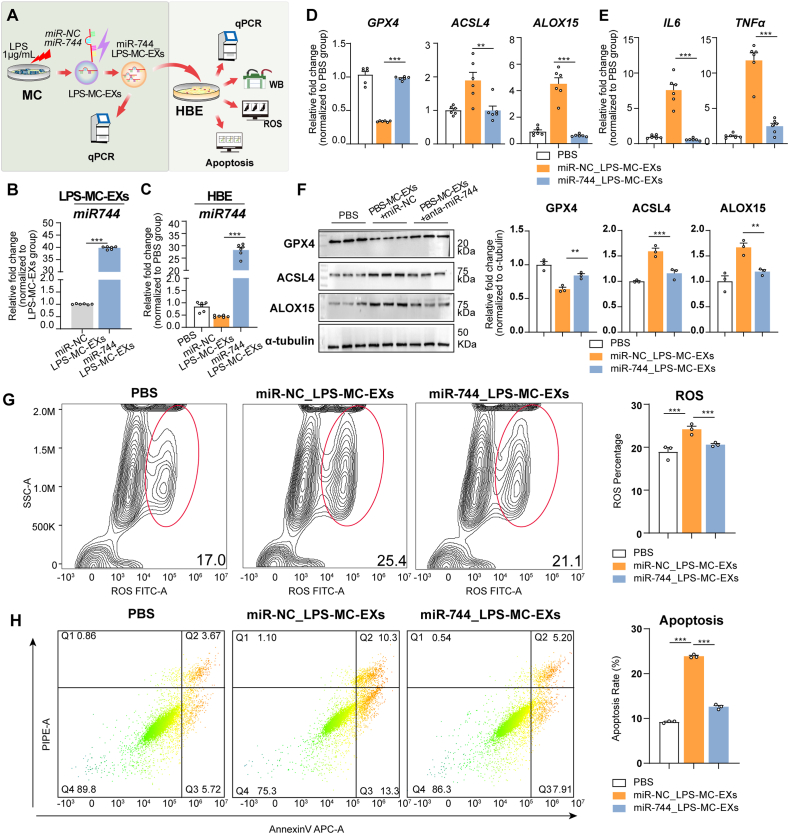
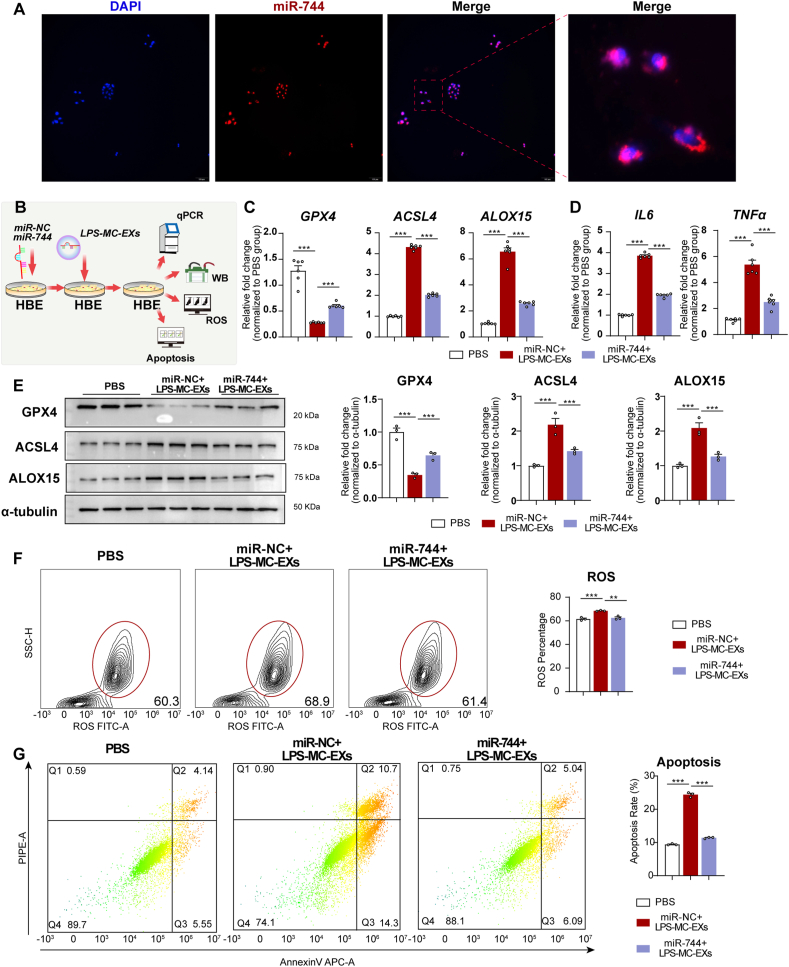
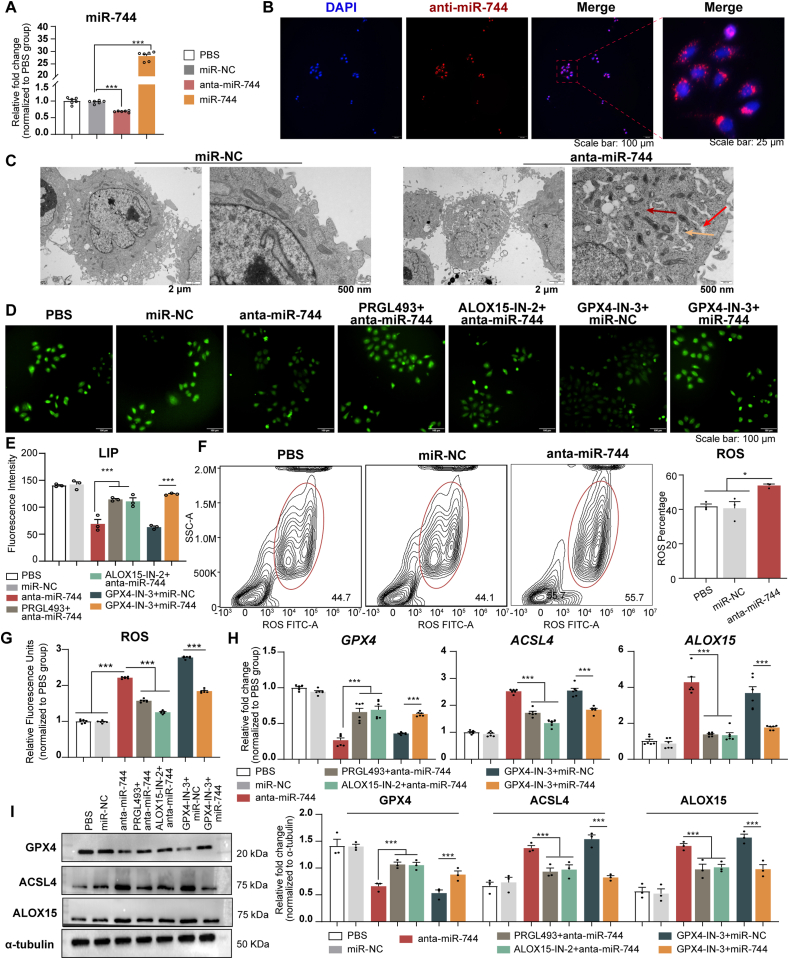
Acute respiratory distress syndrome (ARDS) is a critical disorder characterized by immune-related damage to epithelial cells; however, its underlying mechanism remains elusive. This study investigated the effects of alterations in microRNA (miRNA) expression in mast cell-derived exosomes on human bronchial epithelial (HBE) cells and ARDS development in cellular and mouse models challenged with lipopolysaccharide. Lipopolysaccharide-treated mast cell-derived exosomes reduced glutathione peroxidase 4 (GPX4) expression and increased long-chain acyl-CoA synthetase 4 (ACSL4), 15-lipoxygenase (ALOX15), and inflammatory mediator levels in HBE cells. miRNA sequencing revealed a reduction in mast cell-derived exosomal miR-744 levels, which was associated with the regulation of ACSL4, ALOX15, and GPX4 expression. This downregulation of exosomal miR-744 expression reduced miR-744 levels and promoted ferroptosis in HBE cells, whereas the experimental upregulation of miR-744 reversed these adverse effects. Down-regulation of miR-744 induced the expression of markers for ferroptosis and inflammation in HBE cells and promoted pulmonary ferroptosis, inflammation, and injury in LPS-stimulated mice. In vivo, treatment with ACSL4, ALOX15, and GPX4 inhibitors mitigated these effects, and experimental miR-744 expression rescued the lipopolysaccharide-induced changes in HBE cells and mouse lungs. Notably, miR-744 levels were reduced in the plasma and exosomes of patients with ARDS. We concluded that decreased mast cell-derived exosomal miR-744 levels trigger epithelial cell ferroptosis, promoting lung inflammation and damage in ARDS. This study provides new mechanistic insights into the development and sustained pulmonary damage associated with ARDS and highlights potential therapeutic strategies.
急性呼吸窘迫综合征 (ARDS) 是一种以上皮细胞免疫相关损伤为特征的危急病症,但具体发病机制尚未完全阐明。本研究旨在探讨肥大细胞来源的细胞外囊泡中 miRNA(miRNA)表达变化对脂多糖刺激的人支气管上皮(HBE)细胞和 ARDS 发展的影响,以及在细胞和小鼠模型中的作用。结果表明,脂多糖处理后的肥大细胞来源的细胞外囊泡降低了谷胱甘肽过氧化物酶 4(GPX4)的表达,增加了长链酰基辅酶 A 合成酶 4(ACSL4)、15-脂氧合酶(ALOX15)和炎症介质的水平。miRNA 测序显示,肥大细胞来源的细胞外囊泡中 miR-744 的水平降低,与 ACSL4、ALOX15 和 GPX4 的表达调控有关。这种下调导致 HBE 细胞中 miR-744 水平降低和铁死亡增加,而实验上调 miR-744 则逆转了这些不利影响。miR-744 的下调诱导了 HBE 细胞中铁死亡和炎症的标志物表达,并促进了 LPS 刺激的小鼠肺部铁死亡、炎症和损伤。在体内,ACSL4、ALOX15 和 GPX4 抑制剂的治疗减轻了这些作用,而实验性 miR-744 表达则挽救了 LPS 诱导的 HBE 细胞和小鼠肺部的变化。值得注意的是,ARDS 患者的血浆和细胞外囊泡中 miR-744 的水平降低。综上所述,肥大细胞来源的细胞外囊泡中 miR-744 水平的降低引发上皮细胞铁死亡,促进 ARDS 中的肺部炎症和损伤。本研究为 ARDS 相关的发病机制和持续肺损伤提供了新的见解,并强调了潜在的治疗策略。