Mental Health Center and Psychiatric Laboratory, the State Key Laboratory of Biotherapy, West China Hospital of Sichuan University, 610041, Chengdu, People's Republic of China.
Huaxi Brain Research Center, West China Hospital of Sichuan University, 610041, Chengdu, People's Republic of China.
BMC Med. 2024 Oct 8;22(1):431. doi: 10.1186/s12916-024-03657-9.
Individuals who have experienced severe traumatic events are estimated to have a post-traumatic stress disorder (PTSD) prevalence rate ranging from 10 to 50%, while those not affected by trauma exposure are often considered to possess psychological resilience. However, the neural mechanisms underlying the development of PTSD, especially resilience after trauma, remain unclear. This study aims to investigate changes of cortical morphometric similarity network (MSN) in PTSD and trauma-exposed healthy individuals (TEHI), as well as the associated molecular alterations in gene expression, providing potential targets for the prevention and intervention of PTSD.
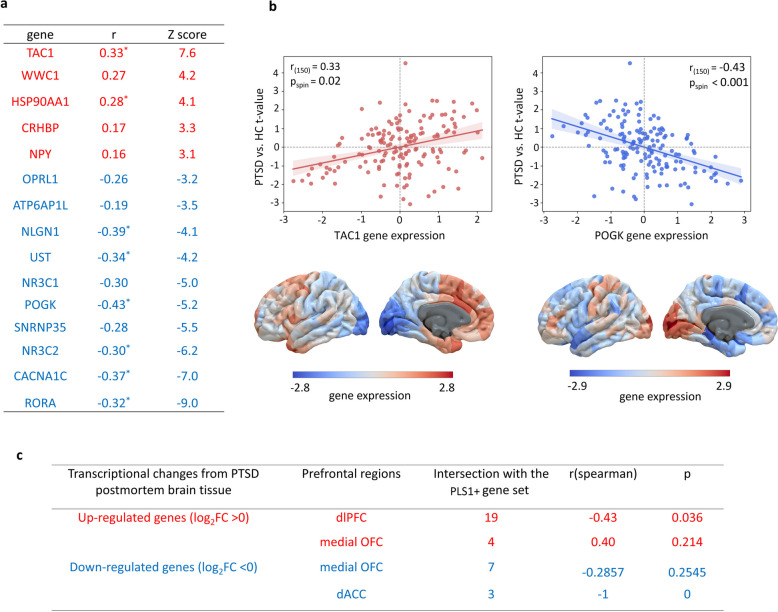
We recruited PTSD patients and TEHI who had experienced severe earthquakes, and healthy controls who had not experienced earthquakes. We identified alterations in the whole-brain MSN changes in PTSD and TEHI, and established associations between these changes and brain-wide gene expression patterns from the Allen Human Brain Atlas microarray dataset using partial least squares regression.
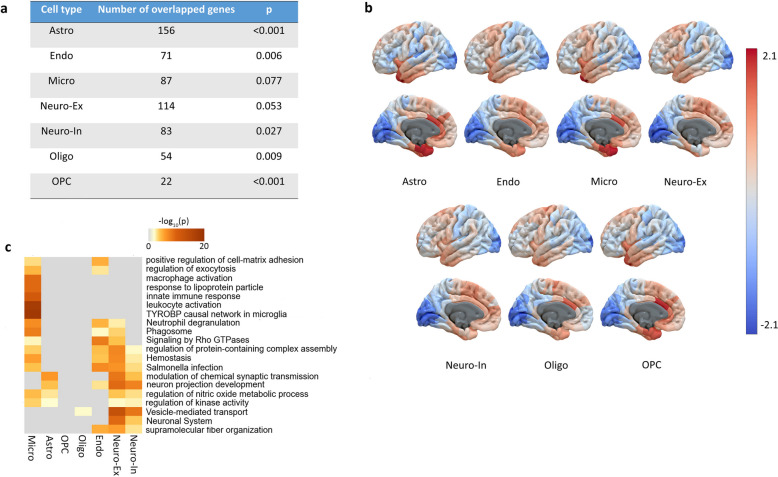
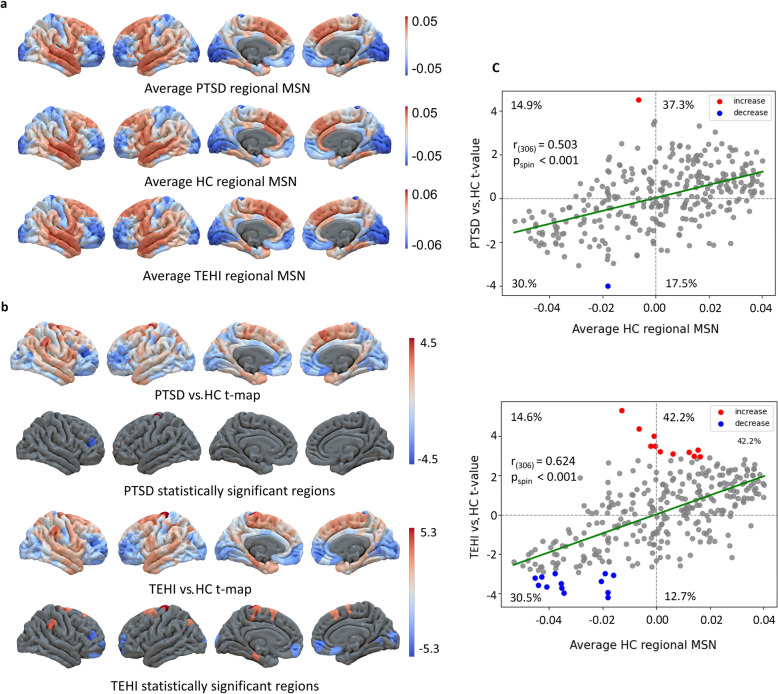
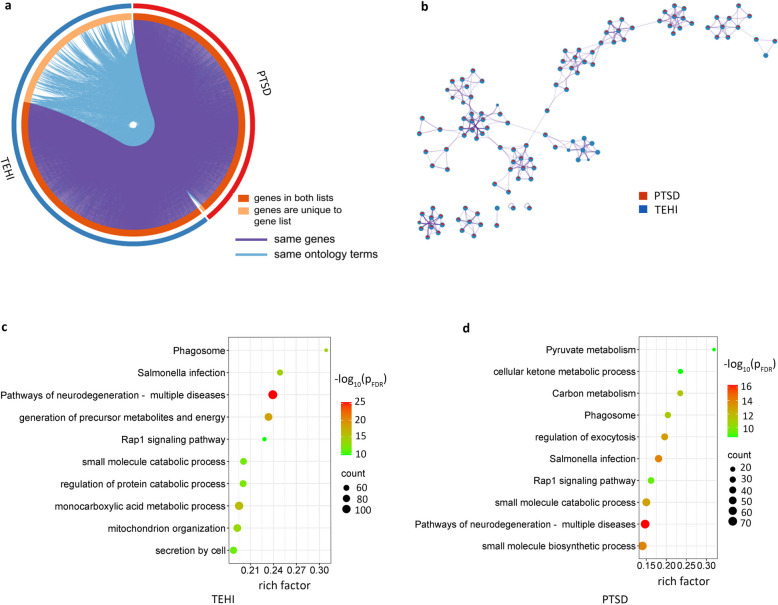
At the neuroimaging level, we found not only trauma-susceptible changes in TEHI same as those in PTSD, but also unique neurobiological alterations to counteract the deleterious impact of severe trauma. We identified 1444 and 2214 genes transcriptionally related to MSN changes in PTSD and TEHI, respectively. Functional enrichment analysis of weighted gene expression for PTSD and TEHI revealed distinct enrichments in Gene Ontology biological processes and Kyoto Encyclopedia of Genes and Genomes pathways. Furthermore, gene expression profiles of astrocytes, excitatory neurons, and microglial cells are highly related to MSN abnormalities in PTSD.
The formation of resilience may be by an active compensatory process of the brain. The combination of macroscopic neuroimaging changes and microscopic human brain transcriptomics could offer a more direct and in-depth understanding of the pathogenesis of PTSD and psychological resilience, shedding light on new targets for the prevention and treatment of PTSD.
经历过严重创伤事件的个体,其创伤后应激障碍(PTSD)患病率估计在 10%到 50%之间,而未受创伤暴露影响的个体通常被认为具有心理弹性。然而,PTSD 的发展的神经机制,特别是创伤后的韧性,仍然不清楚。本研究旨在探讨 PTSD 和创伤暴露健康个体(TEHI)的皮质形态相似网络(MSN)变化,以及基因表达相关的分子改变,为 PTSD 的预防和干预提供潜在靶点。
我们招募了经历过强烈地震的 PTSD 患者和 TEHI,以及没有经历过地震的健康对照者。我们确定了 PTSD 和 TEHI 全脑 MSN 变化的改变,并使用偏最小二乘回归,将这些改变与 Allen 人类大脑图谱微阵列数据集的全脑基因表达模式建立关联。
在神经影像学水平,我们不仅发现了 TEHI 中与 PTSD 相同的创伤易感变化,还发现了独特的神经生物学改变,以抵消严重创伤的有害影响。我们分别确定了与 PTSD 和 TEHI 中 MSN 变化相关的 1444 个和 2214 个转录基因。对 PTSD 和 TEHI 的加权基因表达进行功能富集分析,揭示了基因本体生物学过程和京都基因与基因组百科全书途径的不同富集。此外,PTSD 中 MSN 异常与星形胶质细胞、兴奋性神经元和小胶质细胞的基因表达谱高度相关。
韧性的形成可能是大脑积极补偿的过程。宏观神经影像学改变与微观人类大脑转录组学的结合,可以提供对 PTSD 发病机制和心理弹性的更直接、更深入的理解,为 PTSD 的预防和治疗提供新的靶点。