The Shmunis School of Biomedicine and Cancer Research, George S. Wise Faculty of Life Sciences, Tel-Aviv University, Tel-Aviv, Israel.
Nature. 2024 Nov;635(8037):186-192. doi: 10.1038/s41586-024-07994-w. Epub 2024 Oct 9.
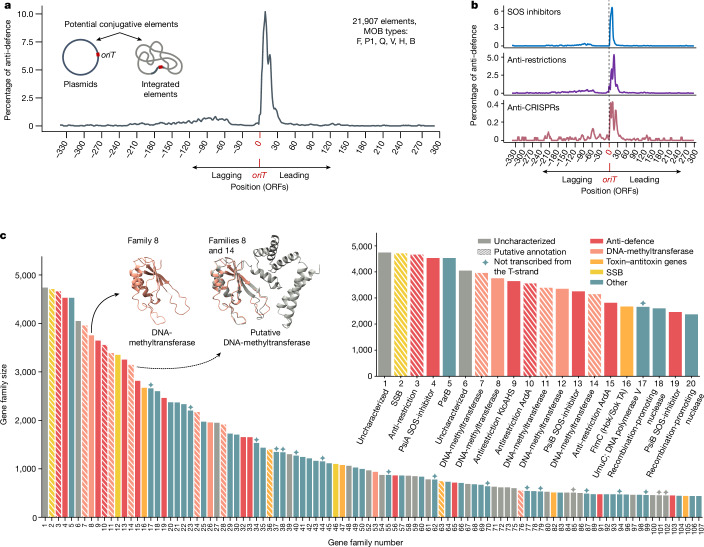
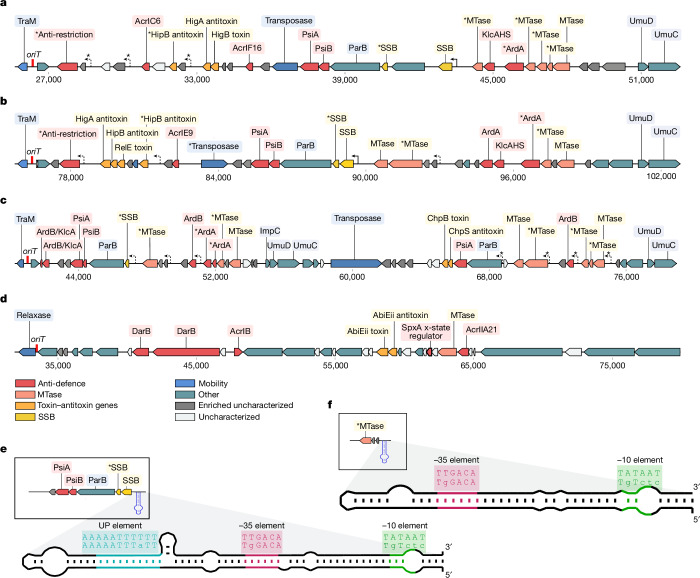
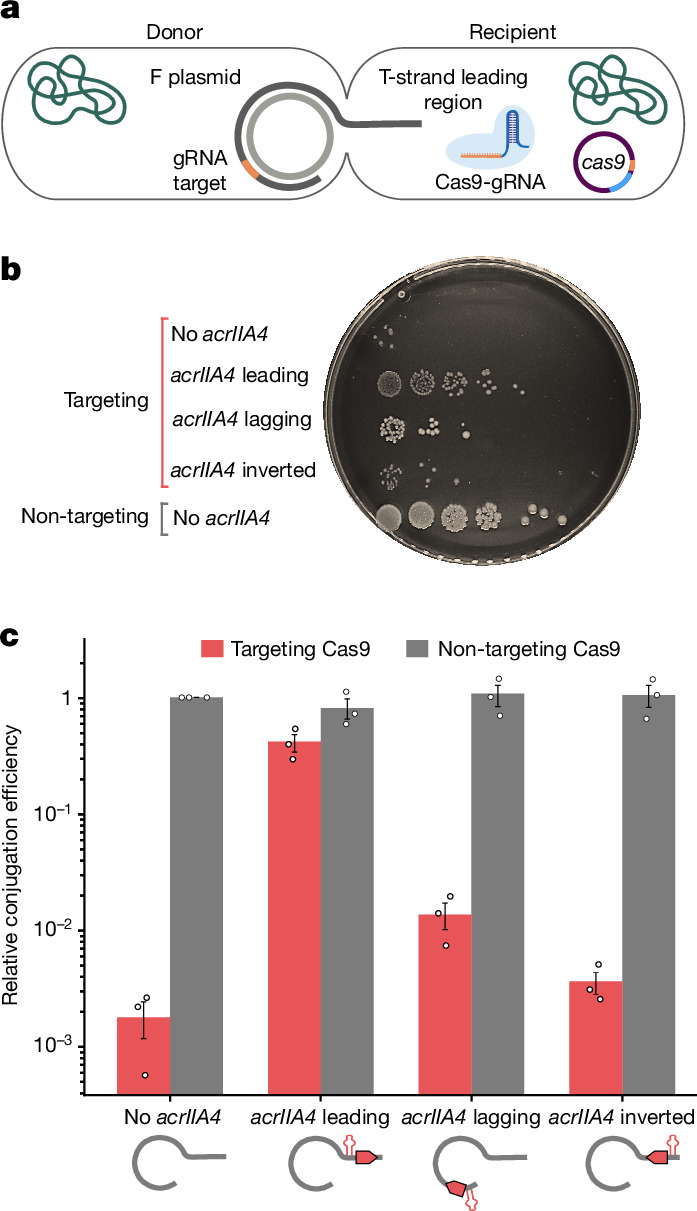
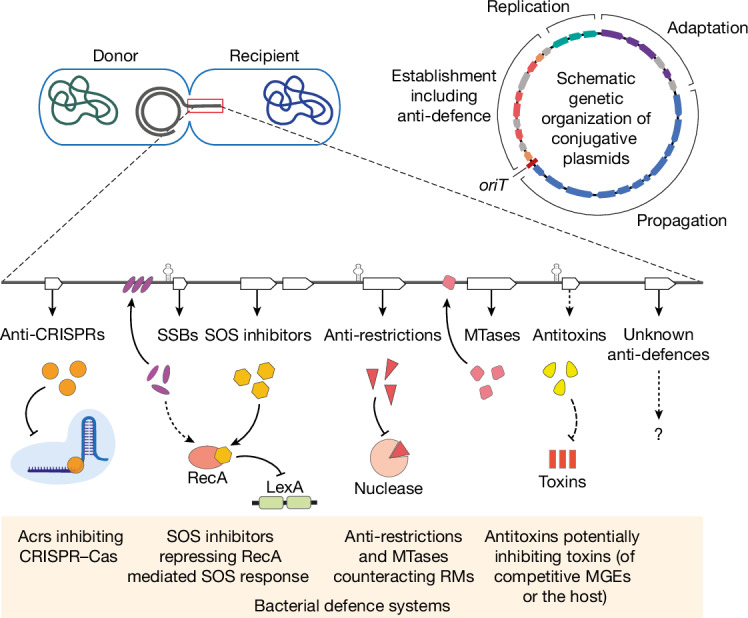
Plasmids are major drivers of gene mobilization by means of horizontal gene transfer and play a key role in spreading antimicrobial resistance among pathogens. Despite various bacterial defence mechanisms such as CRISPR-Cas, restriction-modification systems and SOS-response genes that prevent the invasion of mobile genetic elements, plasmids robustly transfer within bacterial populations through conjugation. Here we show that the leading region of plasmids, the first to enter recipient cells, is a hotspot for an extensive repertoire of anti-defence systems, encoding anti-CRISPR, anti-restriction, anti-SOS and other counter-defence proteins. We further identified in the leading region a prevalence of promoters known to allow expression from single-stranded DNA, potentially facilitating rapid protection against bacterial immunity during the early stages of plasmid establishment. We demonstrated experimentally the importance of anti-defence gene localization in the leading region for efficient conjugation. These results indicate that focusing on the leading region of plasmids could lead to the discovery of diverse anti-defence genes. Combined, our findings show a new facet of plasmid dissemination and provide theoretical foundations for developing efficient conjugative delivery systems for natural microbial communities.
质粒是通过水平基因转移驱动基因移动的主要因素,在病原体中传播抗生素耐药性方面发挥着关键作用。尽管存在各种细菌防御机制,如 CRISPR-Cas、限制修饰系统和 SOS 反应基因,以防止移动遗传元件的入侵,但质粒通过接合在细菌群体中稳健地转移。在这里,我们表明质粒的先导区(首先进入受体细胞的区域)是广泛的抗防御系统的热点,这些系统编码抗 CRISPR、抗限制、抗 SOS 和其他反防御蛋白。我们进一步在先导区中鉴定出了已知允许单链 DNA 表达的启动子的流行,这可能有助于在质粒建立的早期阶段快速保护免受细菌免疫。我们通过实验证明了抗防御基因在先导区中的定位对于有效接合的重要性。这些结果表明,关注质粒的先导区可能会发现更多的抗防御基因。总之,我们的研究结果表明了质粒传播的一个新方面,并为开发自然微生物群落的有效接合传递系统提供了理论基础。