Davis Timothy M E, Davis Wendy A, Bringans Scott D, Lui James K C, Lumbantobing Tasha S C, Peters Kirsten E, Lipscombe Richard J
Medical School, University of Western Australia, Fremantle Hospital, PO Box 480, WA, 6959, Fremantle, Australia.
Department of Endocrinology and Diabetes, Fiona Stanley and Fremantle Hospitals, Murdoch, WA, Australia.
Clin Diabetes Endocrinol. 2024 Oct 10;10(1):30. doi: 10.1186/s40842-024-00191-8.
There are scant data relating to prognostic biomarkers for chronic kidney disease (CKD) complicating type 1 diabetes. The aim of this study was to assess the performance of the plasma protein biomarker-based PromarkerD test developed and validated for predicting renal decline in type 2 diabetes in the context of type 1 diabetes.
The baseline PromarkerD test score was determined in 91 community-based individuals (mean age 46.2 years, 56.5% males) with confirmed type 1 diabetes recruited to the longitudinal observational Fremantle Diabetes Study Phase II. The performance of the PromarkerD test in predicting the risk of incident CKD (estimated glomerular filtration rate (eGFR) < 60 mL/min/1.73m in people without CKD at baseline) or an eGFR decline of ≥ 30% over the next four years was determined. The score can range from 0 to 100%, and is categorized as representing low (< 10%), moderate (10% to < 20%) or high (≥ 20%) risk.
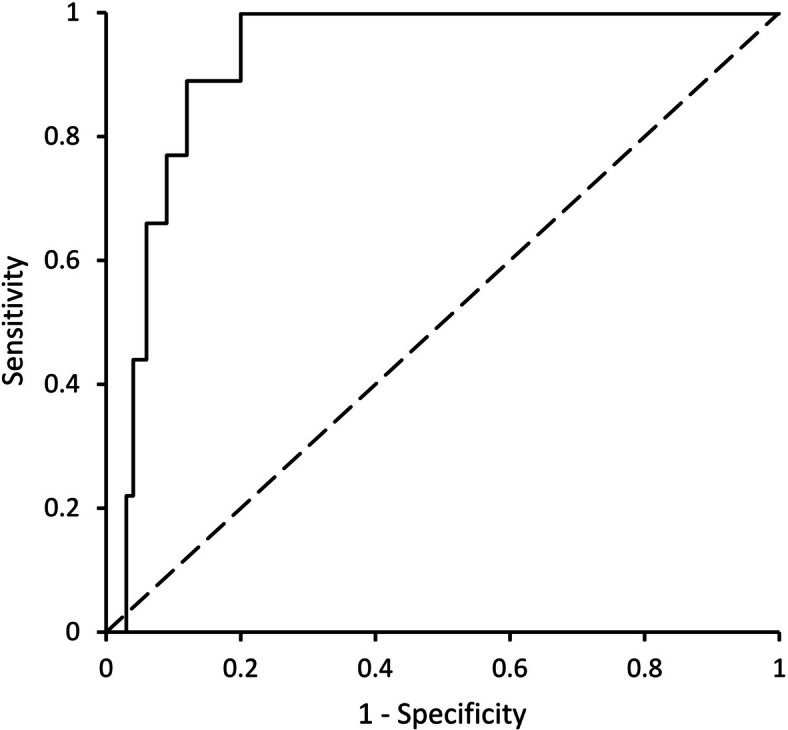
The area under the receiver operating characteristic curve was 0.93 (95% confidence interval 0.87-0.99) for the composite renal endpoint, indicating strong predictive accuracy. The positive and negative predictive values at moderate (10% to < 20%) and high (≥ 20%) risk PromarkerD cut-offs were 46.7-50.0% and ≥ 92.0%, respectively.
These preliminary data suggest that PromarkerD is at least as good a prognostic test for renal decline in type 1 as type 2 diabetes.
关于1型糖尿病合并慢性肾脏病(CKD)的预后生物标志物的数据很少。本研究的目的是评估基于血浆蛋白生物标志物开发并经验证可预测2型糖尿病肾脏功能下降的PromarkerD检测在1型糖尿病背景下的性能。
在纵向观察性弗里曼特尔糖尿病研究二期中招募了91名确诊为1型糖尿病的社区个体(平均年龄46.2岁,男性占56.5%),测定其基线PromarkerD检测分数。确定PromarkerD检测在预测新发CKD风险(基线时无CKD者估计肾小球滤过率(eGFR)<60 mL/min/1.73m²)或未来四年内eGFR下降≥30%方面的性能。该分数范围为0至100%,分为低风险(<10%)、中度风险(10%至<20%)或高风险(≥20%)。
复合肾脏终点的受试者工作特征曲线下面积为0.93(95%置信区间0.87 - 0.99),表明预测准确性强。中度风险(10%至<20%)和高风险(≥20%)的PromarkerD临界值下的阳性和阴性预测值分别为46.7 - 50.0%和≥92.0%。
这些初步数据表明,PromarkerD对1型糖尿病肾脏功能下降的预后检测至少与2型糖尿病一样好。