Nephrologist, Colombian Association of Nephrology, Bogota 110221, Colombia.
Faculty of Medicine, Universidad Simón Bolívar, Barranquilla 080002, Colombia.
Biomolecules. 2023 Mar 31;13(4):633. doi: 10.3390/biom13040633.
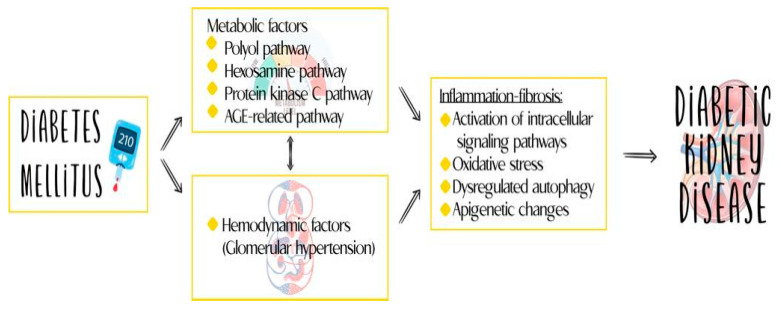
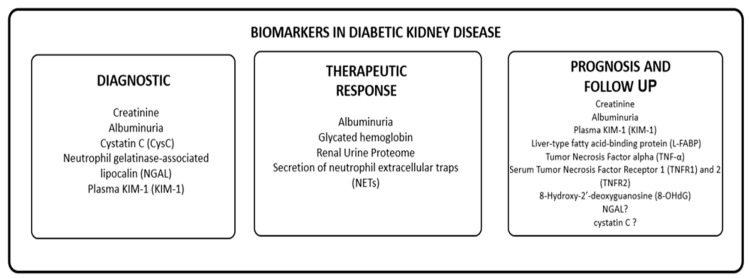
Diabetic kidney disease (DKD) is a highly prevalent condition worldwide. It represents one of the most common complications arising from diabetes mellitus (DM) and is the leading cause of end-stage kidney disease (ESKD). Its development involves three fundamental components: the hemodynamic, metabolic, and inflammatory axes. Clinically, persistent albuminuria in association with a progressive decline in glomerular filtration rate (GFR) defines this disease. However, as these alterations are not specific to DKD, there is a need to discuss novel biomarkers arising from its pathogenesis which may aid in the diagnosis, follow-up, therapeutic response, and prognosis of the disease.
糖尿病肾病(DKD)是一种在全球范围内普遍存在的疾病。它是糖尿病(DM)最常见的并发症之一,也是终末期肾病(ESKD)的主要原因。其发展涉及三个基本组成部分:血流动力学、代谢和炎症轴。临床上,持续性白蛋白尿伴肾小球滤过率(GFR)进行性下降定义了这种疾病。然而,由于这些改变并非 DKD 所特有,因此需要讨论其发病机制中出现的新型生物标志物,这些标志物可能有助于疾病的诊断、随访、治疗反应和预后。