Nakagawa Rachel, Beardsley Andrew, Durney Sophia, Hayward Mary-Kate, Subramanyam Vishvak, Meyer Nathaniel P, Wismer Harrison, Goodarzi Hani, Weaver Valerie M, Van de Mark Daniel, Goga Andrei
Department of Cell & Tissue Biology, University of California, San Francisco, CA, USA.
Department Of Medicine, University of California, San Francisco, San Francisco, CA, USA.
bioRxiv. 2025 Jan 31:2024.09.26.615226. doi: 10.1101/2024.09.26.615226.
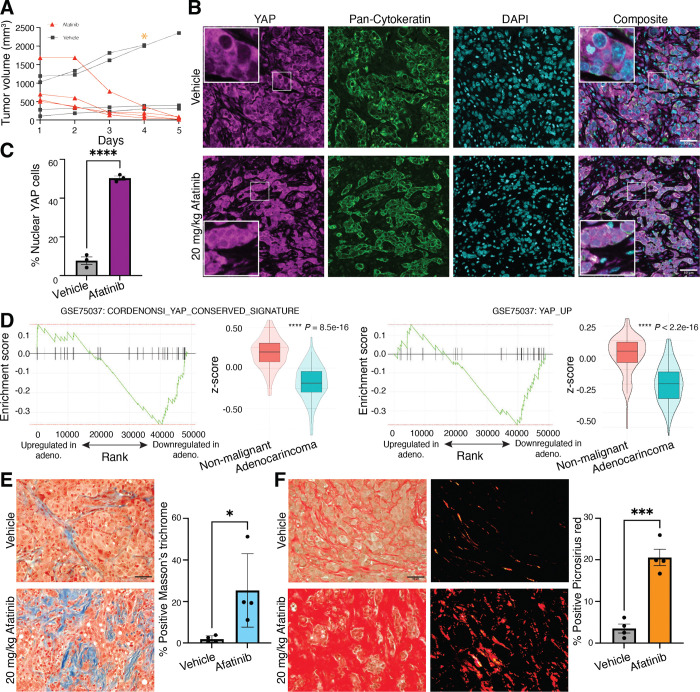
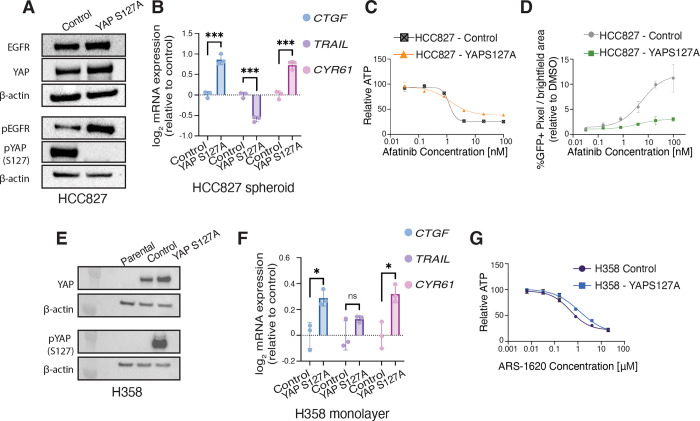
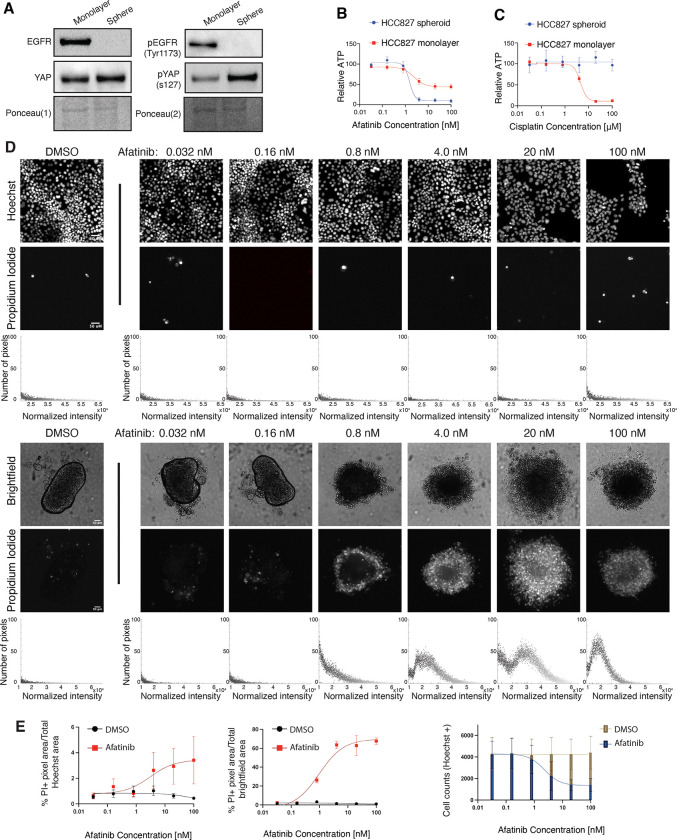
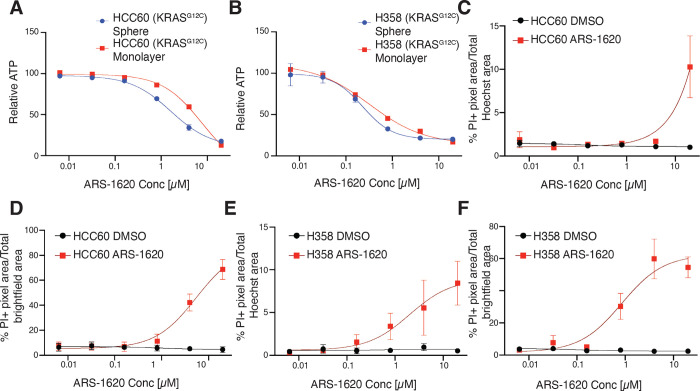
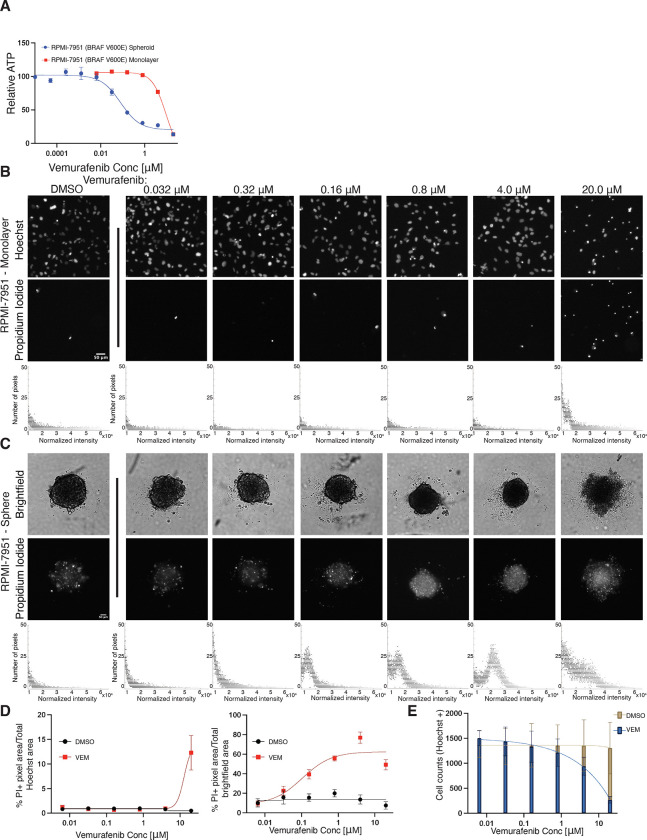
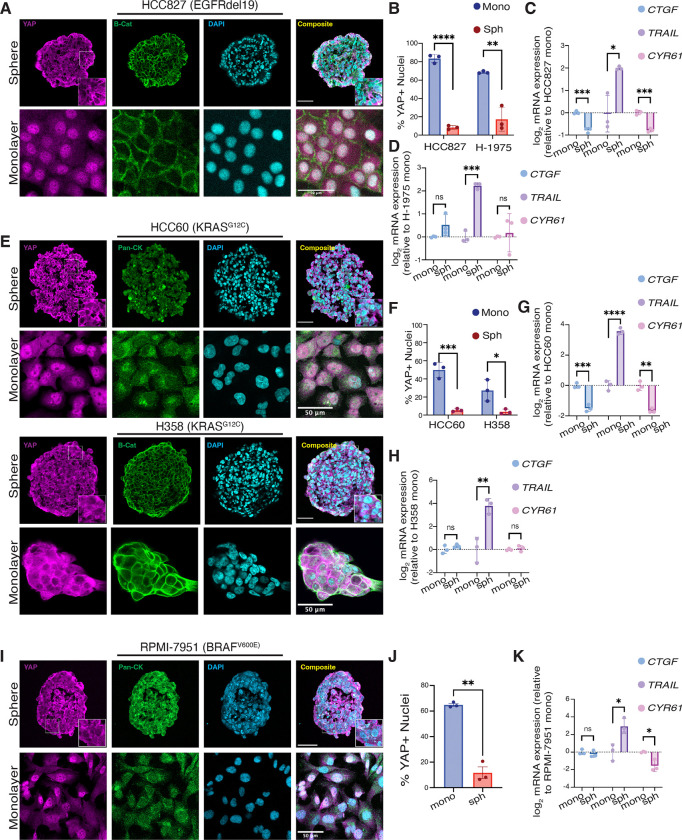
Non-small cell lung cancers (NSCLC) harboring common mutations in EGFR and KRAS characteristically respond transiently to targeted therapies against those mutations, but invariably, tumors recur and progress. Resistance often emerges through mutations in the therapeutic target or activation of alternative signaling pathways. Mechanisms of acute tumor cell resistance to initial EGFR (EGFRi) or KRAS (G12Ci) pathway inhibition remain poorly understood. Our study reveals that acute response to EGFR/RAS/RAF-pathway inhibition is spatial and culture context specific. In vivo, EGFR mutant tumor xenografts shrink by > 90% following acute EGFRi therapy, and residual tumor cells are associated with dense stroma and have increased nuclear YAP. Interestingly, in vitro EGFRi induced cell cycle arrest in NSCLC cells grown in monolayer, while 3D spheroids preferentially die upon inhibitor treatment. We find differential YAP nuclear localization and activity, driven by the distinct culture conditions, as a common resistance mechanism for selective EGFR/KRAS/BRAF pathway therapies. Forced expression of the YAP mutant partially protects cells from EGFR-mediated cell death in spheroid culture. These studies identify YAP activation in monolayer culture as a non-genetic mechanism of acute EGFR/KRAS/BRAF therapy resistance, highlighting that monolayer vs spheroid cell culture systems can model distinct stages of patient cancer progression.
携带EGFR和KRAS常见突变的非小细胞肺癌(NSCLC)通常对针对这些突变的靶向治疗产生短暂反应,但肿瘤总会复发并进展。耐药性通常通过治疗靶点的突变或替代信号通路的激活而出现。急性肿瘤细胞对初始EGFR(EGFRi)或KRAS(G12Ci)通路抑制的耐药机制仍知之甚少。我们的研究表明,对EGFR/RAS/RAF通路抑制的急性反应具有空间和培养环境特异性。在体内,急性EGFRi治疗后,EGFR突变肿瘤异种移植物缩小>90%,残余肿瘤细胞与致密基质相关且核YAP增加。有趣的是,在体外,EGFRi在单层培养的NSCLC细胞中诱导细胞周期停滞,而3D球体在抑制剂处理后优先死亡。我们发现,由不同培养条件驱动的YAP核定位和活性差异是选择性EGFR/KRAS/BRAF通路治疗的常见耐药机制。YAP突变体的强制表达可部分保护球体培养中的细胞免受EGFR介导的细胞死亡。这些研究确定了单层培养中YAP激活是急性EGFR/KRAS/BRAF治疗耐药的非遗传机制,强调单层与球体细胞培养系统可模拟患者癌症进展的不同阶段。