• 文献检索
  • 文档翻译
  • 深度研究
  • 学术资讯
  • Suppr Zotero 插件Zotero 插件
  • 邀请有礼
  • 套餐&价格
  • 历史记录
应用&插件
Suppr Zotero 插件Zotero 插件浏览器插件Mac 客户端Windows 客户端微信小程序
定价
高级版会员购买积分包购买API积分包
服务
文献检索文档翻译深度研究API 文档MCP 服务
关于我们
关于 Suppr公司介绍联系我们用户协议隐私条款
关注我们

Suppr 超能文献

核心技术专利:CN118964589B侵权必究
粤ICP备2023148730 号-1Suppr @ 2026

文献检索

告别复杂PubMed语法,用中文像聊天一样搜索,搜遍4000万医学文献。AI智能推荐,让科研检索更轻松。

立即免费搜索

文件翻译

保留排版,准确专业,支持PDF/Word/PPT等文件格式,支持 12+语言互译。

免费翻译文档

深度研究

AI帮你快速写综述,25分钟生成高质量综述,智能提取关键信息,辅助科研写作。

立即免费体验

情感是复杂的:我们在情感科学中所研究的情感也应该如此。

Feelings are Messy: The Feelings We Study in Affective Science Should Be Too.

作者信息

Vaccaro Anthony G

机构信息

Department of Psychology, University of Southern California, Los Angeles, CA USA.

出版信息

Affect Sci. 2024 Sep 5;5(3):190-195. doi: 10.1007/s42761-024-00263-z. eCollection 2024 Sep.

DOI:10.1007/s42761-024-00263-z
PMID:39391341
原文链接:https://pmc.ncbi.nlm.nih.gov/articles/PMC11461722/
Abstract

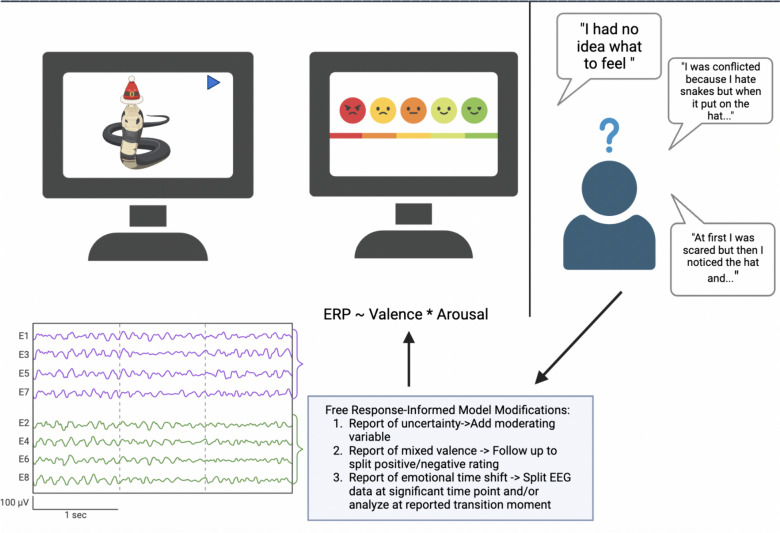
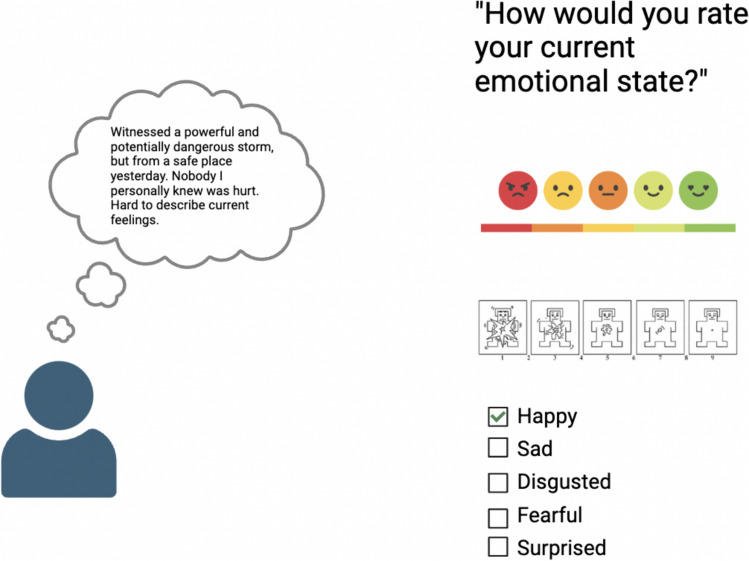
Affective science has taken up the challenge of building a bridge between basic affective science and practical applications. The articles in the Future of Affective Science issue lay out methodological and conceptual frameworks that allow us to expand affective science into real-world settings and to handle naturalistic methods. Along with these advances, accomplishing this goal will require additionally refocusing the types of experiences we study, and the measures of experience we are interested in. This paper explores the necessity for basic affective science to embrace the messy and complex nature of human emotion in order to bridge the gap between theoretical concepts and real-world applicability. Specifically, this involves studying experiences that do not fit as neatly into dominant conceptual frameworks, such as valenced scales and the most common discrete emotion categories, and that may be more difficult to measure or experimentally control. This makes the gap between affective science and real-world feelings larger. To move the field towards incorporating emotional complexity in an empirical manner, I propose measurement standards that err on the side of less fixed-choice options and using stimuli chosen for their potential to elicit highly complex responses over time within the same individual. Designing studies that can measure these experiences will push emotion theories to explain data they were not originally designed for, likely leading to refinement and collaboration. These approaches will help capture the full spectrum of human emotional experience, leading to a more nuanced and applicable understanding of affective science.

摘要

情感科学已接受了在基础情感科学与实际应用之间架起桥梁的挑战。《情感科学的未来》这一特刊中的文章阐述了方法和概念框架,使我们能够将情感科学扩展到现实世界的场景中,并运用自然主义方法。随着这些进展,要实现这一目标还需要重新聚焦我们所研究的体验类型以及我们感兴趣的体验测量方式。本文探讨了基础情感科学接纳人类情感的混乱和复杂本质的必要性,以便弥合理论概念与现实世界适用性之间的差距。具体而言,这涉及研究那些不太能整齐地纳入主导概念框架(如效价量表和最常见的离散情绪类别)的体验,这些体验可能更难测量或进行实验控制。这使得情感科学与现实世界感受之间的差距更大。为了推动该领域以实证方式纳入情感复杂性,我提出了一些测量标准,这些标准倾向于减少固定选择选项,并使用因其有可能在同一个体内随着时间引发高度复杂反应而被选中的刺激。设计能够测量这些体验的研究将促使情感理论去解释它们原本并非为其设计的数据,这可能会带来理论的完善与合作。这些方法将有助于捕捉人类情感体验的全貌,从而对情感科学有更细致入微且适用的理解。
https://cdn.ncbi.nlm.nih.gov/pmc/blobs/7e8a/11461722/cbf8e8132951/42761_2024_263_Fig2_HTML.jpg
https://cdn.ncbi.nlm.nih.gov/pmc/blobs/7e8a/11461722/bd597032f727/42761_2024_263_Fig1_HTML.jpg
https://cdn.ncbi.nlm.nih.gov/pmc/blobs/7e8a/11461722/cbf8e8132951/42761_2024_263_Fig2_HTML.jpg
https://cdn.ncbi.nlm.nih.gov/pmc/blobs/7e8a/11461722/bd597032f727/42761_2024_263_Fig1_HTML.jpg
https://cdn.ncbi.nlm.nih.gov/pmc/blobs/7e8a/11461722/cbf8e8132951/42761_2024_263_Fig2_HTML.jpg

相似文献

1
Feelings are Messy: The Feelings We Study in Affective Science Should Be Too.情感是复杂的:我们在情感科学中所研究的情感也应该如此。
Affect Sci. 2024 Sep 5;5(3):190-195. doi: 10.1007/s42761-024-00263-z. eCollection 2024 Sep.
2
Qualitative Study定性研究
3
Psychodynamic Therapy心理动力疗法
4
Folic acid supplementation and malaria susceptibility and severity among people taking antifolate antimalarial drugs in endemic areas.在流行地区,服用抗叶酸抗疟药物的人群中,叶酸补充剂与疟疾易感性和严重程度的关系。
Cochrane Database Syst Rev. 2022 Feb 1;2(2022):CD014217. doi: 10.1002/14651858.CD014217.
5
Macromolecular crowding: chemistry and physics meet biology (Ascona, Switzerland, 10-14 June 2012).大分子拥挤现象:化学与物理邂逅生物学(瑞士阿斯科纳,2012年6月10日至14日)
Phys Biol. 2013 Aug;10(4):040301. doi: 10.1088/1478-3975/10/4/040301. Epub 2013 Aug 2.
6
We (Still!) Need to Talk About Valence: Contemporary Issues and Recommendations for Affective Science.我们(仍然!)需要谈谈效价:情感科学的当代问题与建议
Affect Sci. 2023 Sep 2;4(3):463-469. doi: 10.1007/s42761-023-00217-x. eCollection 2023 Sep.
7
Affectivism and the Emotional Elephant: How a Componential Approach Can Reconcile Opposing Theories to Serve the Future of Affective Sciences.情感主义与情感之象:一种成分分析法如何调和对立理论以服务情感科学的未来
Affect Sci. 2024 Sep 20;5(3):196-200. doi: 10.1007/s42761-024-00272-y. eCollection 2024 Sep.
8
Prescription of Controlled Substances: Benefits and Risks管制药品的处方:益处与风险
9
The Future of Affective Science: Introduction to the Special Issue.情感科学的未来:特刊引言
Affect Sci. 2023 Sep 12;4(3):429-442. doi: 10.1007/s42761-023-00220-2. eCollection 2023 Sep.
10
Advancing Naturalistic Affective Science with Deep Learning.利用深度学习推动自然主义情感科学发展。
Affect Sci. 2023 Aug 25;4(3):550-562. doi: 10.1007/s42761-023-00215-z. eCollection 2023 Sep.

本文引用的文献

1
Neural patterns associated with mixed valence feelings differ in consistency and predictability throughout the brain.与混合情绪相关的神经模式在大脑中的一致性和可预测性上存在差异。
Cereb Cortex. 2024 Apr 1;34(4). doi: 10.1093/cercor/bhae122.
2
Why the Single-N Design Should Be the Default in Affective Neuroscience.为何单N设计应成为情感神经科学的默认选择。
Affect Sci. 2023 Mar 21;5(1):62-66. doi: 10.1007/s42761-023-00182-5. eCollection 2024 Mar.
3
Mapping Interpersonal Emotion Regulation in Everyday Life.绘制日常生活中的人际情绪调节图谱。
Affect Sci. 2023 Nov 13;4(4):672-683. doi: 10.1007/s42761-023-00223-z. eCollection 2023 Dec.
4
Yucatec Maya Children's Responding to Emotional Challenge.尤卡坦玛雅儿童对情感挑战的反应。
Affect Sci. 2023 Aug 14;4(4):644-661. doi: 10.1007/s42761-023-00205-1. eCollection 2023 Dec.
5
Daily Affective Dynamics in Major Depressive Disorder: The Role of Daily Stressors and Positive Events.重度抑郁症的日常情感动态:日常压力源和积极事件的作用。
Affect Sci. 2023 Aug 30;4(4):757-769. doi: 10.1007/s42761-023-00209-x. eCollection 2023 Dec.
6
The Future of Emotion Regulation Research: Broadening Our Field of View.情绪调节研究的未来:拓宽我们的视野
Affect Sci. 2023 Oct 2;4(4):609-616. doi: 10.1007/s42761-023-00222-0. eCollection 2023 Dec.
7
Habitual Expressive Suppression of Positive, but not Negative, Emotions Consistently Predicts Lower Well-being across Two Culturally Distinct Regions.习惯性地抑制积极情绪而非消极情绪,始终预示着在两个文化不同地区的幸福感较低。
Affect Sci. 2023 Sep 21;4(4):684-701. doi: 10.1007/s42761-023-00221-1. eCollection 2023 Dec.
8
The Affective Dynamics of Everyday Digital Life: Opening Computational Possibility.日常数字生活的情感动态:开启计算可能性。
Affect Sci. 2023 Aug 7;4(3):529-540. doi: 10.1007/s42761-023-00202-4. eCollection 2023 Sep.
9
We (Still!) Need to Talk About Valence: Contemporary Issues and Recommendations for Affective Science.我们(仍然!)需要谈谈效价:情感科学的当代问题与建议
Affect Sci. 2023 Sep 2;4(3):463-469. doi: 10.1007/s42761-023-00217-x. eCollection 2023 Sep.
10
A Case for Neutrality: Why Neutral Affect is Critical for Advancing Affective Science.中立性的价值:为何中性情感对推进情感科学至关重要。
Affect Sci. 2023 Aug 21;4(3):458-462. doi: 10.1007/s42761-023-00214-0. eCollection 2023 Sep.