Wilson Alexa, McCormick Craig
Department of Microbiology & Immunology, Dalhousie University, Halifax, Nova Scotia, Canada.
Autophagy. 2025 Jan;21(1):3-20. doi: 10.1080/15548627.2024.2414424. Epub 2024 Oct 23.
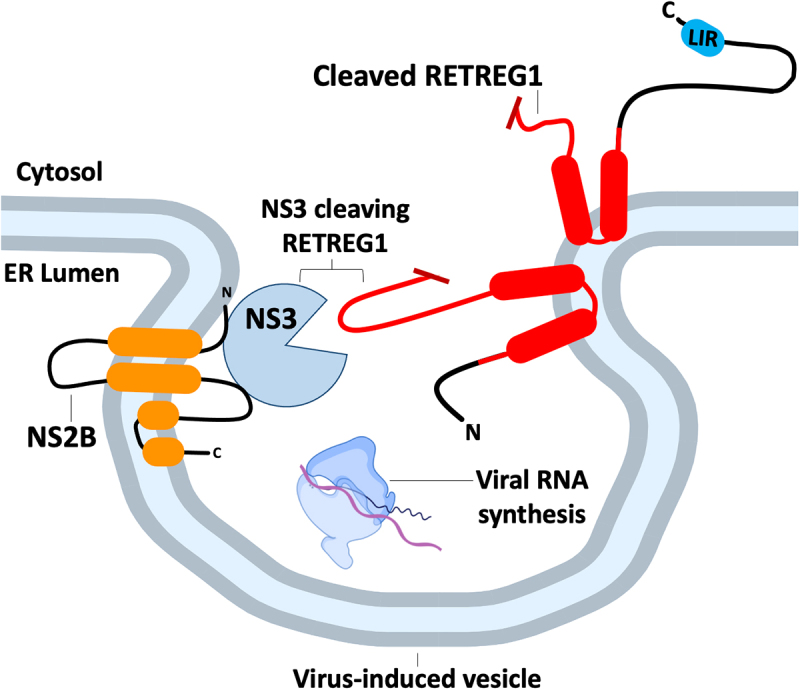
All viruses are obligate intracellular parasites that use host machinery to synthesize viral proteins. In infected eukaryotes, viral secreted and transmembrane proteins are synthesized at the endoplasmic reticulum (ER). Many viruses refashion ER membranes into bespoke factories where viral products accumulate while evading host pattern recognition receptors. ER processes are tightly regulated to maintain cellular homeostasis, so viruses must either conform to ER regulatory mechanisms or subvert them to ensure efficient viral replication. Reticulophagy is a catabolic process that directs lysosomal degradation of ER components. There is accumulating evidence that reticulophagy serves as a form of antiviral defense; we call this defense "xERophagy" to acknowledge its relationship to xenophagy, the catabolic degradation of microorganisms by macroautophagy/autophagy. In turn, viruses can subvert reticulophagy to suppress host antiviral responses and support efficient viral replication. Here, we review the evidence for functional interplay between viruses and the host reticulophagy machinery.: AMFR: autocrine motility factor receptor; ARF4: ADP-ribosylation factor 4; ARL6IP1: ADP-ribosylation factor-like 6 interacting protein 1; ATL3: atlastin GTPase 3; ATF4: activating transcription factor 4; ATF6: activating transcription factor 6; BPIFB3: BPI fold containing family B, member 3; CALCOCO1: calcium binding and coiled coil domain 1; CAMK2B: calcium/calmodulin-dependent protein kinase II, beta; CANX: calnexin; CDV: canine distemper virus; CCPG1: cell cycle progression 1; CDK5RAP3/C53: CDK5 regulatory subunit associated protein 3; CIR: cargo-interacting region; CoV: coronavirus; CSNK2/CK2: casein kinase 2; CVB3: coxsackievirus B3; DAPK1: death associated protein kinase 1; DENV: dengue virus; DMV: double-membrane vesicles; EBOV: Ebola virus; EBV: Epstein-Barr Virus; EIF2AK3/PERK: eukaryotic translation initiation factor 2 alpha kinase 3; EMCV: encephalomyocarditis virus; EMV: extracellular microvesicle; ER: endoplasmic reticulum; ERAD: ER-associated degradation; ERN1/IRE1: endoplasmic reticulum to nucleus signalling 1; EV: extracellular vesicle; EV71: enterovirus 71; FIR: RB1CC1/FIP200-interacting region; FMDV: foot-and-mouth disease virus; HCMV: human cytomegalovirus; HCV: hepatitis C virus; HMGB1: high mobility group box 1; HSPA5/BiP: heat shock protein 5; IFN: interferon; IFNG/IFN-γ: interferon gamma; KSHV: Kaposi's sarcoma-associated herpesvirus; LIR: MAP1LC3/LC3-interacting region; LNP: lunapark, ER junction formation factor; MAP1LC3: microtubule-associated protein 1 light chain 3; MAP3K5/ASK1: mitogen-activated protein kinase kinase kinase 5; MAPK/JNK: mitogen-activated protein kinase; MeV: measles virus; MHV: murine hepatitis virus; NS: non-structural; PDIA3: protein disulfide isomerase associated 3; PRR: pattern recognition receptor; PRRSV: porcine reproductive and respiratory syndrome virus; RB1CC1/FIP200: RB1-inducible coiled-coil 1; RETREG1/FAM134B: reticulophagy regulator 1; RHD: reticulon homology domain; RTN3: reticulon 3; RTN3L: reticulon 3 long; sAIMs: shuffled Atg8-interacting motifs; SARS-CoV: severe acute respiratory syndrome coronavirus; SINV: Sindbis virus; STING1: stimulator of interferon response cGAMP interactor 1; SVV: Seneca Valley virus; SV40: simian virus 40; TEX264: testis expressed gene 264 ER-phagy receptor; TFEB: transcription factor EB; TRAF2: TNF receptor-associated factor 2; UIM: ubiquitin-interacting motif; UFM1: ubiquitin-fold modifier 1; UPR: unfolded protein response; VAPA: vesicle-associated membrane protein, associated protein A; VAPB: vesicle-associated membrane protein, associated protein B and C; VZV: varicella zoster virus; WNV: West Nile virus; XBP1: X-box binding protein 1; XBP1s: XBP1 spliced; xERophagy: xenophagy involving reticulophagy; ZIKV: Zika virus.

所有病毒都是专性细胞内寄生虫,它们利用宿主机制来合成病毒蛋白。在受感染的真核生物中,病毒分泌蛋白和跨膜蛋白在内质网(ER)中合成。许多病毒将内质网膜重塑为定制工厂,病毒产物在其中积累,同时躲避宿主模式识别受体。内质网过程受到严格调控以维持细胞稳态,因此病毒必须要么顺应内质网调控机制,要么颠覆这些机制以确保高效的病毒复制。网织吞噬是一种分解代谢过程,它指导内质网成分的溶酶体降解。越来越多的证据表明,网织吞噬是一种抗病毒防御形式;我们将这种防御称为“xERophagy”,以承认它与异噬作用(通过巨自噬/自噬对微生物进行分解代谢降解)的关系。反过来,病毒可以颠覆网织吞噬来抑制宿主抗病毒反应并支持高效的病毒复制。在这里,我们综述病毒与宿主网织吞噬机制之间功能相互作用的证据。:AMFR:自分泌运动因子受体;ARF4:ADP-核糖基化因子4;ARL6IP1:ADP-核糖基化因子样6相互作用蛋白1;ATL3:atlastin GTP酶3;ATF4:激活转录因子4;ATF6:激活转录因子6;BPIFB3:含BPI结构域的B家族成员3;CALCOCO1:钙结合和卷曲螺旋结构域1;CAMK2B:钙/钙调蛋白依赖性蛋白激酶II,β;CANX:钙连蛋白;CDV:犬瘟热病毒;CCPG1:细胞周期进程1;CDK5RAP3/C53:CDK5调节亚基相关蛋白3;CIR:货物相互作用区域;CoV:冠状病毒;CSNK2/CK2:酪蛋白激酶2;CVB3:柯萨奇病毒B3;DAPK1:死亡相关蛋白激酶1;DENV:登革病毒;DMV:双膜囊泡;EBOV:埃博拉病毒;EBV:爱泼斯坦-巴尔病毒;EIF2AK3/PERK:真核翻译起始因子2α激酶3;EMCV:脑心肌炎病毒;EMV:细胞外微泡;ER:内质网;ERAD:内质网相关降解;ERN1/IRE1:内质网到细胞核信号转导1;EV:细胞外囊泡;EV71:肠道病毒71;FIR:RB1CC1/FIP200相互作用区域;FMDV:口蹄疫病毒;HCMV:人巨细胞病毒;HCV:丙型肝炎病毒;HMGB1:高迁移率族蛋白B1;HSPA5/BiP:热休克蛋白5;IFN:干扰素;IFNG/IFN-γ:干扰素γ;KSHV:卡波西肉瘤相关疱疹病毒;LIR:MAP1LC3/LC3相互作用区域;LNP:月神公园,内质网连接形成因子;MAP1LC3:微管相关蛋白1轻链3;MAP3K5/ASK1:丝裂原活化蛋白激酶激酶激酶5;MAPK/JNK:丝裂原活化蛋白激酶;MeV:麻疹病毒;MHV:鼠肝炎病毒;NS:非结构;PDIA3:蛋白二硫键异构酶相关3;PRR:模式识别受体;PRRSV:猪繁殖与呼吸综合征病毒;RB1CC1/FIP200:RB1诱导的卷曲螺旋1;RETREG1/FAM134B:网织吞噬调节因子1;RHD:网织蛋白同源结构域;RTN3:网织蛋白3;RTN3L:网织蛋白3长链;sAIMs:改组的Atg8相互作用基序;SARS-CoV:严重急性呼吸综合征冠状病毒;SINV:辛德毕斯病毒;STING1:干扰素反应cGAMP相互作用因子1;SVV:塞内卡山谷病毒;SV40:猴病毒40;TEX264:睾丸表达基因264内质网自噬受体;TFEB:转录因子EB;TRAF2:肿瘤坏死因子受体相关因子2;UIM:泛素相互作用基序;UFM1:泛素折叠修饰因子1;UPR:未折叠蛋白反应;VAPA:囊泡相关膜蛋白,相关蛋白A;VAPB:囊泡相关膜蛋白,相关蛋白B和C;VZV:水痘带状疱疹病毒;WNV:西尼罗河病毒;XBP1:X盒结合蛋白1;XBP1s:剪接的XBP1;xERophagy:涉及网织吞噬的异噬作用;ZIKV:寨卡病毒。