Petrosyan Edgar, Fares Jawad, Ahuja Christopher S, Lesniak Maciej S, Koski Tyler R, Dahdaleh Nader S, El Tecle Najib E
Department of Neurological Surgery, Feinberg School of Medicine, Northwestern University, Chicago, IL 60611, United States.
N Am Spine Soc J. 2024 Sep 6;20:100556. doi: 10.1016/j.xnsj.2024.100556. eCollection 2024 Dec.
Scoliosis is defined as a lateral spine curvature of at least 10° with vertebral rotation, as seen on a posterior-anterior radiograph, often accompanied by reduced thoracic kyphosis. Scoliosis affects all age groups: idiopathic scoliosis is the most common spinal disorder in children and adolescents, while adult degenerative scoliosis typically affects individuals over fifty. In the United States, approximately 3 million new cases of scoliosis are diagnosed annually, with a predicted increase in part due to global aging. Despite its prevalence, the etiopathogenesis of scoliosis remains unclear.
This comprehensive review analyzes the literature on the etiopathogenetic evidence for both idiopathic and adult degenerative scoliosis. PubMed and Google Scholar databases were searched for studies on the genetic factors and etiopathogenetic mechanisms of scoliosis development and progression, with the search limited to articles in English.
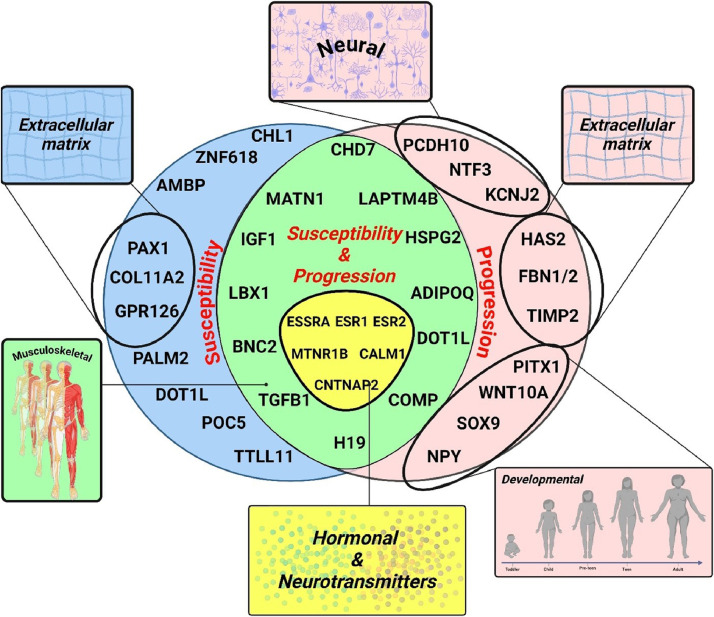
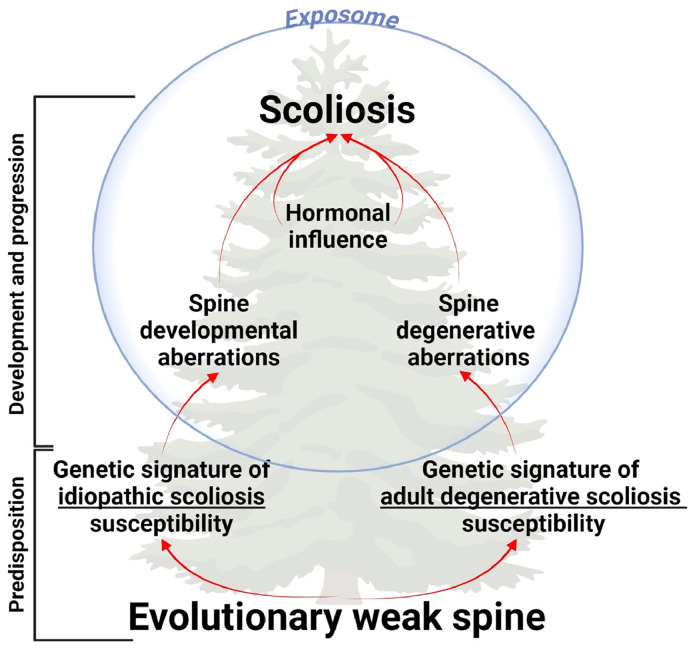
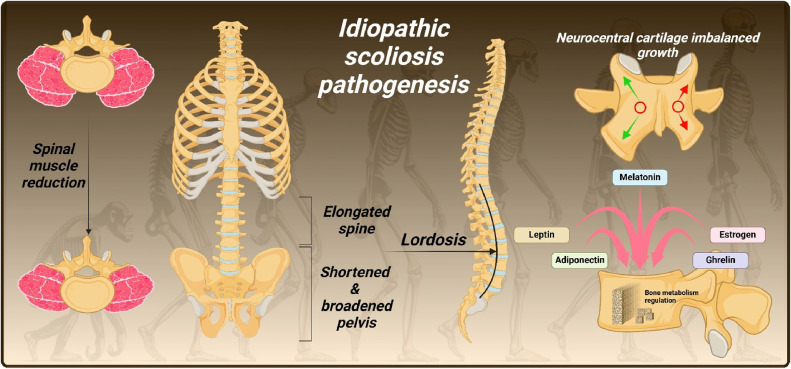
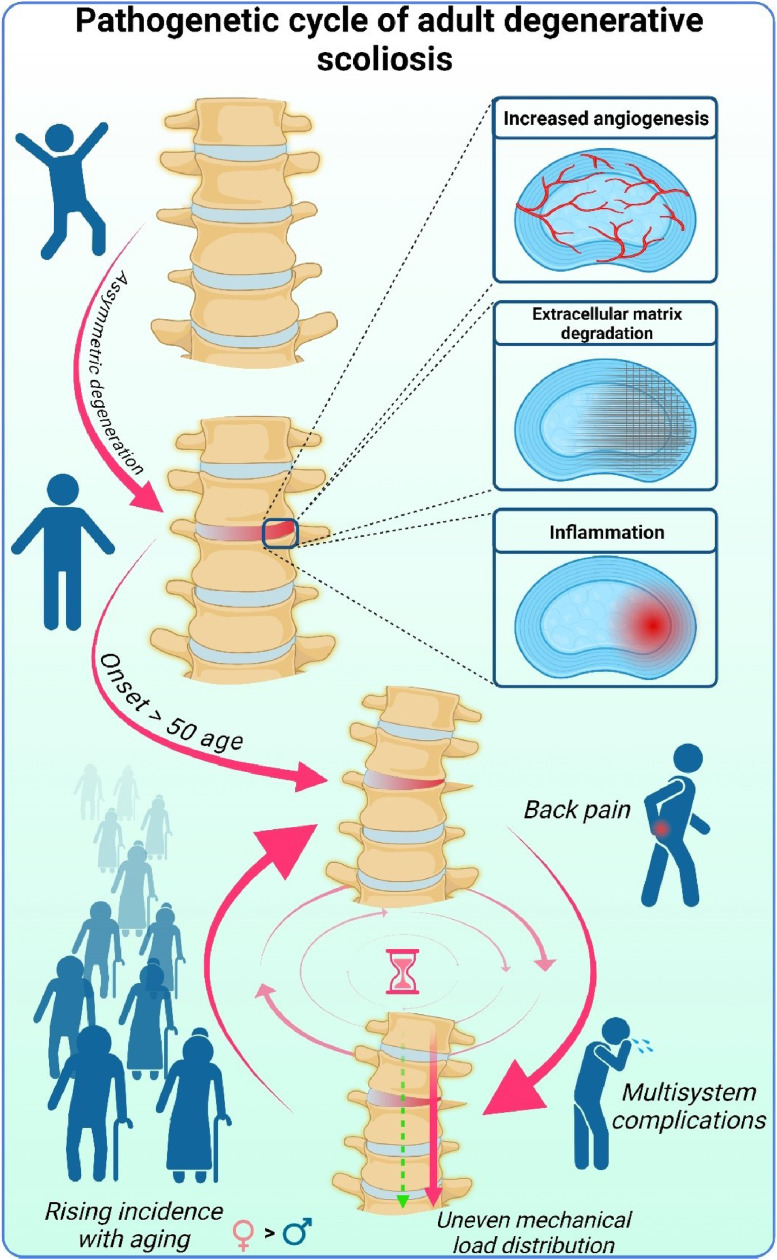
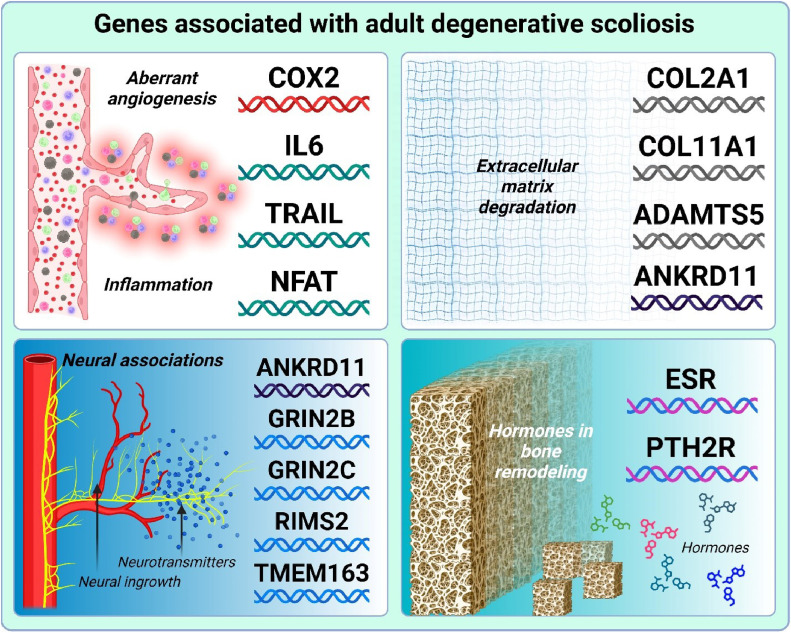
For idiopathic scoliosis, genetic factors are categorized into three groups: genes associated with susceptibility, disease progression, and both. We identify gene groups related to different biological processes and explore multifaceted pathogenesis of idiopathic scoliosis, including evolutionary adaptations to bipedalism and developmental and homeostatic spinal aberrations. For adult degenerative scoliosis, we segregate genetic and pathogenic evidence into categories of angiogenesis and inflammation, extracellular matrix degradation, neural associations, and hormonal influences. Finally, we compare findings in idiopathic scoliosis and adult degenerative scoliosis, discuss current limitations in scoliosis research, propose a new model for scoliosis etiopathogenesis, and highlight promising areas for future studies.
Scoliosis is a complex, multifaceted disease with largely enigmatic origins and mechanisms of progression, keeping it under continuous scientific scrutiny.
脊柱侧弯被定义为脊柱在前后位X线片上出现至少10°的侧弯并伴有椎体旋转,常伴有胸椎后凸减小。脊柱侧弯影响所有年龄组:特发性脊柱侧弯是儿童和青少年中最常见的脊柱疾病,而成人退变性脊柱侧弯通常影响50岁以上的个体。在美国,每年约有300万新的脊柱侧弯病例被诊断出来,预计部分原因是全球老龄化。尽管其发病率很高,但脊柱侧弯的病因发病机制仍不清楚。
本综述分析了关于特发性和成人退变性脊柱侧弯病因发病证据的文献。在PubMed和谷歌学术数据库中搜索关于脊柱侧弯发生和进展的遗传因素及病因发病机制的研究,搜索仅限于英文文章。
对于特发性脊柱侧弯,遗传因素分为三组:与易感性、疾病进展以及两者都相关的基因。我们确定了与不同生物学过程相关的基因组,并探讨了特发性脊柱侧弯的多方面发病机制,包括对双足行走的进化适应以及发育和稳态性脊柱异常。对于成人退变性脊柱侧弯,我们将遗传和致病证据分为血管生成与炎症、细胞外基质降解、神经关联和激素影响等类别。最后,我们比较了特发性脊柱侧弯和成人退变性脊柱侧弯的研究结果,讨论了当前脊柱侧弯研究的局限性,提出了一种新的脊柱侧弯病因发病模型,并强调了未来研究的有前景领域。
脊柱侧弯是一种复杂、多方面的疾病,其起源和进展机制在很大程度上仍不清楚,因此一直受到持续的科学审视。