Botany Department, Faculty of Science, Mansoura University, Mansoura, 35516, Egypt.
Botany Department, Faculty of Science, Tanta University, Tanta, 31527, Egypt.
Sci Rep. 2024 Oct 15;14(1):24130. doi: 10.1038/s41598-024-73470-0.
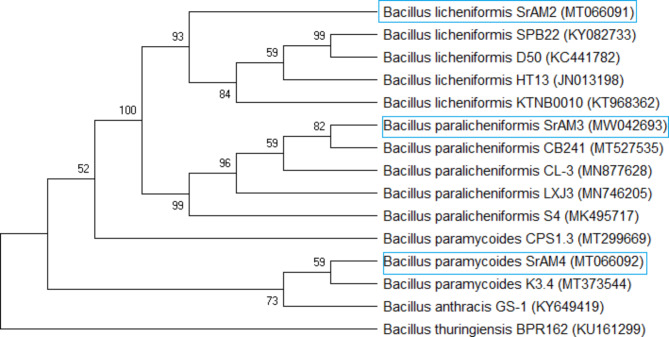
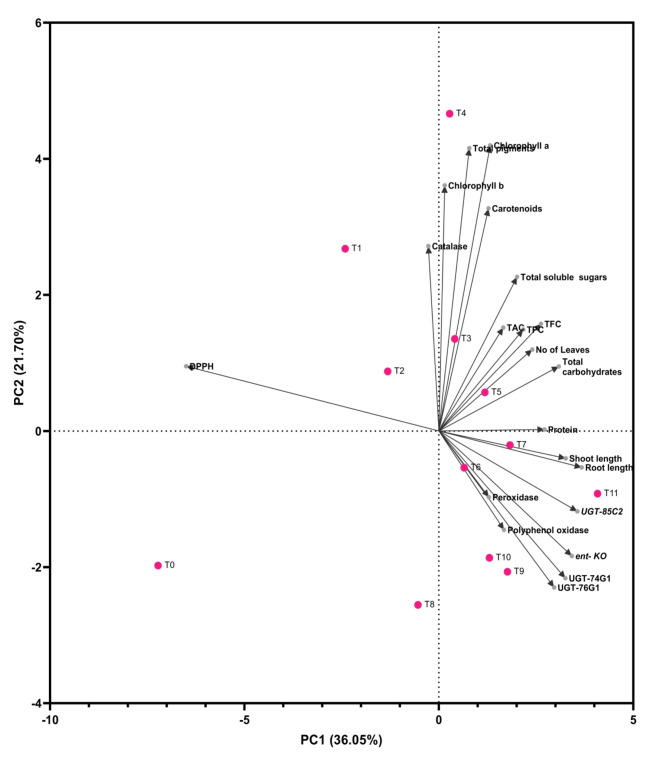
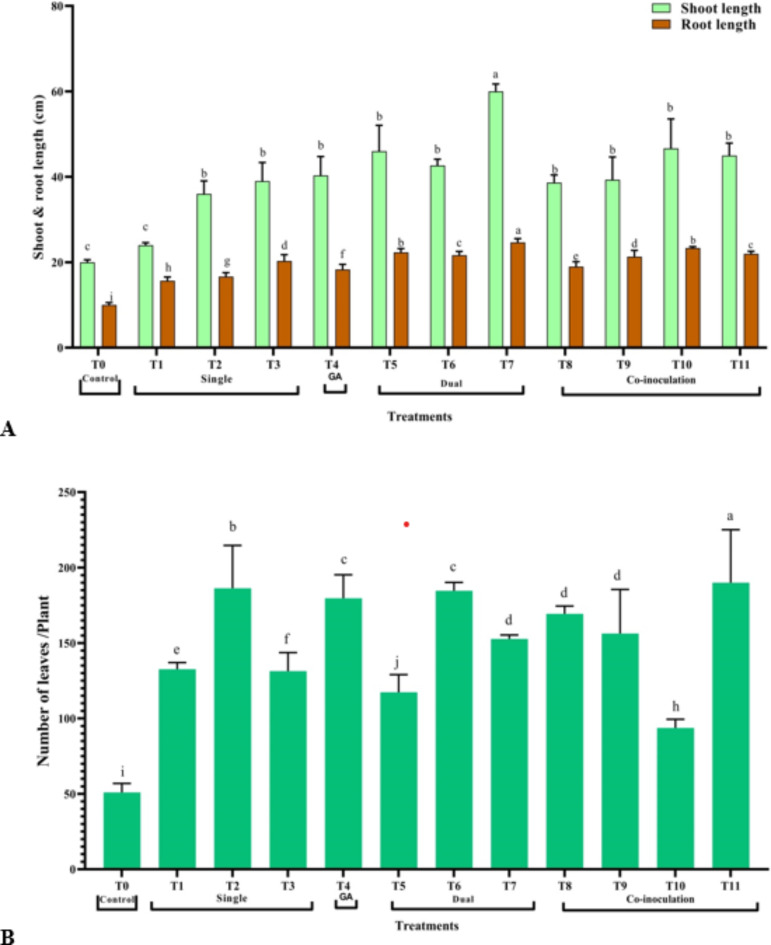
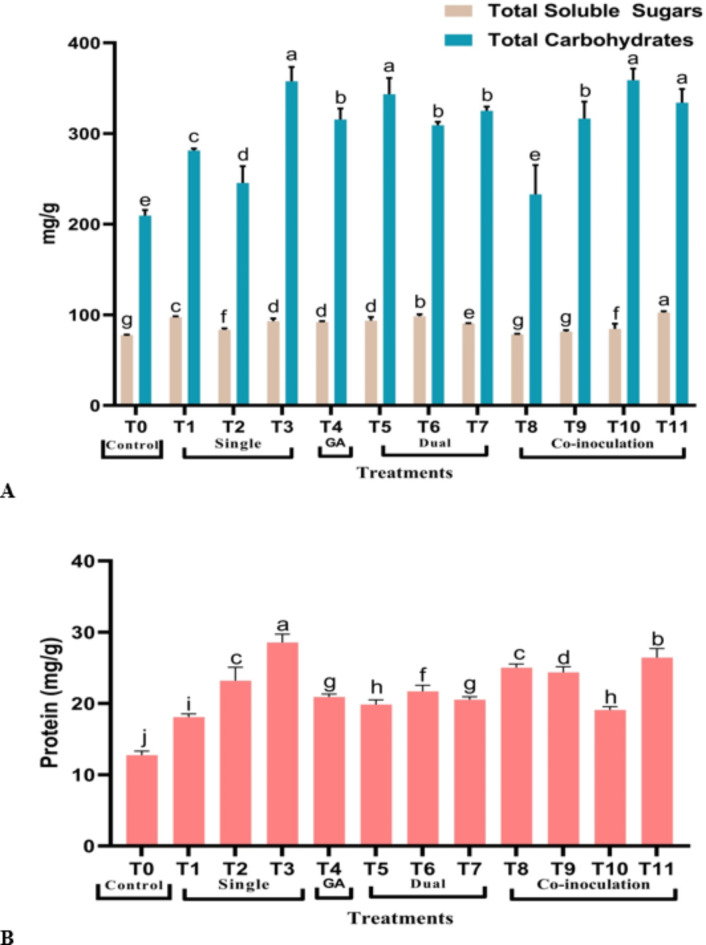
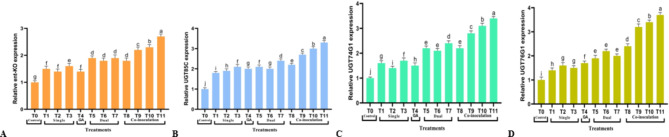
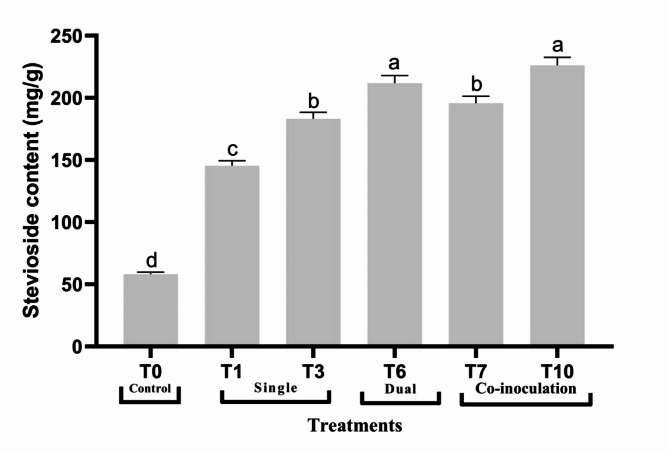
Stevia rebaudiana is associated with the production of calorie-free steviol glycosides (SGs) sweetener, receiving worldwide interest as a sugar substitute for people with metabolic disorders. The aim of this investigation is to show the promising role of endophytic bacterial strains isolated from Stevia rebaudiana Egy1 leaves as a biofertilizer integrated with Azospirillum brasilense ATCC 29,145 and gibberellic acid (GA) to improve another variety of stevia (S. rebaudiana Shou-2) growth, bioactive compound production, expression of SGs involved genes, and stevioside content. Endophytic bacteria isolated from S. rebaudiana Egy1 leaves were molecularly identified and assessed in vitro for plant growth promoting (PGP) traits. Isolated strains Bacillus licheniformis SrAM2, Bacillus paralicheniformis SrAM3 and Bacillus paramycoides SrAM4 with accession numbers MT066091, MW042693 and MT066092, respectively, induced notable variations in the majority of PGP traits production. B. licheniformis SrAM2 revealed the most phytohormones and hydrogen cyanide (HCN) production, while B. paralicheniformis SrAM3 was the most in exopolysaccharides (EPS) and ammonia production 290.96 ± 10.08 mg/l and 88.92 ± 2.96 mg/ml, respectively. Treated plants significantly increased in performance, and the dual treatment T7 (B. paramycoides SrAM4 + A. brasilense) exhibited the highest improvement in shoot and root length by 200% and 146.7%, respectively. On the other hand, T11 (Bacillus cereus SrAM1 + B. licheniformis SrAM2 + B. paralicheniformis SrAM3 + B. paramycoides SrAM4 + A. brasilense + GA) showed the most elevation in number of leaves, total soluble sugars (TSS), and up-regulation in the expression of the four genes ent-KO, UGT85C2, UGT74G1 and UGT76G1 at 2.7, 3.3, 3.4 and 3.7, respectively. In High-Performance Liquid Chromatography (HPLC) analysis, stevioside content showed a progressive increase in all tested samples but the maximum was exhibited by dual and co-inoculations at 264.37% and 289.05%, respectively. It has been concluded that the PGP endophytes associated with S. rebaudiana leaves improved growth and SGs production, implying the usability of these strains as prospective tools to improve important crop production individually or in consortium.
甜叶菊与无热量甜菊糖苷 (SGs) 甜味剂的生产有关,作为代谢紊乱人群的糖替代品,受到了全世界的关注。本研究的目的是展示从甜叶菊 Egy1 叶片中分离出的内生细菌菌株作为生物肥料与固氮菌 Azospirillum brasilense ATCC 29,145 和赤霉素 (GA) 结合的有前途的作用,以提高另一种甜叶菊(Stevia rebaudiana Shou-2)的生长、生物活性化合物的产生、参与 SGs 的基因表达和甜菊糖苷含量。从甜叶菊 Egy1 叶片中分离出的内生细菌进行了分子鉴定,并在体外评估了其对植物生长促进(PGP)特性的影响。分离到的菌株 Bacillus licheniformis SrAM2、Bacillus paralicheniformis SrAM3 和 Bacillus paramycoides SrAM4,其登录号分别为 MT066091、MW042693 和 MT066092,分别诱导了大多数 PGP 特性产生的显著变化。B. licheniformis SrAM2 表现出最多的植物激素和氢氰酸 (HCN) 产生,而 B. paralicheniformis SrAM3 则是最多的胞外多糖 (EPS) 和氨产生 290.96 ± 10.08 mg/l 和 88.92 ± 2.96 mg/ml。处理过的植物在性能上显著提高,双重处理 T7(B. paramycoides SrAM4 + A. brasilense)在茎长和根长上的提高分别达到 200%和 146.7%。另一方面,T11(蜡样芽孢杆菌 SrAM1 + B. licheniformis SrAM2 + B. paralicheniformis SrAM3 + B. paramycoides SrAM4 + A. brasilense + GA)在叶片数、总可溶性糖 (TSS) 和四个基因 ent-KO、UGT85C2、UGT74G1 和 UGT76G1 的表达上调方面表现出最高的升高,分别为 2.7、3.3、3.4 和 3.7。在高效液相色谱 (HPLC) 分析中,所有测试样品中的甜菊糖苷含量均呈逐渐增加,但双重和共接种的含量最高,分别为 264.37%和 289.05%。结论是,与甜叶菊叶片相关的 PGP 内生菌提高了生长和 SGs 的产生,这意味着这些菌株可以作为提高重要作物产量的有前途的工具单独使用或联合使用。