Alobaidi Sami
Department of Internal Medicine, University of Jeddah, Jeddah 21493, Saudi Arabia.
J Clin Med. 2024 Sep 27;13(19):5778. doi: 10.3390/jcm13195778.
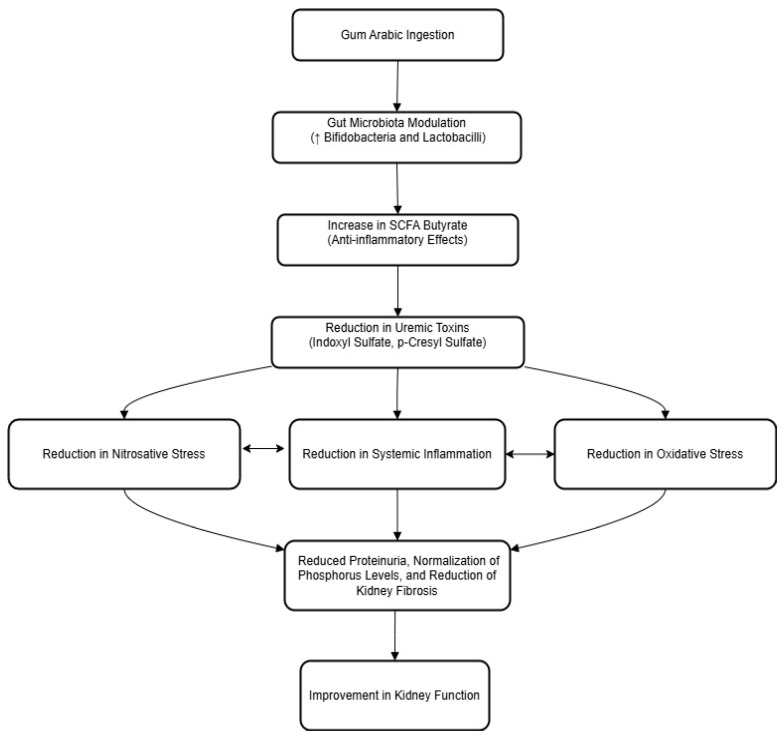
Chronic kidney disease (CKD) poses significant health challenges globally, particularly in regions like the Middle East. This review evaluates the potential efficacy and safety of Gum Arabic (), a traditional remedy, in managing CKD. A comprehensive literature review was conducted using databases including PubMed and Scopus, focusing on the biochemical, physiological, and therapeutic impacts of Gum Arabic on renal health. Gum Arabic has demonstrated antioxidative and anti-inflammatory properties that may benefit renal function, as shown in animal studies. Clinical trials suggest improvements in renal biomarkers, though these are limited by scope and methodology. While promising, the clinical application of Gum Arabic requires cautious interpretation due to gaps in understanding its mechanisms of action. Gum Arabic shows potential as an adjunct treatment for CKD, reflecting both traditional use and preliminary scientific evidence. Future research should focus on its long-term efficacy, safety, and underlying biochemical pathways to better guide its therapeutic use.
慢性肾脏病(CKD)在全球范围内构成了重大的健康挑战,尤其是在中东等地区。本综述评估了传统疗法阿拉伯胶在管理CKD方面的潜在疗效和安全性。使用包括PubMed和Scopus在内的数据库进行了全面的文献综述,重点关注阿拉伯胶对肾脏健康的生化、生理和治疗影响。动物研究表明,阿拉伯胶具有抗氧化和抗炎特性,可能对肾功能有益。临床试验表明肾脏生物标志物有所改善,尽管这些研究在范围和方法上存在局限性。虽然前景乐观,但由于对其作用机制的理解存在差距,阿拉伯胶的临床应用需要谨慎解读。阿拉伯胶显示出作为CKD辅助治疗的潜力,这既反映了其传统用途,也有初步的科学证据支持。未来的研究应关注其长期疗效、安全性和潜在的生化途径,以更好地指导其治疗应用。