Nutrition Postgraduate Program, Center of Health Sciences, Federal University of Rio Grande do Norte, Natal 59078-970, RN, Brazil.
Psychobiology Postgraduate Program, Center of Biosciences, Federal University of Rio Grande do Norte, Natal 59078-970, RN, Brazil.
Nutrients. 2024 Oct 7;16(19):3398. doi: 10.3390/nu16193398.
This study aimed to compare diet-induced obesity (DIO) models in zebrafish and investigate the complications and differences between sexes in biochemical and inflammatory parameters.
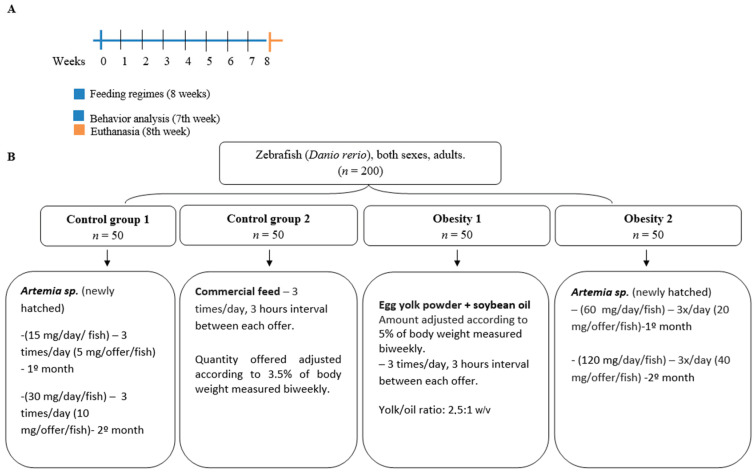
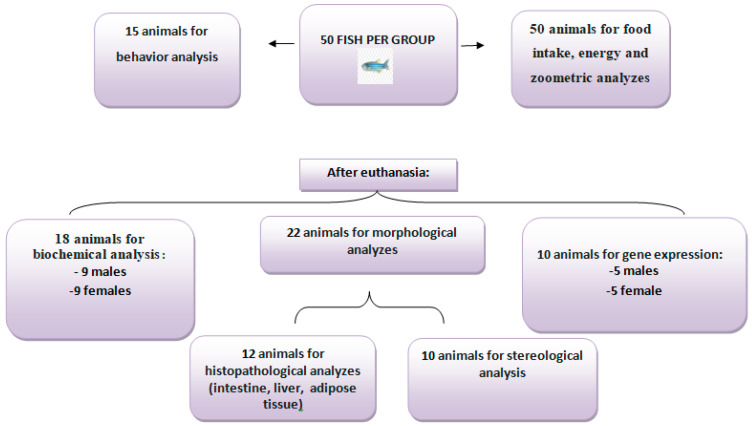
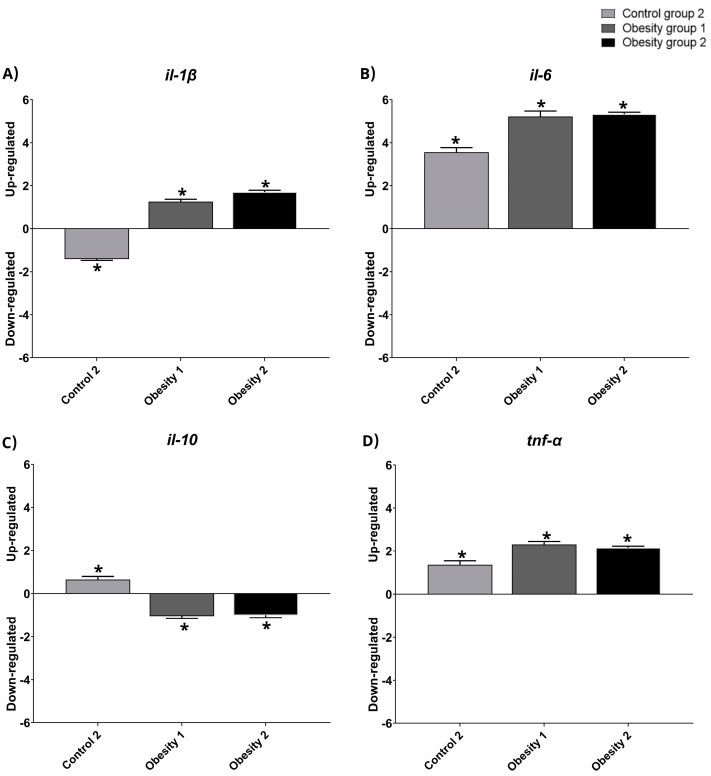
Adult animals of both sexes were divided into four groups ( = 50) and fed for eight weeks: control group 1: sp. (15-30 mg/day/fish); control group 2: commercial fish food (3.5% of average weight); obesity group 1: pasteurized egg yolk powder + soybean oil (5% of average weight); obesity group 2: sp. (60-120 mg/day/fish). Dietary intake, caloric intake and efficiency, body mass index, biochemical, inflammatory, behavioral, histopathological, and stereological parameters, and inflammation-related gene expression were investigated.
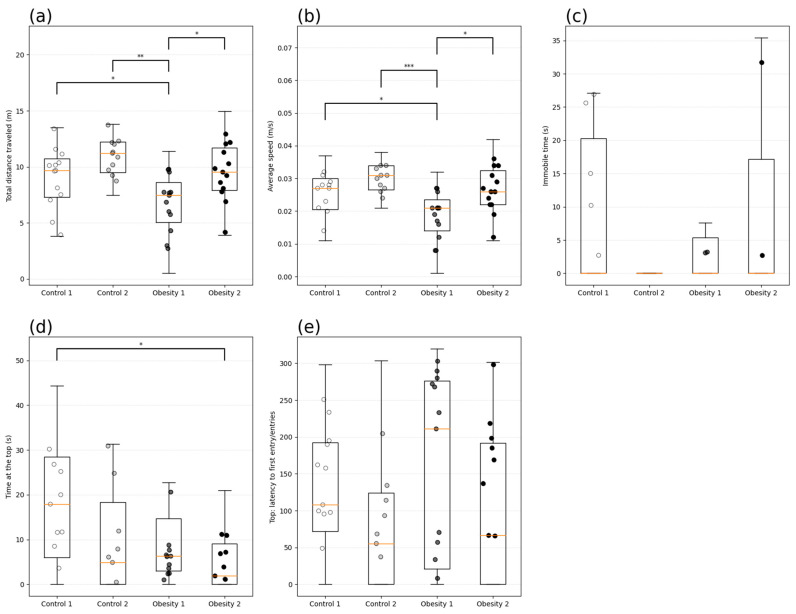
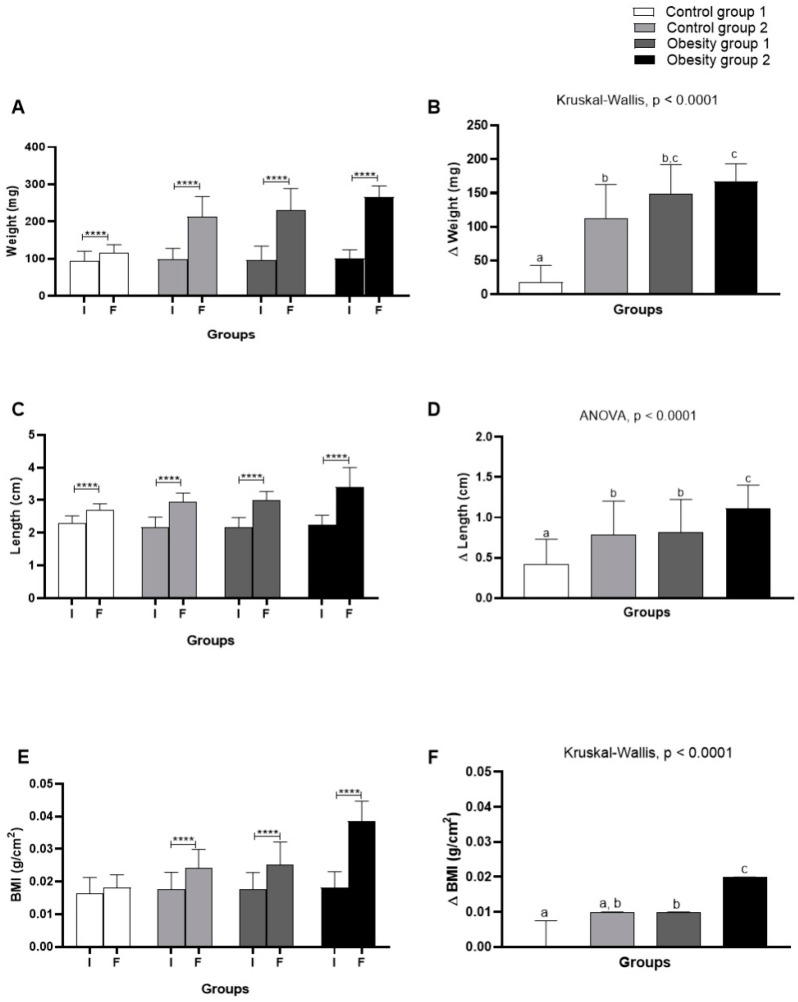
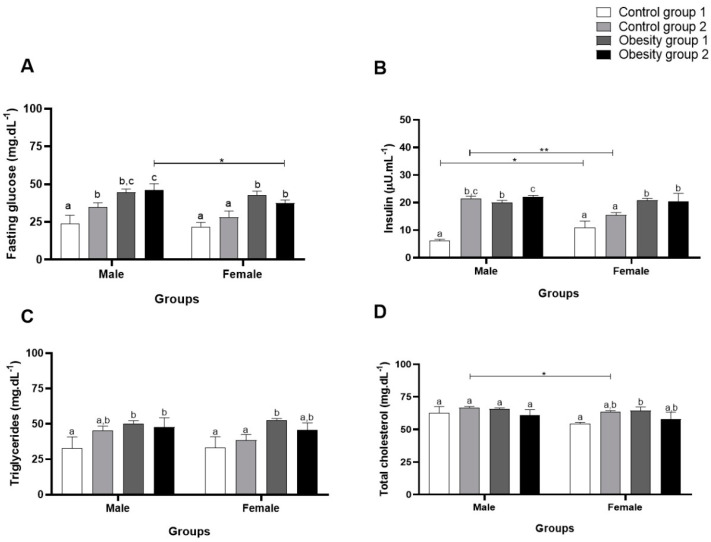
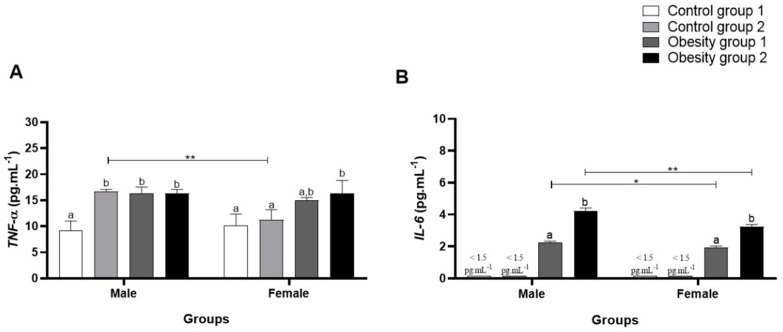
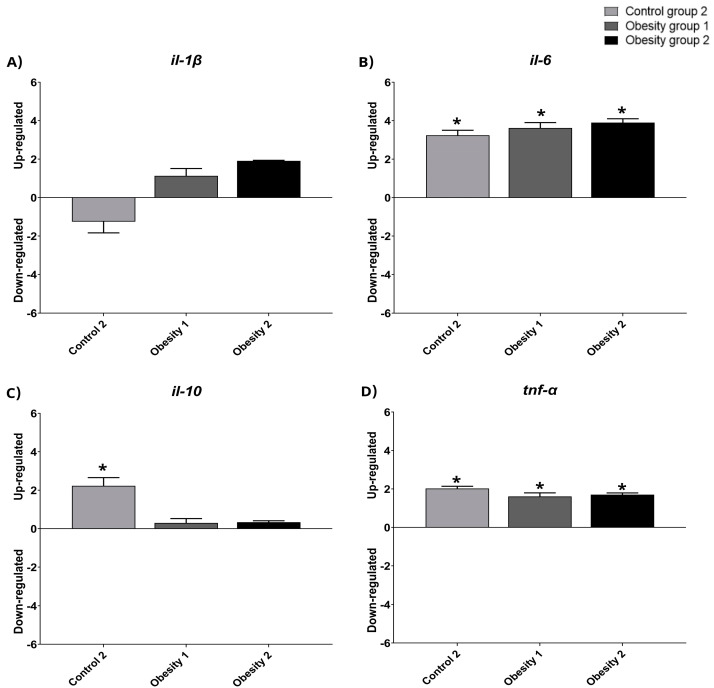
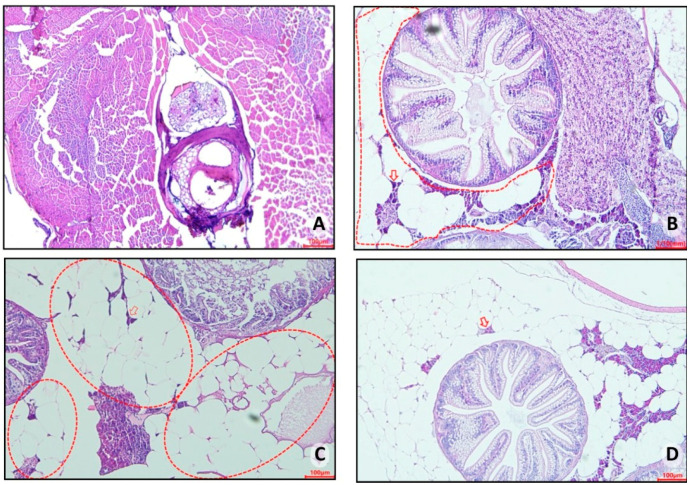
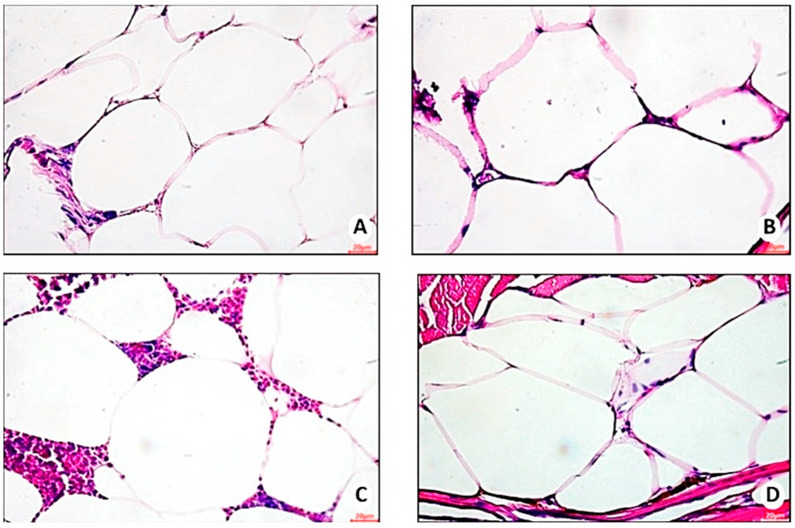
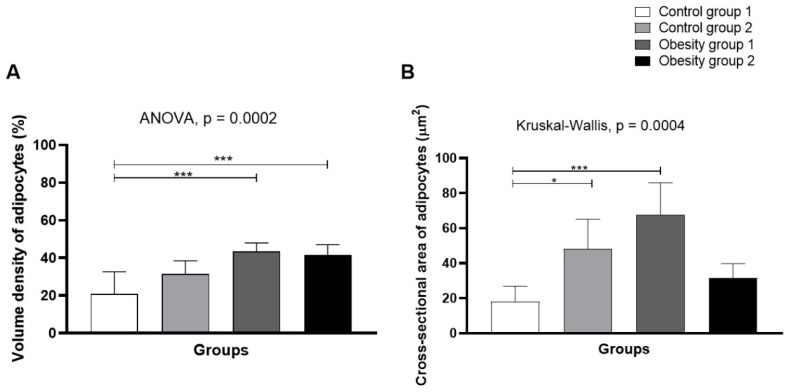
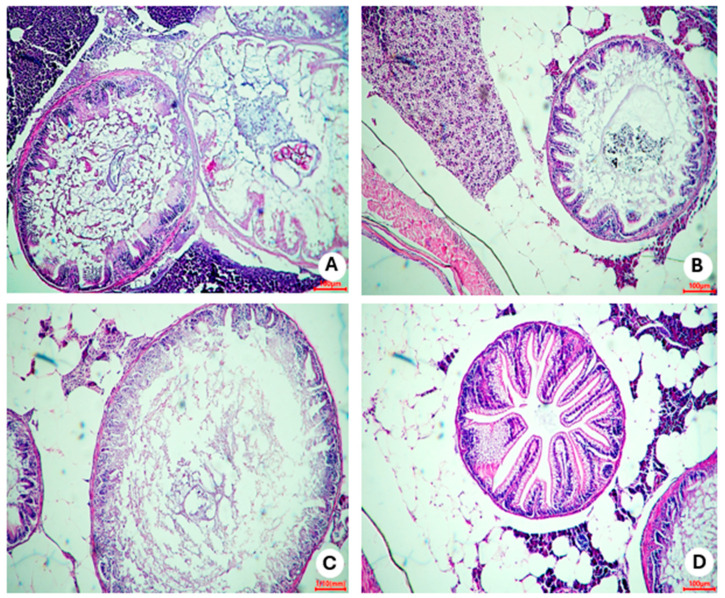
Obesity group 1 was the most indicated to investigate changes in the anxious behavioral profile ( < 0.05), triglyceride elevation [52.67 (1.2) mg/dL], adipocyte hypertrophy [67.8 (18.1) µm; = 0.0004], and intestinal inflammation. Obesity group 2 was interesting to investigate in terms of weight gain [167 mg; < 0.0001), changes in fasting glucose [48.33 (4.14) mg/dL; = 0.003), and inflammatory parameters [IL-6: 4.24 (0.18) pg/mL; = 0.0015].
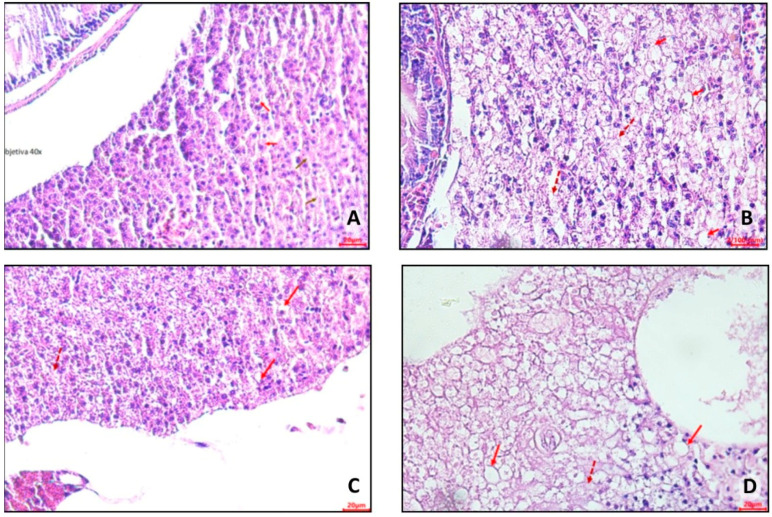
Furthermore, both DIO models evaluated in the present study were effective in investigating hepatic steatosis. The data also highlighted that sex influences inflammatory changes and fasting blood glucose levels, which were higher in males ( > 0.05). The results show new metabolic routes to be explored in relation to DIO in zebrafish.
本研究旨在比较斑马鱼饮食诱导肥胖(DIO)模型,并研究生化和炎症参数方面的性别并发症和差异。
将成年雌雄动物分为四组(每组 50 只),并喂养八周:对照组 1: sp.(15-30 mg/天/鱼);对照组 2:商业鱼饲料(平均体重的 3.5%);肥胖组 1:巴氏蛋黄粉+大豆油(平均体重的 5%);肥胖组 2: sp.(60-120 mg/天/鱼)。研究了饮食摄入量、热量摄入和效率、体重指数、生化、炎症、行为、组织病理学和体视学参数以及与炎症相关的基因表达。
肥胖组 1 最适合研究焦虑行为特征的变化( < 0.05)、甘油三酯升高[52.67(1.2)mg/dL]、脂肪细胞肥大[67.8(18.1)µm; = 0.0004]和肠道炎症。肥胖组 2 适合研究体重增加[167 mg; < 0.0001)、空腹血糖变化[48.33(4.14)mg/dL; = 0.003)和炎症参数[IL-6:4.24(0.18)pg/mL; = 0.0015]。
此外,本研究评估的两种 DIO 模型都有效地研究了肝脂肪变性。数据还强调,性别会影响炎症变化和空腹血糖水平,雄性的这些变化更高( > 0.05)。结果表明,在斑马鱼中,需要探索新的代谢途径来研究 DIO。