MacLennan Keren, Schwannauer Matthias, McLaughlin Angela L, Allan Stephanie, Blackwell Simon E, Ashworth Fiona, Chan Stella W Y
Department of Psychology, Durham University, Durham, UK.
School of Psychology and Clinical Language Sciences, University of Reading, Reading, UK.
Wellcome Open Res. 2024 Mar 1;8:218. doi: 10.12688/wellcomeopenres.18950.2. eCollection 2023.
Mentally-generated soothing imagery is a therapeutic technique to support mental wellbeing, but some individuals may require support using externally presented stimuli. Project Soothe was launched to collect soothing images using a citizen science approach. This online pilot study evaluated the first 575 soothing images collected, examining: 1) if the images were perceived to be soothing; 2) if viewing the images had a positive impact on mood; and 3) if mood effects were influenced by individual differences in age, gender and depressive symptoms.
We recruited 1152 participants (13 - 79 years, M = 35.62, SD = 14.60; 77% female). Participants were randomly allocated to one of 23 sets, each containing 25 images (n = 50 per set) and asked to rate their emotional response (soothed, excited, and anxious) to each image. Participants also reported their mood states pre- and post-viewing the images (using the International Positive and Negative Affect Schedule - Short Form).
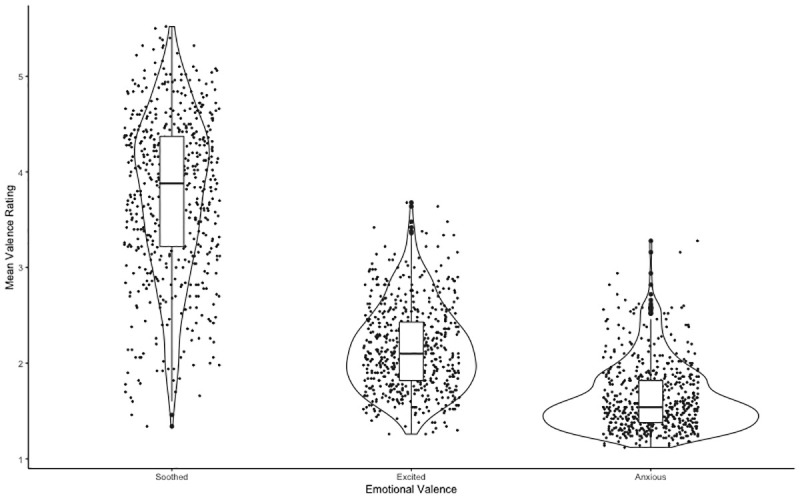
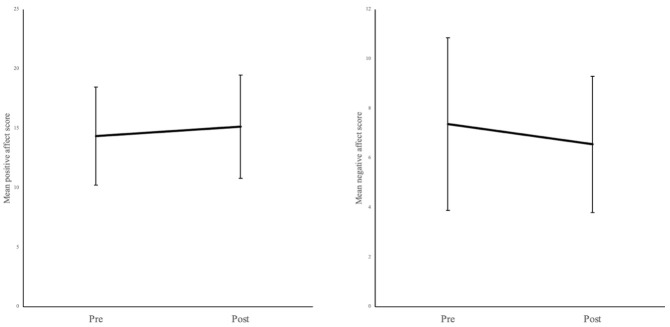
Project Soothe images were rated to be significantly more soothing than anxiety- or excitement-inducing. Further, viewing 25 images was significantly associated with an increase in positive affect and decrease in negative affect. These effects were associated with age and depressive symptoms, with older individuals and those with lower depressive symptoms being associated with more positive changes in mood.
This pilot study provides preliminary evidence that these soothing images can promote positive mood changes. Further work can now replicate these findings in larger-scale studies with comparison groups and extended outcome variables. The images and associated data have been made available in a data repository (OSF) as a free resource for researchers and practitioners. It is hoped that these images can be developed into useful therapeutic resources.
心理生成的舒缓意象是一种支持心理健康的治疗技术,但有些人可能需要借助外部呈现的刺激来获得支持。“舒缓计划”旨在通过公民科学方法收集舒缓图像。这项在线试点研究对收集到的前575张舒缓图像进行了评估,考察了:1)这些图像是否被认为具有舒缓作用;2)观看这些图像是否对情绪有积极影响;3)情绪影响是否受到年龄、性别和抑郁症状等个体差异的影响。
我们招募了1152名参与者(年龄在13 - 79岁之间,M = 35.62,SD = 14.60;77%为女性)。参与者被随机分配到23组中的一组,每组包含25张图像(每组n = 50),并被要求对每张图像的情绪反应(舒缓、兴奋和焦虑)进行评分。参与者还报告了观看图像前后的情绪状态(使用国际正负性情绪量表简版)。
“舒缓计划”的图像被评为比诱发焦虑或兴奋的图像更具舒缓作用。此外,观看25张图像与积极情绪增加和消极情绪减少显著相关。这些影响与年龄和抑郁症状有关,年龄较大的个体和抑郁症状较轻的个体情绪变化更积极。
这项试点研究提供了初步证据,表明这些舒缓图像可以促进积极的情绪变化。后续工作可以在更大规模的研究中,设置对照组并扩展结果变量来重复这些发现。这些图像和相关数据已在一个数据存储库(开放科学框架)中提供,作为研究人员和从业者的免费资源。希望这些图像能够发展成为有用的治疗资源。