Hospital de Clínicas de Porto Alegre, Porto Alegre, Brazil
Postgraduate Program in Epidemiology, Universidade Federal do Rio Grande do Sul, Porto Alegre, Brazil.
BMJ Open. 2024 Oct 15;14(10):e082572. doi: 10.1136/bmjopen-2023-082572.
To evaluate a postpartum telephone-based lifestyle intervention to prevent diabetes in high-risk women with recent gestational diabetes mellitus (GDM).
Multicentre parallel randomised clinical trial.
Specialised antenatal clinics in the Brazilian National System.
Lifestyle Intervention for Diabetes Prevention After Pregnancy compared (1:1) postpartum telephone support for lifestyle changes with conventional care in women with recent GDM at substantial risk for diabetes. Randomisation started on 28 March 2015 and ended on 13 March 2020, with the onset of the COVID-19 pandemic. We used Cox regression to estimate HRs for diabetes and analysis of covariance adjusted for follow-up time to assess weight change.
The primary outcome was incident diabetes ascertained with blinded measurements of oral glucose tolerance tests. The secondary outcome was a change in measured weight.
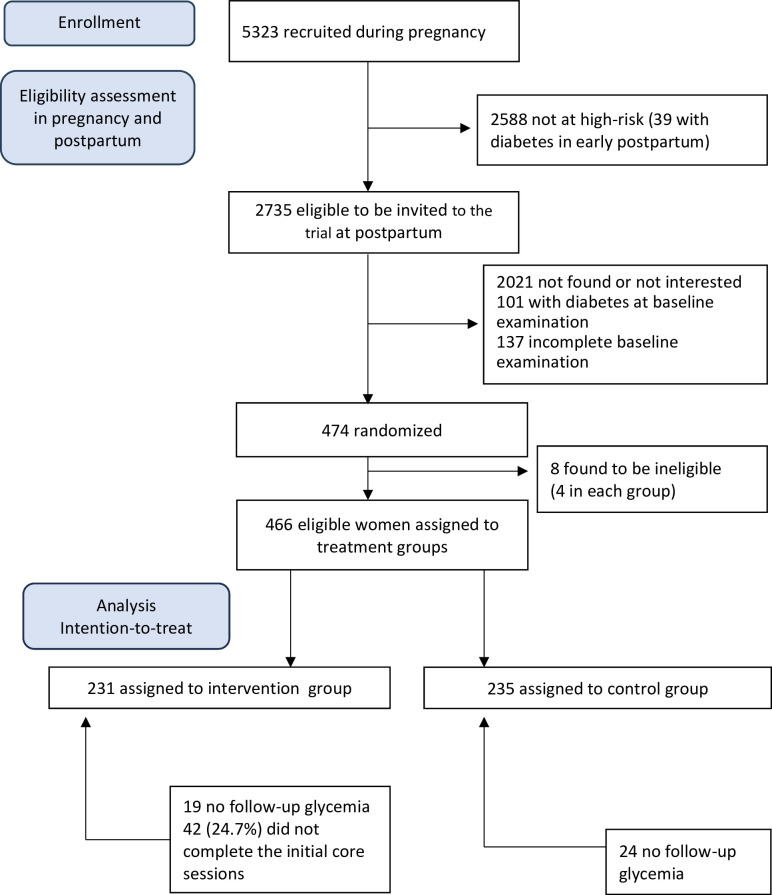
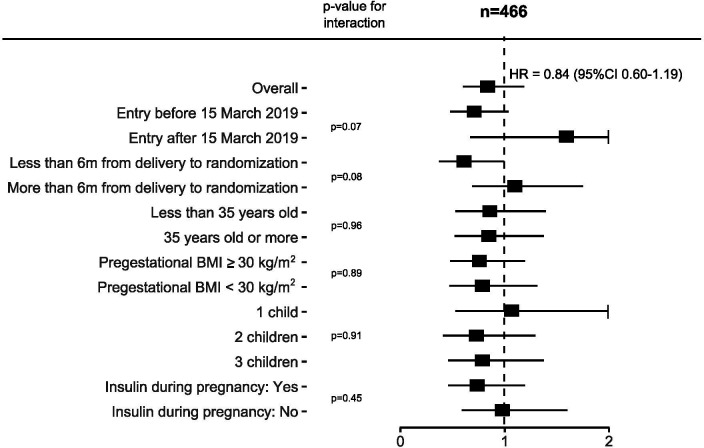
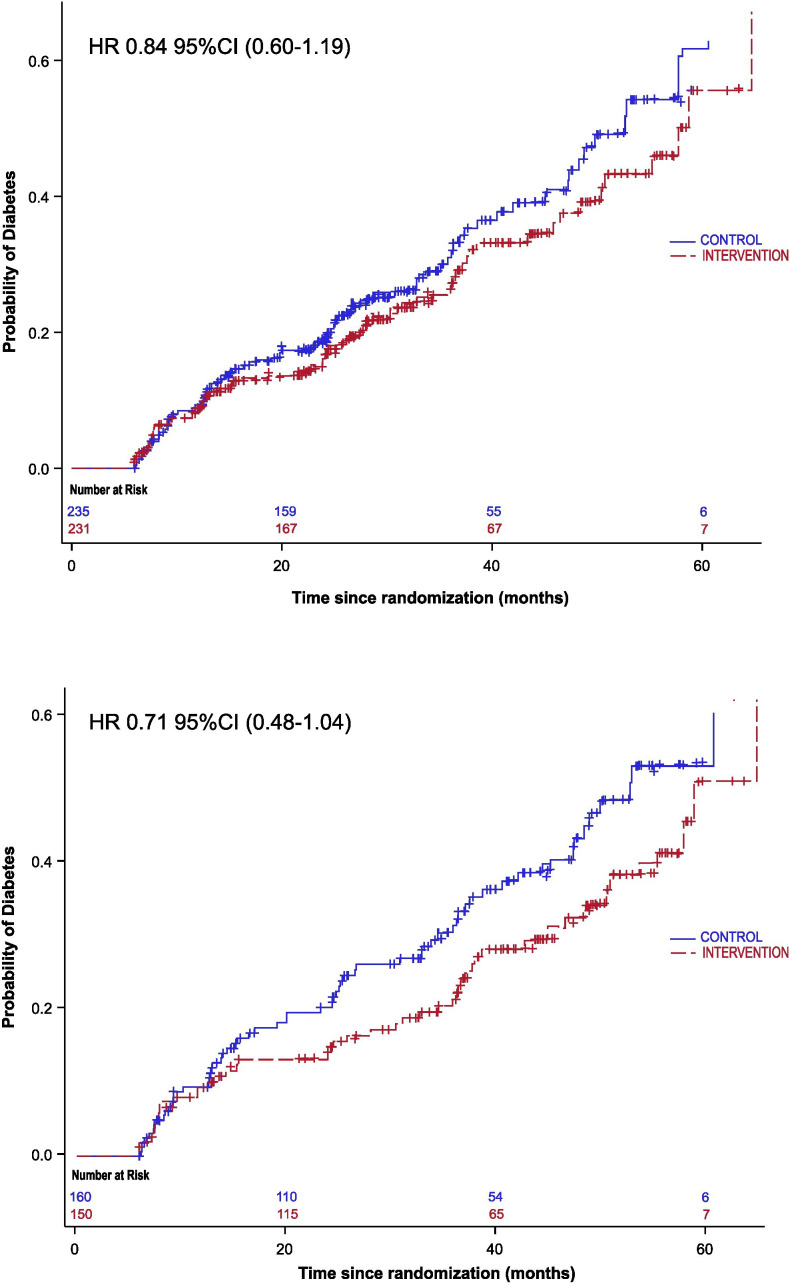
We enrolled 5323 women with GDM, 2735 (51%) being at high risk. After invitations, baseline assessment and exclusions, we assigned 466 women to intervention (231) or control (235) groups. Attendance was satisfactory (≥7/20 phone sessions) in 75%. Over an average follow-up of 29.7 (15.6) months, 142 (30.5%) women progressed to diabetes, 75 (32%) in the control and 67 (29%) in the intervention group. There was no reduction in the incidence of diabetes (HR=0.84; 0.60-1.19) and only a non-significant 0.97 kg less weight gain (p=0.09). Among the 305 women randomised more than 1 year before the COVID-19 pandemic, the intervention did not reduce the incidence of diabetes (HR=0.71; 0.48-1.04) despite a 2.09 kg (p=0.002) lesser weight gain.
The strategy to identify women with GDM at high risk proved valid, as women often gained weight and frequently developed diabetes. Over a 30-month follow-up, telephone support for lifestyle changes at postpartum did not reduce weight gain or diabetes incidence, although only 75% attended the minimum number of telephone sessions. The COVID-19 pandemic negatively impacted trial conduction.
NCT02327286.
评估一种基于产后电话的生活方式干预措施,以预防近期患有妊娠糖尿病(GDM)的高危女性发生糖尿病。
多中心平行随机临床试验。
巴西国家系统的专门产前诊所。
产后生活方式干预预防糖尿病试验(LIFESTYLE)将产后电话支持生活方式改变与近期 GDM 且有较高糖尿病风险的女性的常规护理进行了(1:1)比较。随机分组于 2015 年 3 月 28 日开始,2020 年 3 月 13 日结束,正值 COVID-19 大流行期间。我们使用 Cox 回归估计糖尿病的 HR,并采用协方差分析来调整随访时间,以评估体重变化。
主要结局是采用盲法口服葡萄糖耐量试验测量确诊的新发糖尿病。次要结局是体重变化。
我们共纳入了 5323 名患有 GDM 的女性,其中 2735 名(51%)为高危人群。在发出邀请、进行基线评估和排除后,我们将 466 名女性分配到干预组(231 名)或对照组(235 名)。75%的女性参加了至少 7/20 次的电话随访。在平均 29.7(15.6)个月的随访中,142 名(30.5%)女性发展为糖尿病,对照组 75 名(32%),干预组 67 名(29%)。糖尿病发病率没有降低(HR=0.84;0.60-1.19),体重仅增加了 0.97kg(p=0.09),无显著差异。在 COVID-19 大流行之前超过 1 年随机分组的 305 名女性中,尽管体重增加了 2.09kg(p=0.002),但干预组糖尿病发病率也没有降低(HR=0.71;0.48-1.04)。
确定患有 GDM 的高危女性的策略是有效的,因为这些女性经常增重且经常发生糖尿病。在 30 个月的随访中,产后生活方式改变的电话支持并未降低体重增加或糖尿病发病率,尽管只有 75%的女性参加了至少 7/20 次的电话随访。COVID-19 大流行对试验实施产生了负面影响。
NCT02327286。