Souissi Amine, Dergaa Ismail, Hajri Samia Ernez, Chamari Karim, Saad Helmi Ben
Université de Sousse, Faculté de Médecine de Sousse, Hôpital Farhat HACHED, Laboratoire de Recherche (Insuffisance Cardiaque, LR12SP09), Sousse, Tunisie.
Primary Health Care Corporation (PHCC), Doha, P.O. Box 26555, Qatar.
Biol Sport. 2024 Oct;41(4):131-144. doi: 10.5114/biolsport.2024.134757. Epub 2024 Apr 9.
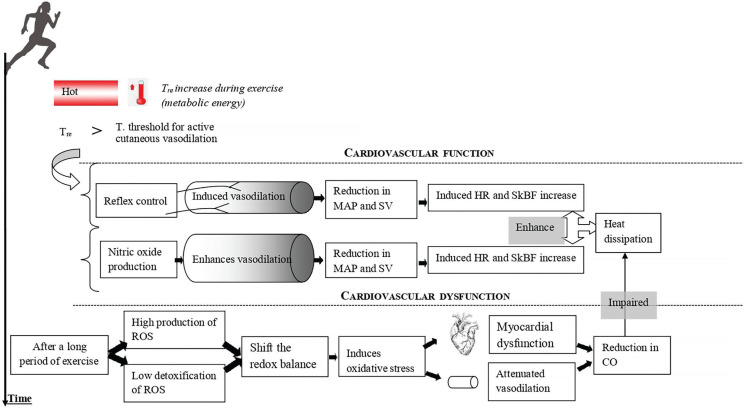
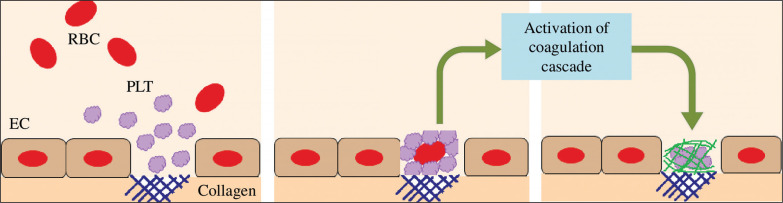
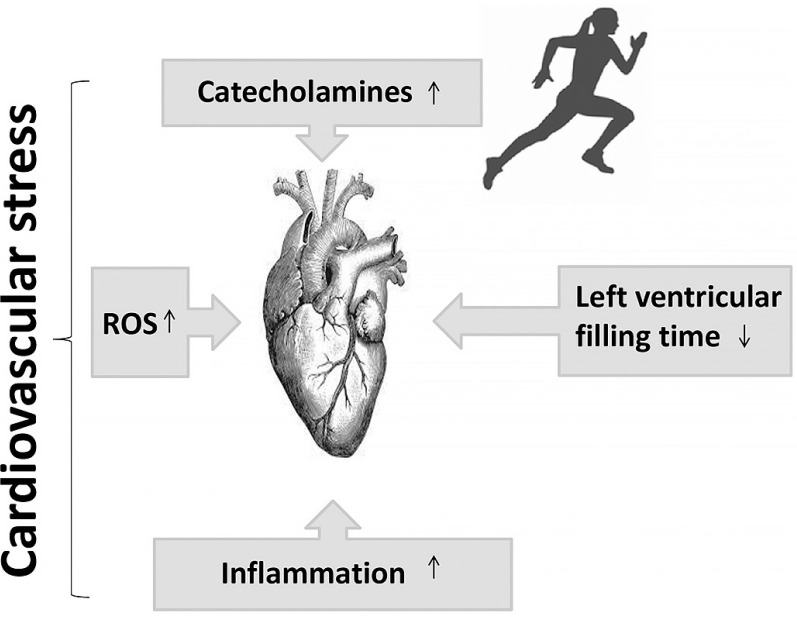
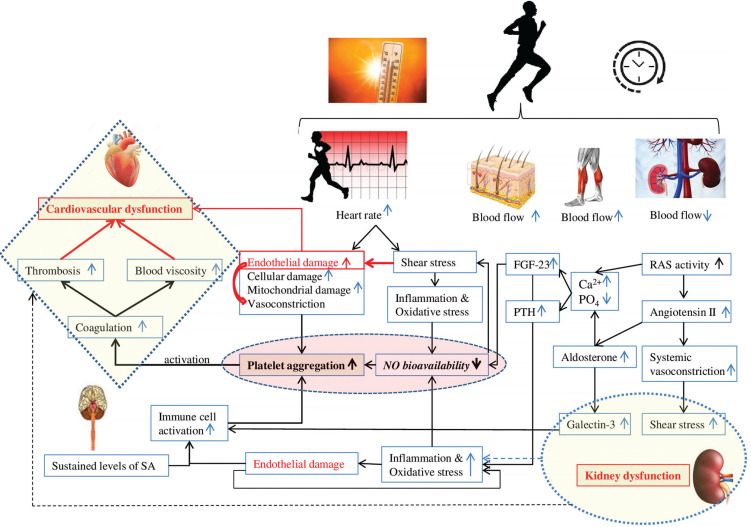
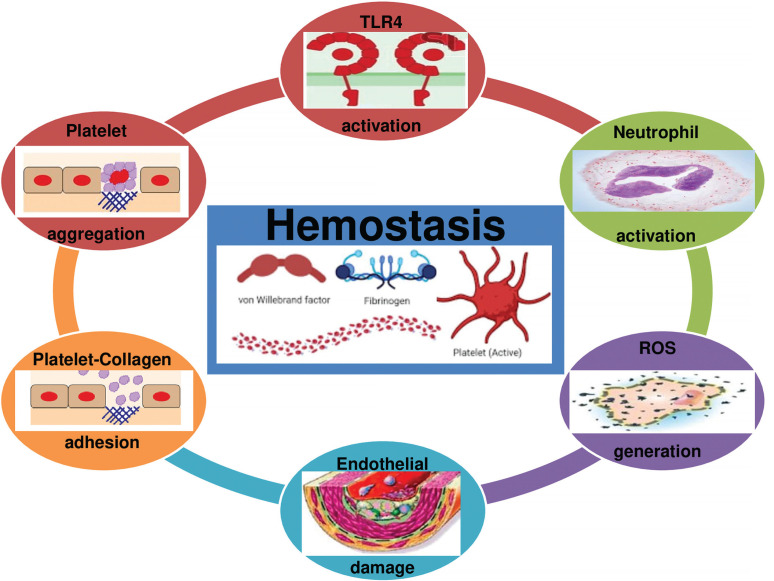
Exercise mechanical efficiency typically falls within the range of approximately 20 to 25%. This means that a great part of the metabolic energy converted to generate movement is released as heat. Therefore, the rise in core temperature during endurance exercise in humans is proportional to generated work. Cutaneous vasodilation occurs when the core temperature threshold is reached. The rise in heart rate in response to thermal stress is a cardiovascular response that increases cardiac output and skin blood flow. The cardiovascular response during endurance exercise is a complex phenomenon potentially influenced by the involvement of nitric oxide in active thermoregulatory vasodilation. Excessive exercise can create high oxidative stress by disrupting the balance between free radicals' production and scavenging, resulting in impaired cardiovascular function. The above considerations are related to the severity and duration of endurance exercise. The first focus of this narrative review is to provide an updated understanding of cardiovascular function during endurance exercise. We aim to explore the potential role of oxidative stress in causing cardiovascular dysfunction during endurance exercise from a fresh perspective. Additionally, we aim to identify the primary factors contributing to cardiovascular risk during strenuous prolonged exercise by highlighting recent progress in this area, which may shed light on previously unexplained physiological responses. To ascertain the effect of endurance exercise on cardiovascular function and dysfunction, a narrative review of the literature was undertaken using PubMed, ScienceDirect, Medline, Google Scholar, and Scopus. The review highlighted that high oxidative stress (due to high levels of catecholamines, shear stress, immune system activation, and renal dysfunction) leads to a rise in platelet aggregation during endurance exercise. Importantly, we clearly revealed for the first time that endothelial damage, vasoconstriction, and blood coagulation (inducing thrombosis) are potentially the primary factors of cardiovascular dysfunction and myocardial infarction during and/or following endurance exercise.
运动机械效率通常在约20%至25%的范围内。这意味着转化为产生运动的大部分代谢能量以热量的形式释放。因此,人类耐力运动期间核心体温的升高与所产生的功成正比。当达到核心体温阈值时会发生皮肤血管舒张。心率因热应激而升高是一种心血管反应,可增加心输出量和皮肤血流量。耐力运动期间的心血管反应是一种复杂的现象,可能受到一氧化氮参与主动体温调节性血管舒张的影响。过度运动可能会破坏自由基产生与清除之间的平衡,从而产生高氧化应激,导致心血管功能受损。上述考虑与耐力运动的强度和持续时间有关。本叙述性综述的首要重点是提供对耐力运动期间心血管功能的最新理解。我们旨在从全新的角度探索氧化应激在耐力运动期间导致心血管功能障碍中的潜在作用。此外,我们旨在通过强调该领域的最新进展来确定剧烈长时间运动期间导致心血管风险的主要因素,这可能会揭示以前无法解释的生理反应。为了确定耐力运动对心血管功能和功能障碍的影响,我们使用PubMed、ScienceDirect、Medline、谷歌学术和Scopus对文献进行了叙述性综述。该综述强调,高氧化应激(由于高水平的儿茶酚胺、剪切应力、免疫系统激活和肾功能障碍)会导致耐力运动期间血小板聚集增加。重要的是,我们首次明确揭示,内皮损伤、血管收缩和血液凝固(导致血栓形成)可能是耐力运动期间和/或之后心血管功能障碍和心肌梗死的主要因素。