Department of Biomedical Sciences, University of Lausanne, Lausanne, Switzerland.
Institute of Sport Sciences, University of Lausanne, Lausanne, Switzerland.
Sports Med. 2022 Dec;52(12):2821-2836. doi: 10.1007/s40279-022-01734-8. Epub 2022 Jul 18.
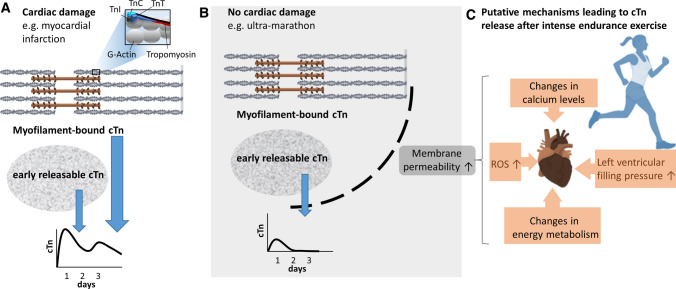
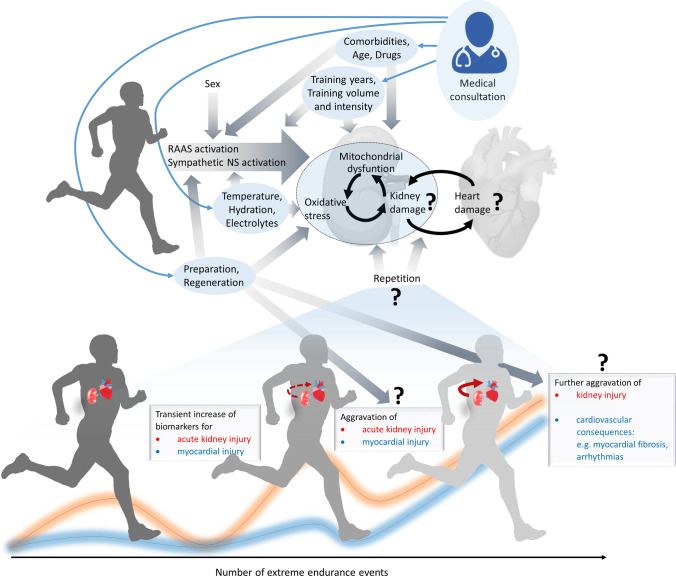
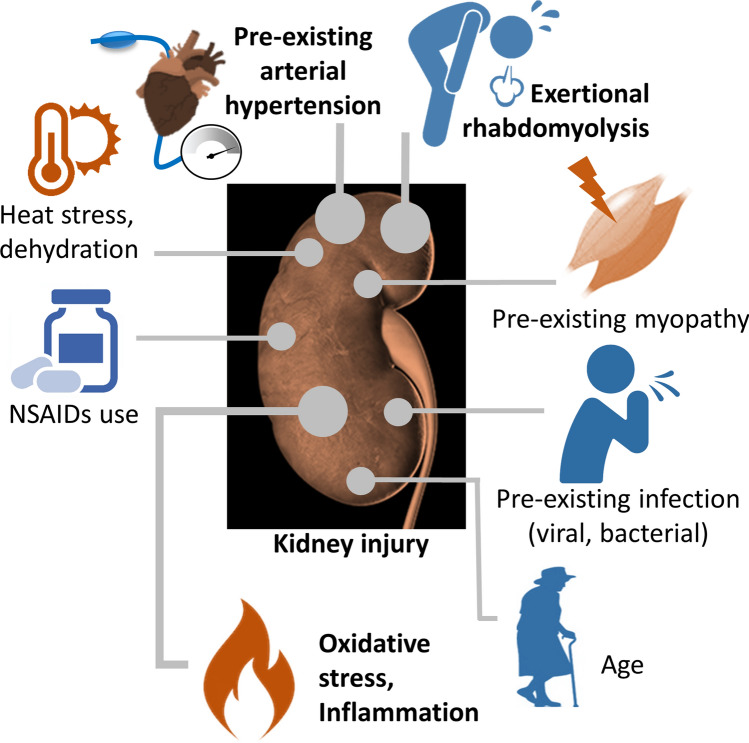
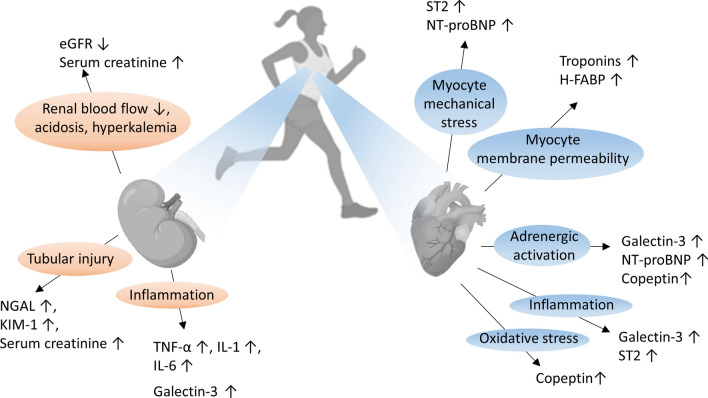
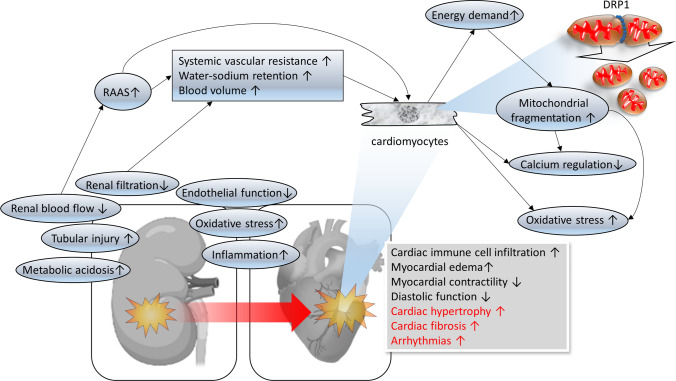
Regular exercise confers multifaceted and well-established health benefits. Yet, transient and asymptomatic increases in markers of cardio-renal injury are commonly observed in ultra-endurance athletes during and after competition. This has raised concerns that chronic recurring insults could cause long-term cardiac and/or renal damage. Indeed, extreme endurance exercise (EEE) over decades has sometimes been linked with untoward cardiac effects, but a causal relation with acute injury markers has not yet been established. Here, we summarize the current knowledge on markers of cardiac and/or renal injury in EEE athletes, outline the possible interplay between cardiac and kidney damage, and explore the roles of various factors in the development of potential exercise-related cardiac damage, including underlying diseases, medication, sex, training, competition, regeneration, mitochondrial dysfunction, oxidative stress, and inflammation. In conclusion, despite the undisputed health benefits of regular exercise, we speculate, based on the intimate link between heart and kidney diseases, that in rare cases excessive endurance sport may induce adverse cardio-renal interactions that under specific, hitherto undefined conditions could result in persistent cardiac damage. We highlight future research priorities and provide decision support for athletes and clinical consultants who are seeking safe strategies for participation in EEE training and competition.
经常锻炼能带来多方面的、已被充分证实的健康益处。然而,在比赛期间和之后,超耐力运动员的心血管-肾脏损伤标志物会出现短暂、无症状的增加。这引发了人们的担忧,即慢性反复性损伤可能导致长期的心脏和/或肾脏损伤。事实上,几十年来,极端耐力运动(EEE)有时与不良的心脏效应有关,但与急性损伤标志物之间的因果关系尚未建立。在这里,我们总结了 EEE 运动员中心血管和/或肾脏损伤标志物的现有知识,概述了心脏和肾脏损伤之间可能的相互作用,并探讨了各种因素在潜在与运动相关的心脏损伤发展中的作用,包括基础疾病、药物、性别、训练、比赛、再生、线粒体功能障碍、氧化应激和炎症。总之,尽管有规律的运动带来了无可争议的健康益处,但我们推测,基于心脏和肾脏疾病之间的密切联系,在极少数情况下,过度的耐力运动可能会引起不良的心肺相互作用,在特定的、迄今为止尚未明确的条件下,可能会导致持续的心脏损伤。我们强调了未来的研究重点,并为运动员和临床顾问提供决策支持,帮助他们寻找安全的策略,以参与 EEE 训练和比赛。