Ortiz Bryan, Varela Diana, Fontecha Gustavo, Torres Karla, Cornely Oliver A, Salmanton-García Jon
Instituto de Investigaciones en Microbiología, Facultad de Ciencias, Universidad Nacional Autónoma de Honduras, Tegucigalpa, Honduras.
Servicio de Infectología, Servicio de Atención Integral de Pacientes con VIH, Hospital Escuela, Tegucigalpa, Honduras.
Open Forum Infect Dis. 2024 Oct 3;11(10):ofae578. doi: 10.1093/ofid/ofae578. eCollection 2024 Oct.
Invasive fungal infections (IFIs) are a major public health concern in low- and middle-income countries (LMICs) due to limited diagnostic and treatment resources, leading to high morbidity and mortality. Despite their significant global burden, IFIs are underrecognized and underdiagnosed in LMICs. This study evaluates the diagnostic and therapeutic capacities for managing IFI in Honduras, a country with unique health care challenges.
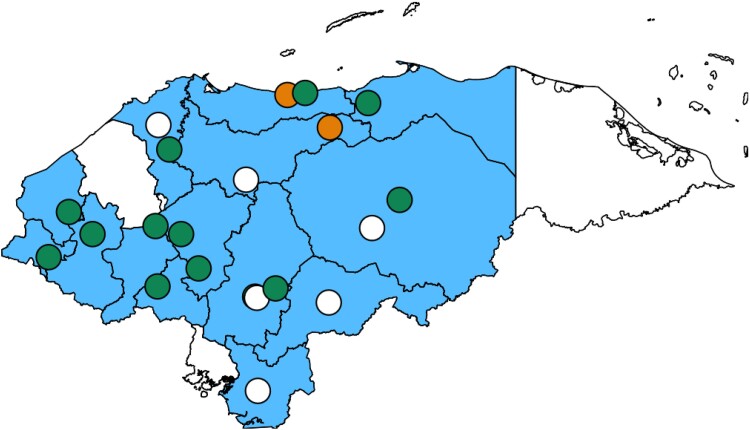
From March to December 2023, a comprehensive survey was conducted across multiple health care centers in Honduras. The survey, reviewed for content and clarity by local medical institutions, targeted medical microbiologists and clinicians to assess various aspects of fungal disease diagnosis and treatment. Data included the availability and use of diagnostic tools and antifungal therapies, identifying gaps and limitations in current practices.
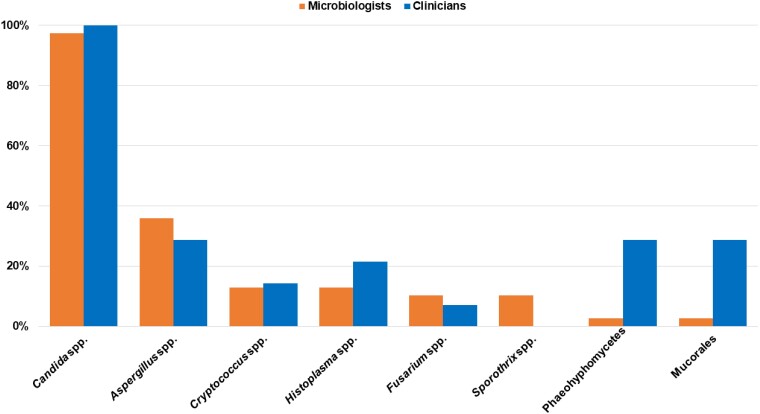
The survey revealed that spp (97.4%) and spp (35.9%) were the most concerning pathogens. Although microscopy and culture methods were available in most institutions, their application in suspected IFI cases was inconsistent, and antifungal susceptibility testing was rarely performed. Advanced diagnostic techniques, such as antigen detection, were available in only a few institutions, while antibody detection and polymerase chain reaction testing were entirely absent. All hospitals had access to at least 1 triazole antifungal, typically fluconazole, but there was a notable scarcity of more potent antifungals, including amphotericin B formulations and echinocandins. The limited use of available diagnostic tools and the restricted availability of essential antifungals were identified as major barriers to effective IFI management.
This study highlights significant gaps in the diagnostic and therapeutic capabilities for managing IFI in Honduras. The underutilization of basic diagnostic tools, the inaccessibility of advanced testing methods, and the limited availability of essential antifungal medications underscore the urgent need for capacity-building initiatives, infrastructure improvements, and policy reforms. Addressing these deficiencies is critical for enhancing the management of IFI in Honduras, with broader implications for similar LMIC settings. These findings can inform targeted interventions and resource allocation to improve outcomes for patients with IFI.
由于诊断和治疗资源有限,侵袭性真菌感染(IFI)在低收入和中等收入国家(LMIC)是一个主要的公共卫生问题,导致高发病率和死亡率。尽管IFI在全球负担重大,但在LMIC中却未得到充分认识和诊断。本研究评估了洪都拉斯应对IFI的诊断和治疗能力,该国面临独特的医疗保健挑战。
2023年3月至12月,在洪都拉斯的多个医疗中心进行了一项全面调查。该调查经当地医疗机构审查内容和清晰度后,针对医学微生物学家和临床医生,以评估真菌疾病诊断和治疗的各个方面。数据包括诊断工具和抗真菌疗法的可用性及使用情况,确定当前实践中的差距和局限性。
调查显示, spp(97.4%)和 spp(35.9%)是最令人担忧的病原体。虽然大多数机构都有显微镜检查和培养方法,但它们在疑似IFI病例中的应用并不一致,且很少进行抗真菌药敏试验。仅少数机构具备先进的诊断技术,如抗原检测,而抗体检测和聚合酶链反应检测则完全没有。所有医院至少都能获得一种三唑类抗真菌药物,通常是氟康唑,但更有效的抗真菌药物明显短缺,包括两性霉素B制剂和棘白菌素。可用诊断工具的使用有限以及基本抗真菌药物供应受限被确定为有效管理IFI的主要障碍。
本研究突出了洪都拉斯在管理IFI的诊断和治疗能力方面的重大差距。基本诊断工具利用不足、先进检测方法难以获得以及基本抗真菌药物供应有限,凸显了能力建设举措、基础设施改善和政策改革的迫切需求。解决这些不足对于加强洪都拉斯IFI的管理至关重要,对类似的LMIC环境具有更广泛的影响。这些发现可为有针对性的干预措施和资源分配提供参考,以改善IFI患者的治疗结果。