School of Healthy Aging, Shandong Women's University, Jinan, Shandong 250000, P.R. China.
Department of Biological and Environmental Engineering, Binzhou University, Binzhou, Shandong 256600, P.R. China.
Mol Med Rep. 2024 Dec;30(6). doi: 10.3892/mmr.2024.13364. Epub 2024 Oct 18.
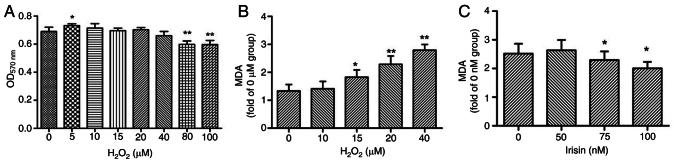
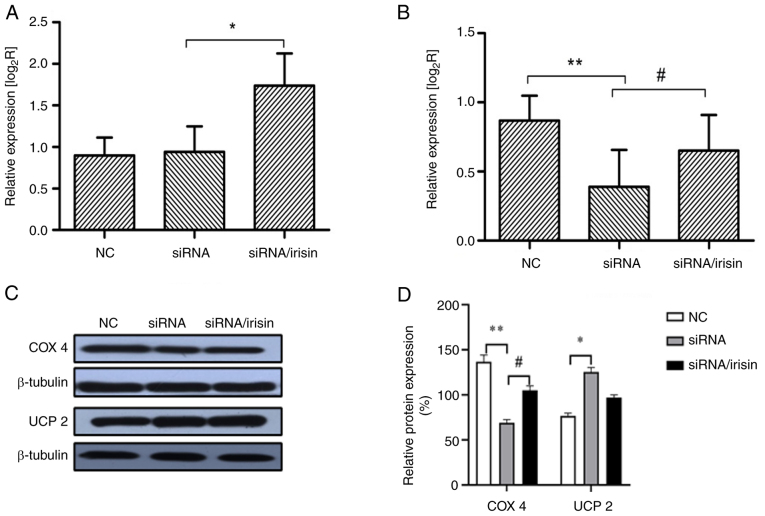
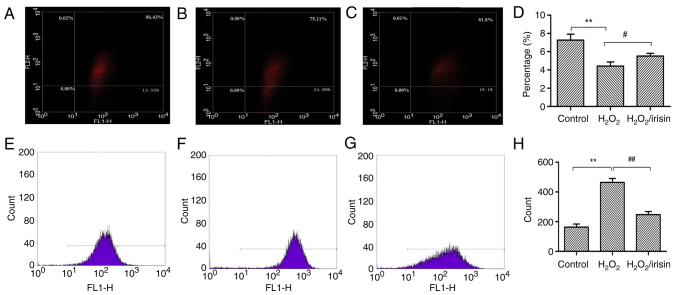
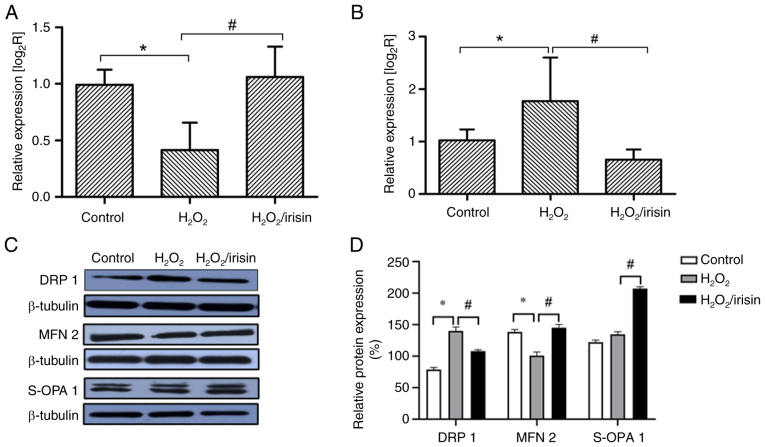
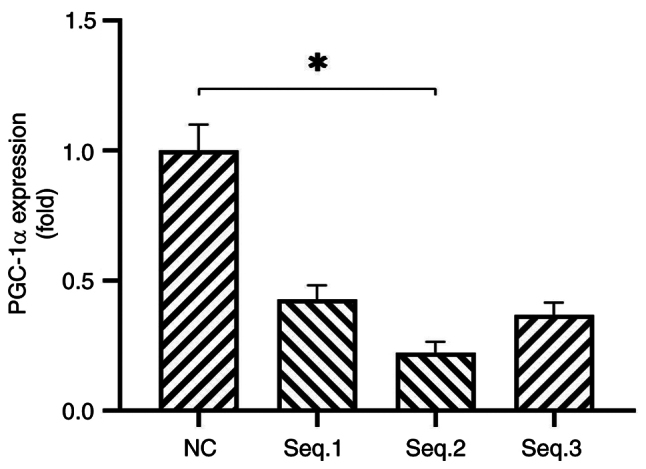
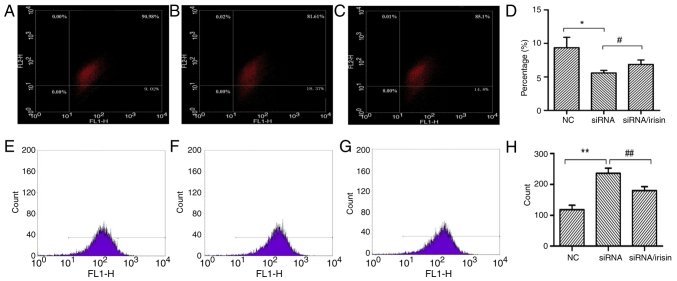
Abnormal mitohormesis is a key pathogenic mechanism that induces a variety of cardiac diseases, including cardiac hypertrophy and heart failure. Irisin as a muscle factor serves a cardioprotective role in response to cellular oxidative stress injury. Rat cardiomyocyte cells (H9c2) were treated with 40 µM exogenous HO to establish an oxidative stress model, followed by addition of 75 nM exogenous irisin for experiments to determine mitochondrial membrane potential, reactive oxygen species, and Mitohormesis‑related factors by attrition cytometry. Subsequently, the expression of mitochondrial membrane potential, reactive oxygen species and Mitohormesis‑related factors were continued to be determined by establishing a peroxisome proliferator‑activated receptor γ coactivator‑1 alpha (PGC‑1α) siRNA interference model and continuing the treatment with the addition of 75 nM irisin 12 h before the end of interference. When H9c2 cells underwent oxidative stress, irisin partially improved mitochondrial membrane potential and reactive oxygen species levels and partially restored mitochondrial energy metabolism by upregulating fusion proteins optic atrophy 1 (OPA1) mitochondrial dynamin‑like GTPase and mitofusin 2 and downregulating fission protein dynamin‑related protein 1. Following interference with PGC‑1α, irisin promoted mitochondrial biosynthesis by increasing the mRNA levels of OPA1 and protein levels of cytochrome c oxidase subunit 4. These results suggested that irisin acted partially independently of the PGC‑1α signaling pathway to regulate mitohormesis imbalance due to oxidative stress and maintain energy metabolism by improving mitochondrial structure.
异常的线粒体适应是诱导多种心脏病的关键发病机制,包括心肌肥厚和心力衰竭。鸢尾素作为一种肌肉因子,在应对细胞氧化应激损伤时发挥心脏保护作用。用 40μM 外源性 HO 处理大鼠心肌细胞(H9c2)建立氧化应激模型,然后加入 75nM 外源性鸢尾素,通过耗散式细胞术实验测定线粒体膜电位、活性氧和线粒体适应相关因子。随后,通过建立过氧化物酶体增殖物激活受体γ共激活因子 1α(PGC-1α)siRNA 干扰模型,并在干扰结束前 12 小时加入 75nM 鸢尾素继续处理,继续测定线粒体膜电位、活性氧和线粒体适应相关因子的表达。当 H9c2 细胞发生氧化应激时,鸢尾素部分改善线粒体膜电位和活性氧水平,并通过上调融合蛋白视神经萎缩 1(OPA1)线粒体动力相关 GTP 酶和线粒体融合蛋白 2,下调分裂蛋白动力相关蛋白 1,部分恢复线粒体能量代谢。PGC-1α 干扰后,鸢尾素通过增加 OPA1 的 mRNA 水平和细胞色素 c 氧化酶亚基 4 的蛋白水平,促进线粒体生物合成。这些结果表明,鸢尾素部分独立于 PGC-1α 信号通路发挥作用,调节氧化应激引起的线粒体适应失衡,通过改善线粒体结构维持能量代谢。