Medical Research Council Cognition and Brain Sciences Unit, University of Cambridge, Cambridge, UK.
Department of Psychiatry, University of Cambridge, Cambridge, UK.
Hum Brain Mapp. 2024 Oct 15;45(15):e70043. doi: 10.1002/hbm.70043.
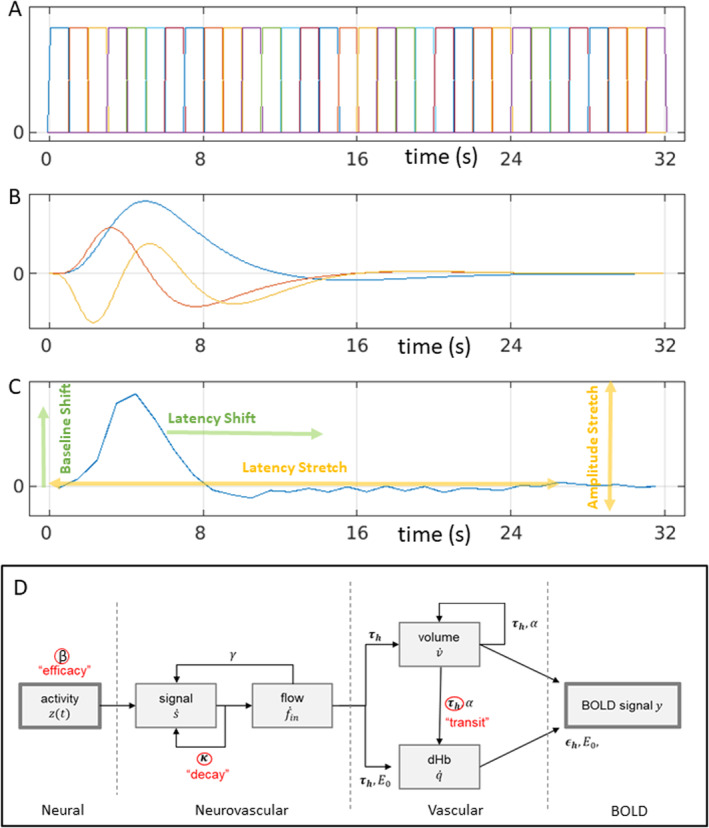
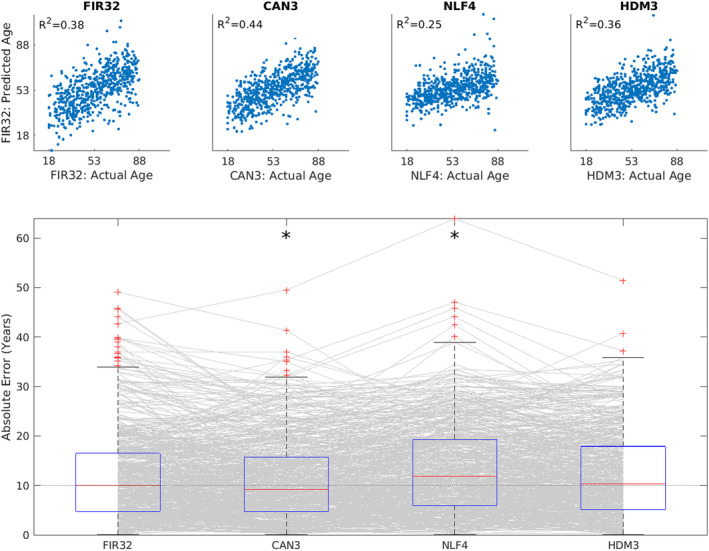
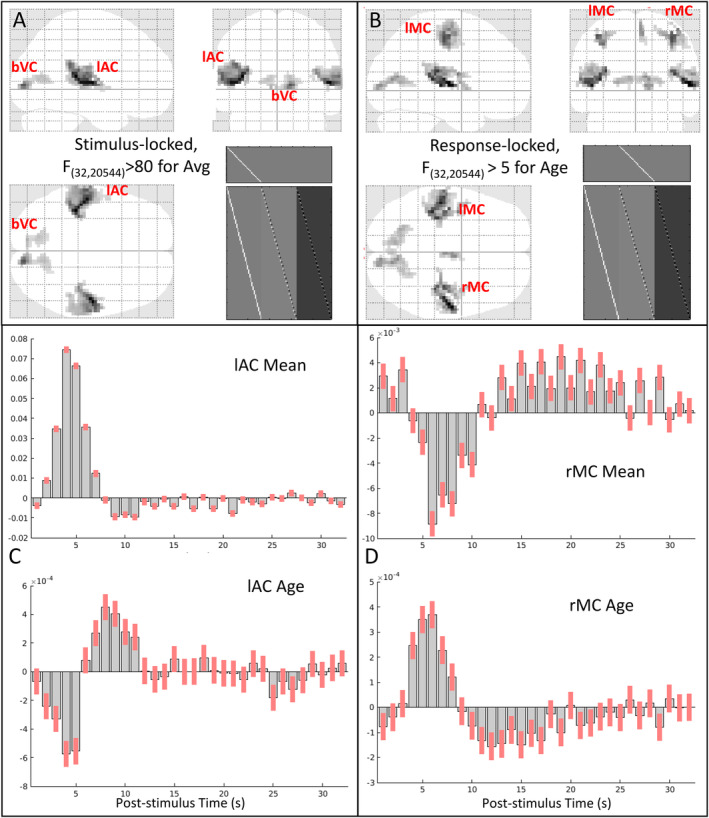
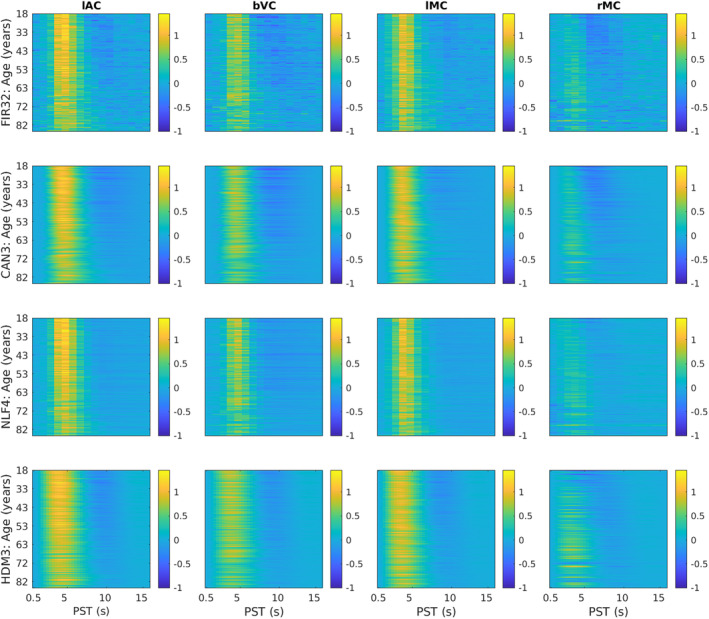
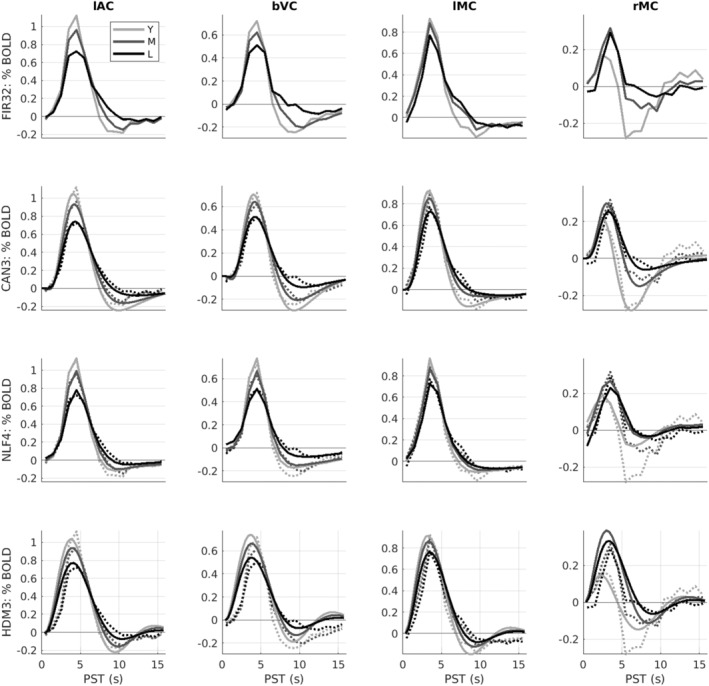
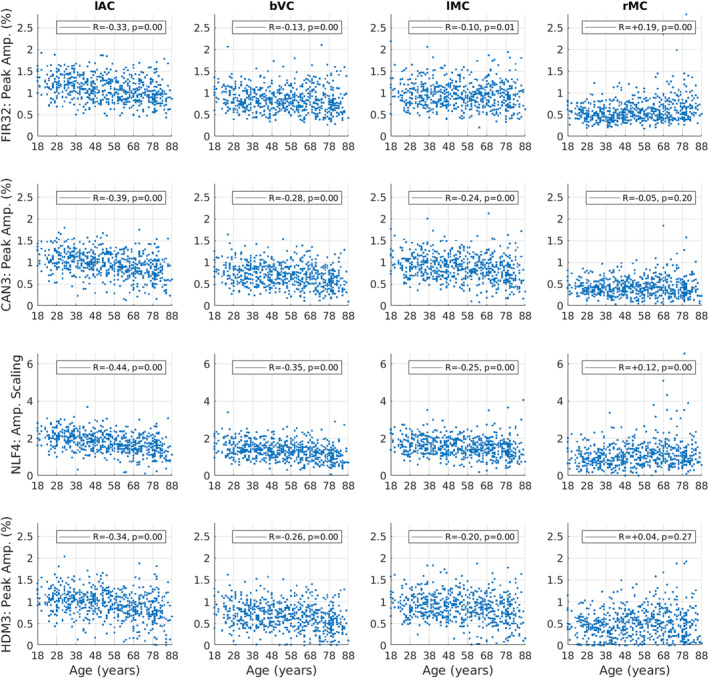
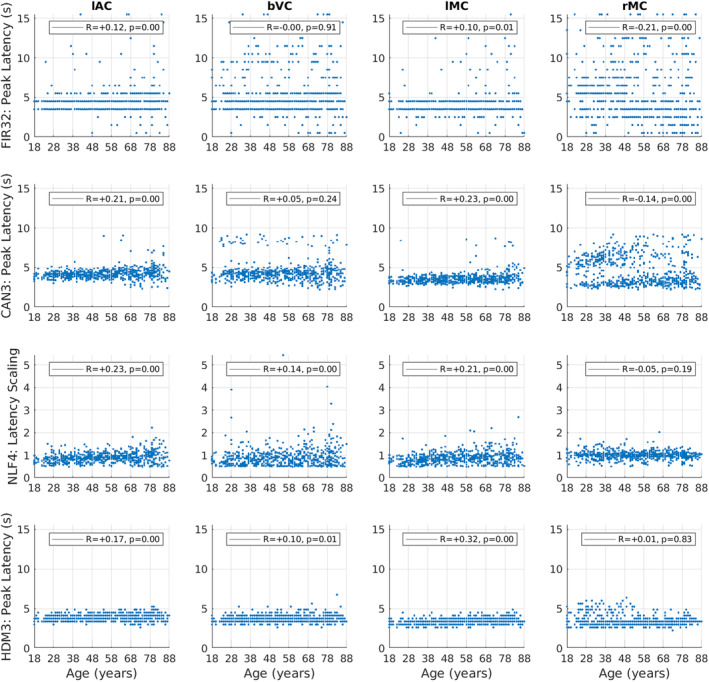
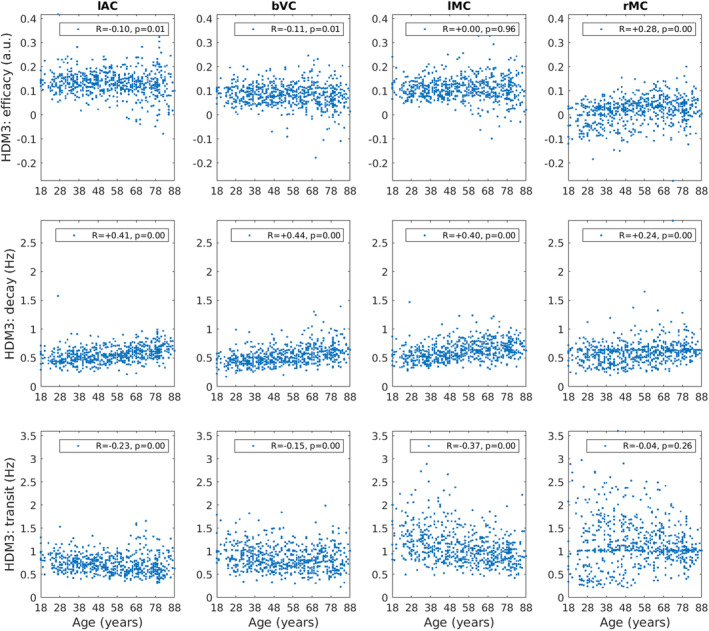
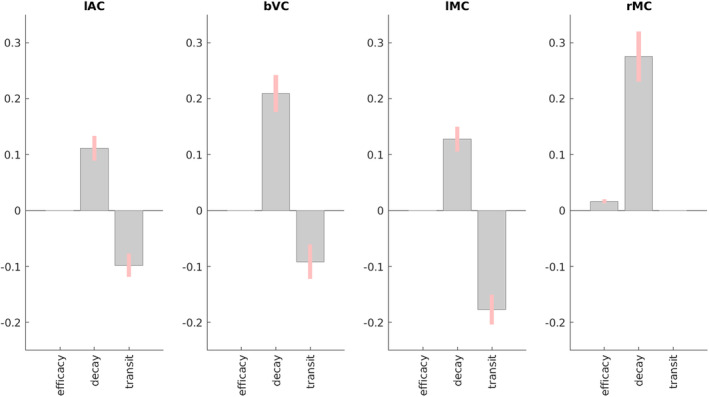
Neural activity cannot be directly observed using fMRI; rather it must be inferred from the hemodynamic responses that neural activity causes. Solving this inverse problem is made possible through the use of forward models, which generate predicted hemodynamic responses given hypothesised underlying neural activity. Commonly-used hemodynamic models were developed to explain data from healthy young participants; however, studies of ageing and dementia are increasingly shifting the focus toward elderly populations. We evaluated the validity of a range of hemodynamic models across the healthy adult lifespan: from basis sets for the linear convolution models commonly used to analyse fMRI studies, to more advanced models including nonlinear fitting of a parameterised hemodynamic response function (HRF) and nonlinear fitting of a biophysical generative model (hemodynamic modelling, HDM). Using an exceptionally large sample of participants, and a sensorimotor task optimized for detecting the shape of the BOLD response to brief stimulation, we first characterised the effects of age on descriptive features of the response (e.g., peak amplitude and latency). We then compared these to features from more complex nonlinear models, fit to four regions of interest engaged by the task, namely left auditory cortex, bilateral visual cortex, left (contralateral) motor cortex and right (ipsilateral) motor cortex. Finally, we validated the extent to which parameter estimates from these models have predictive validity, in terms of how well they predict age in cross-validated multiple regression. We conclude that age-related differences in the BOLD response can be captured effectively by models with three free parameters. Furthermore, we show that biophysical models like the HDM have predictive validity comparable to more common models, while additionally providing insights into underlying mechanisms, which go beyond descriptive features like peak amplitude or latency, and include estimation of nonlinear effects. Here, the HDM revealed that most of the effects of age on the BOLD response could be explained by an increased rate of vasoactive signal decay and decreased transit rate of blood, rather than changes in neural activity per se. However, in the absence of other types of neural/hemodynamic data, unique interpretation of HDM parameters is difficult from fMRI data alone, and some brain regions in some tasks (e.g., ipsilateral motor cortex) can show responses that are more difficult to capture using current models.
神经活动不能直接通过 fMRI 观察;相反,它必须从神经活动引起的血液动力学反应中推断出来。通过使用正向模型,可以解决这个逆问题,正向模型根据假设的潜在神经活动生成预测的血液动力学反应。常用的血液动力学模型是为了解释来自健康年轻参与者的数据而开发的;然而,老龄化和痴呆症的研究越来越关注老年人群。我们评估了一系列血液动力学模型在健康成年人寿命中的有效性:从常用的线性卷积模型的基础集,到更先进的模型,包括对参数化血液动力学反应函数(HRF)的非线性拟合和对生物物理生成模型(血液动力学建模,HDM)的非线性拟合。我们使用一个非常大的参与者样本,并使用优化的感觉运动任务来检测短暂刺激下 BOLD 反应的形状,首先描述了年龄对反应描述特征的影响(例如,峰值幅度和潜伏期)。然后,我们将这些特征与更复杂的非线性模型进行比较,这些模型拟合任务所涉及的四个感兴趣区域,即左听觉皮层、双侧视觉皮层、左(对侧)运动皮层和右(同侧)运动皮层。最后,我们验证了这些模型的参数估计在交叉验证多元回归中预测年龄的程度的预测有效性。我们的结论是,具有三个自由参数的模型可以有效地捕捉到与年龄相关的 BOLD 反应差异。此外,我们表明,像 HDM 这样的生物物理模型具有与更常见的模型相当的预测有效性,同时还提供了对潜在机制的深入了解,这些机制超出了描述特征,如峰值幅度或潜伏期,包括对非线性效应的估计。在这里,HDM 显示,年龄对 BOLD 反应的大多数影响可以通过增加血管活性信号衰减的速率和血液传输速率的降低来解释,而不是神经活动本身的变化。然而,在没有其他类型的神经/血液动力学数据的情况下,仅从 fMRI 数据单独对 HDM 参数进行独特解释是困难的,并且某些任务中的某些脑区(例如同侧运动皮层)的反应更难用当前模型捕捉。