Tak Yae Won, Knights Ethan, Henson Richard, Zeidman Peter
Wellcome Centre for Human Neuroimaging, University College London, London WC1N 3AR, UK.
MRC Cognition and Brain Sciences Unit, Department of Psychiatry, University of Cambridge, Cambridge CB2 7EF, UK.
Brain Sci. 2021 Aug 26;11(9):1130. doi: 10.3390/brainsci11091130.
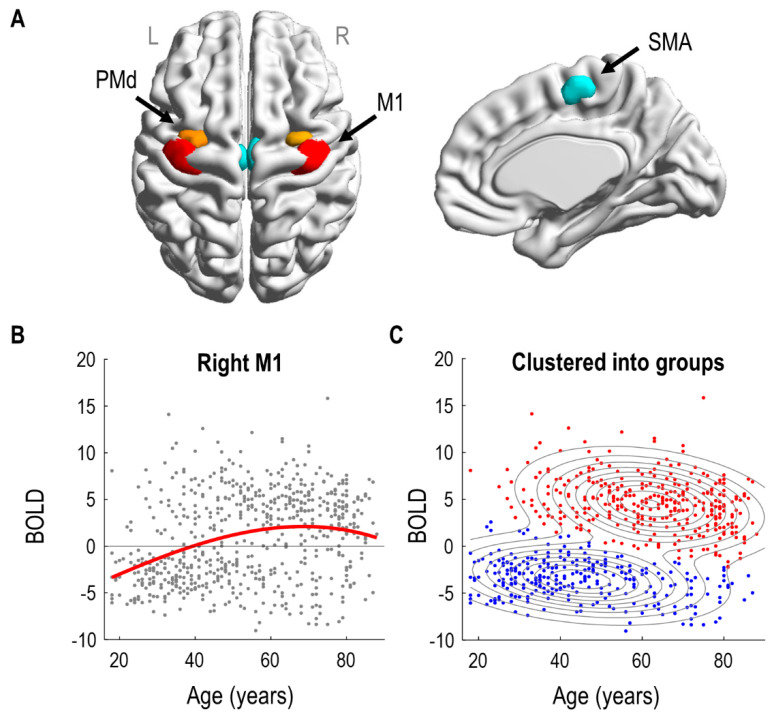
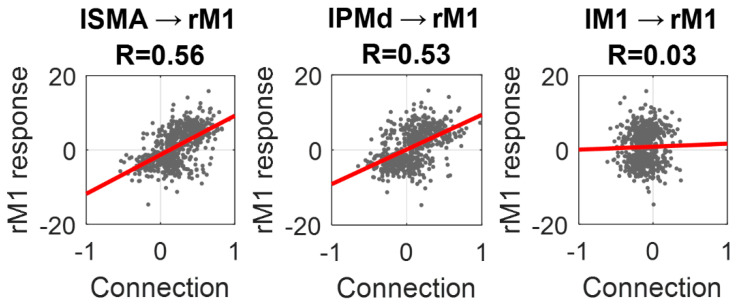
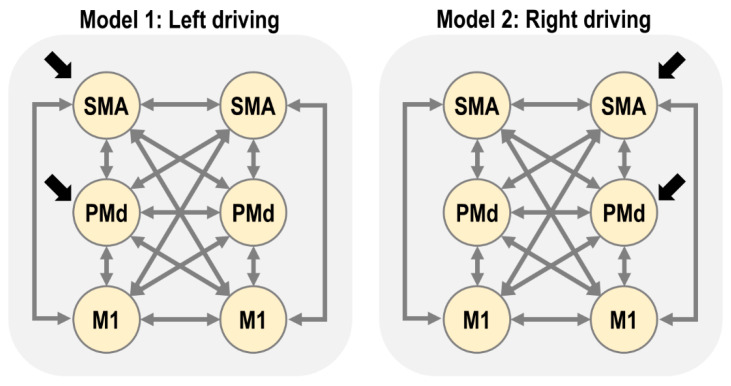
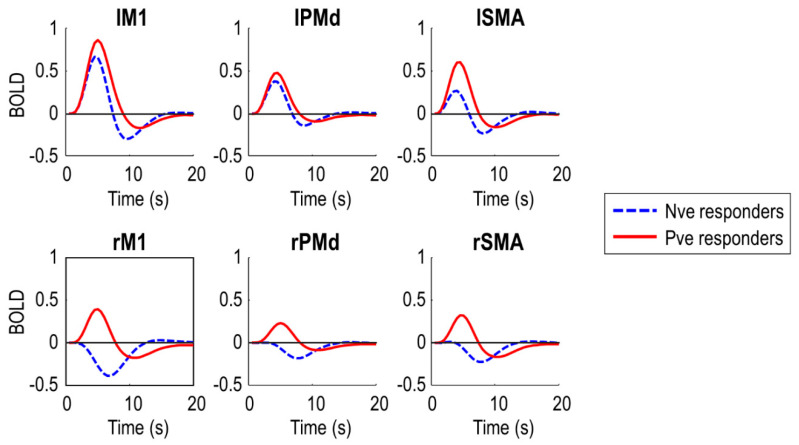
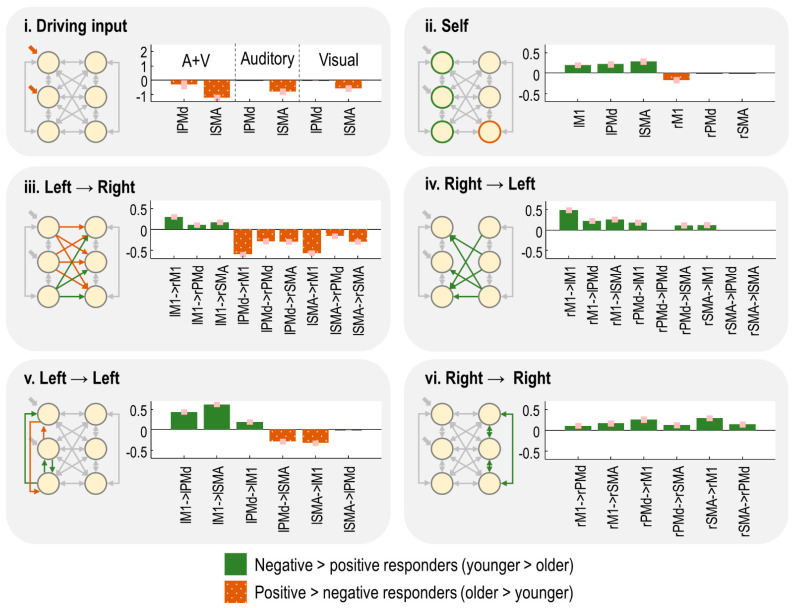
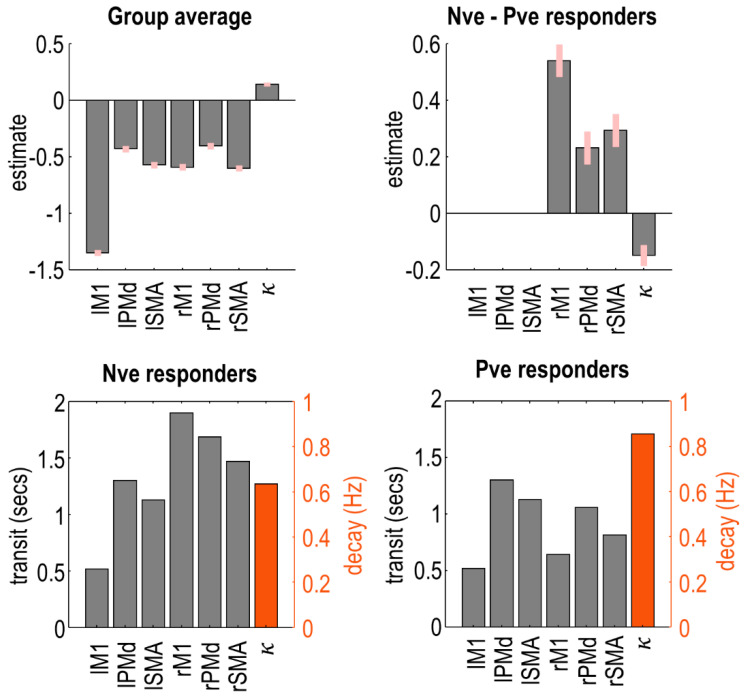
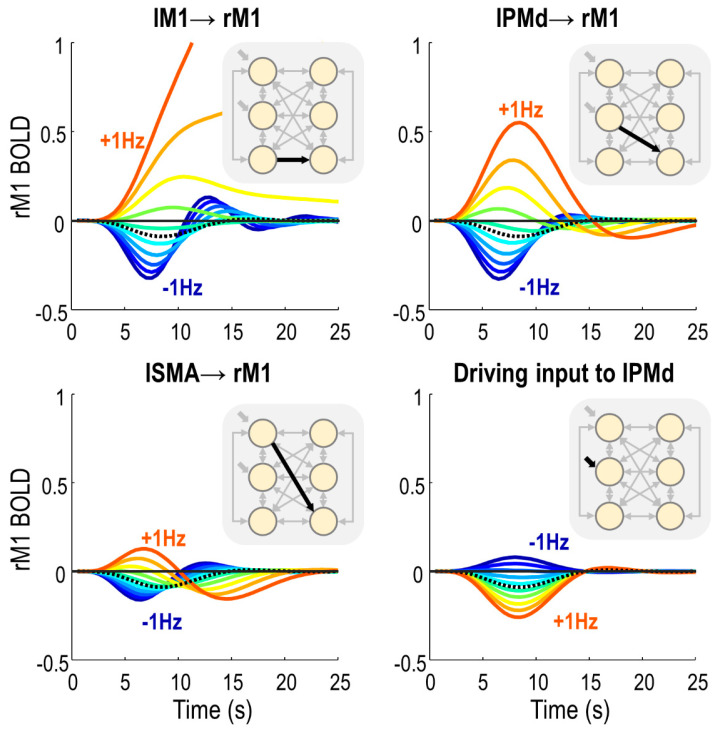
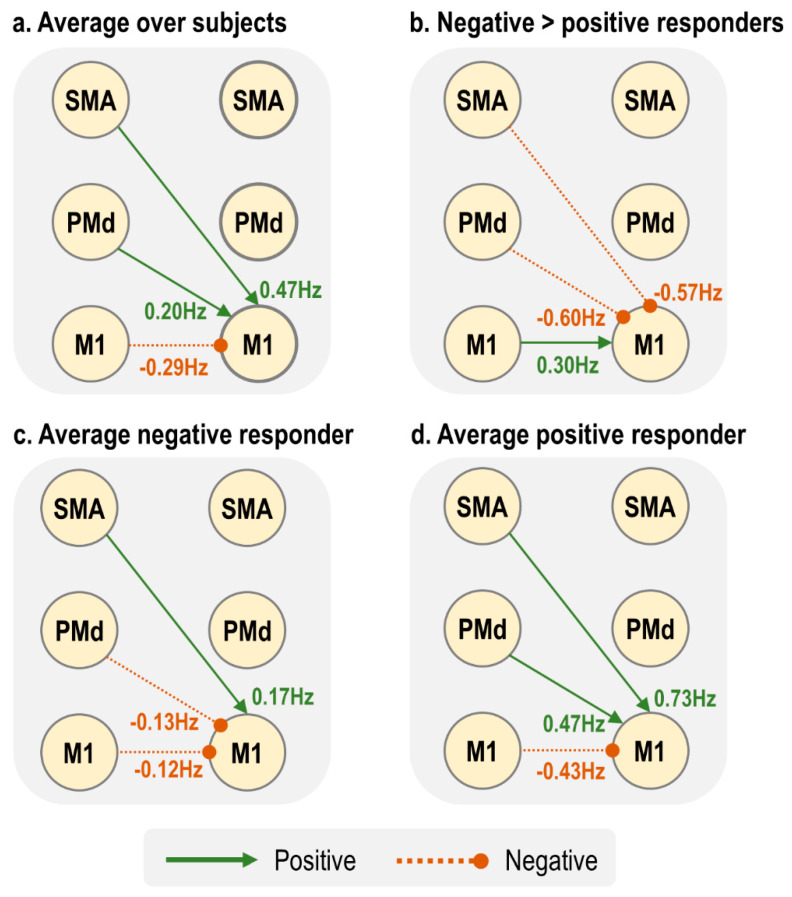
Young people exhibit a negative BOLD response in ipsilateral primary motor cortex (M1) when making unilateral movements, such as button presses. This negative BOLD response becomes more positive as people age. In this study, we investigated why this occurs, in terms of the underlying effective connectivity and haemodynamics. We applied dynamic causal modeling (DCM) to task fMRI data from 635 participants aged 18-88 from the Cam-CAN dataset, who performed a cued button pressing task with their right hand. We found that connectivity from contralateral supplementary motor area (SMA) and dorsal premotor cortex (PMd) to ipsilateral M1 became more positive with age, explaining 44% of the variability across people in ipsilateral M1 responses. In contrast, connectivity from contralateral M1 to ipsilateral M1 was weaker and did not correlate with individual differences in rM1 BOLD. Neurovascular and haemodynamic parameters in the model were not able to explain the age-related shift to positive BOLD. Our results add to a body of evidence implicating neural, rather than vascular factors as the predominant cause of negative BOLD-while emphasising the importance of inter-hemispheric connectivity. This study provides a foundation for investigating the clinical and lifestyle factors that determine the sign and amplitude of the M1 BOLD response in ageing, which could serve as a proxy for neural and vascular health, via the underlying neurovascular mechanisms.
年轻人在进行单侧运动(如按按钮)时,同侧初级运动皮层(M1)会出现负性BOLD反应。随着年龄增长,这种负性BOLD反应会变得更加正向。在本研究中,我们从潜在的有效连接性和血流动力学方面,探究了为何会出现这种情况。我们将动态因果模型(DCM)应用于来自Cam-CAN数据集的635名年龄在18 - 88岁参与者的任务功能磁共振成像(fMRI)数据,这些参与者用右手执行了一个有提示的按按钮任务。我们发现,从对侧辅助运动区(SMA)和背侧运动前皮层(PMd)到同侧M1的连接性随年龄增长变得更加正向,解释了同侧M1反应中44%的个体间变异性。相比之下,从对侧M1到同侧M1的连接性较弱,且与rM1 BOLD的个体差异无关。模型中的神经血管和血流动力学参数无法解释与年龄相关的向正向BOLD的转变。我们的结果补充了一系列证据,表明神经因素而非血管因素是负性BOLD的主要原因,同时强调了半球间连接性的重要性。本研究为调查决定衰老过程中M1 BOLD反应的正负及幅度的临床和生活方式因素奠定了基础,这些因素可通过潜在的神经血管机制作为神经和血管健康的一个指标。