Department of Molecular Physiology and Biophysics, Vanderbilt University, Nashville, TN, USA.
Department of Chemistry and Biochemistry, University of Arkansas, Fayetteville, AR, USA.
Nat Commun. 2024 Oct 20;15(1):9055. doi: 10.1038/s41467-024-53420-0.
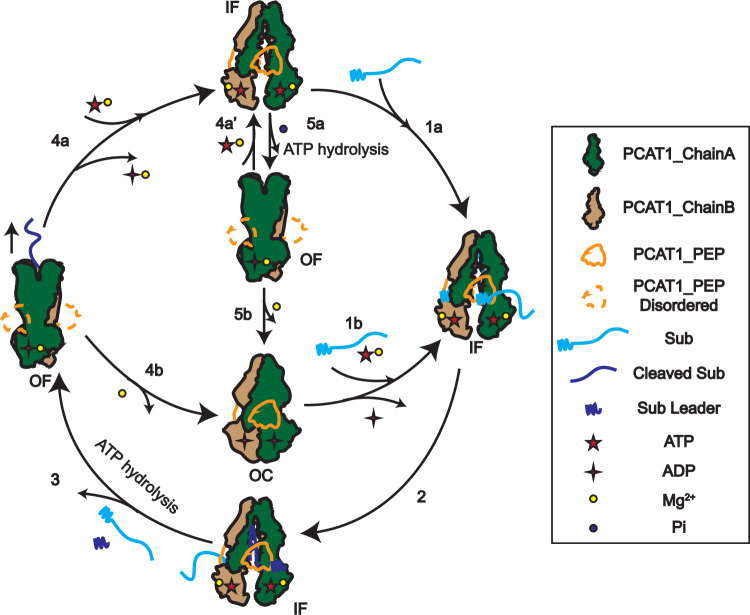
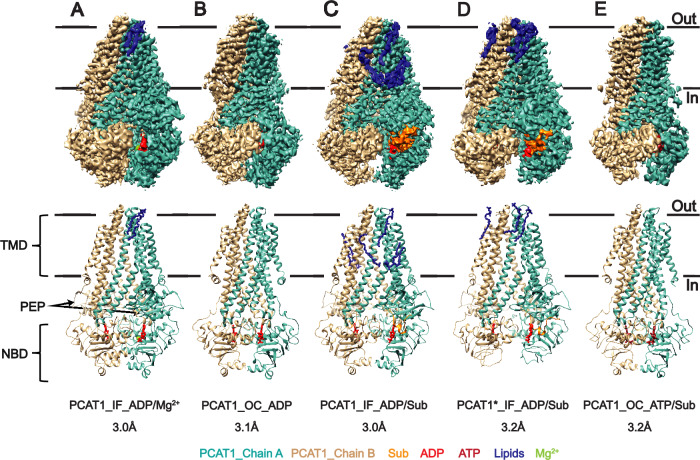
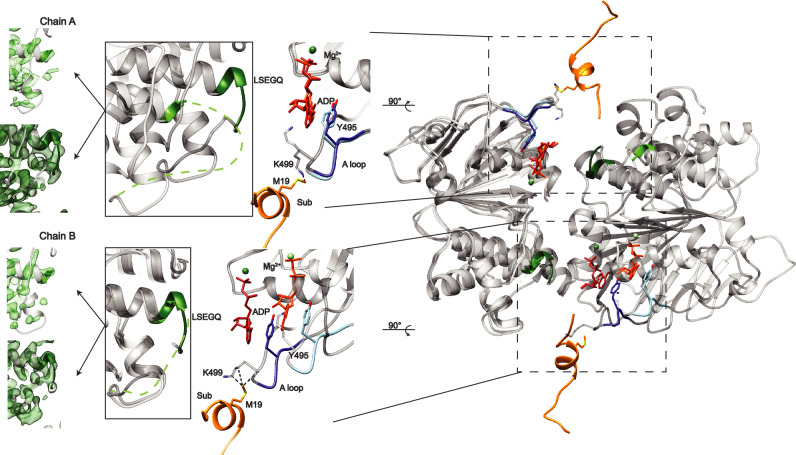
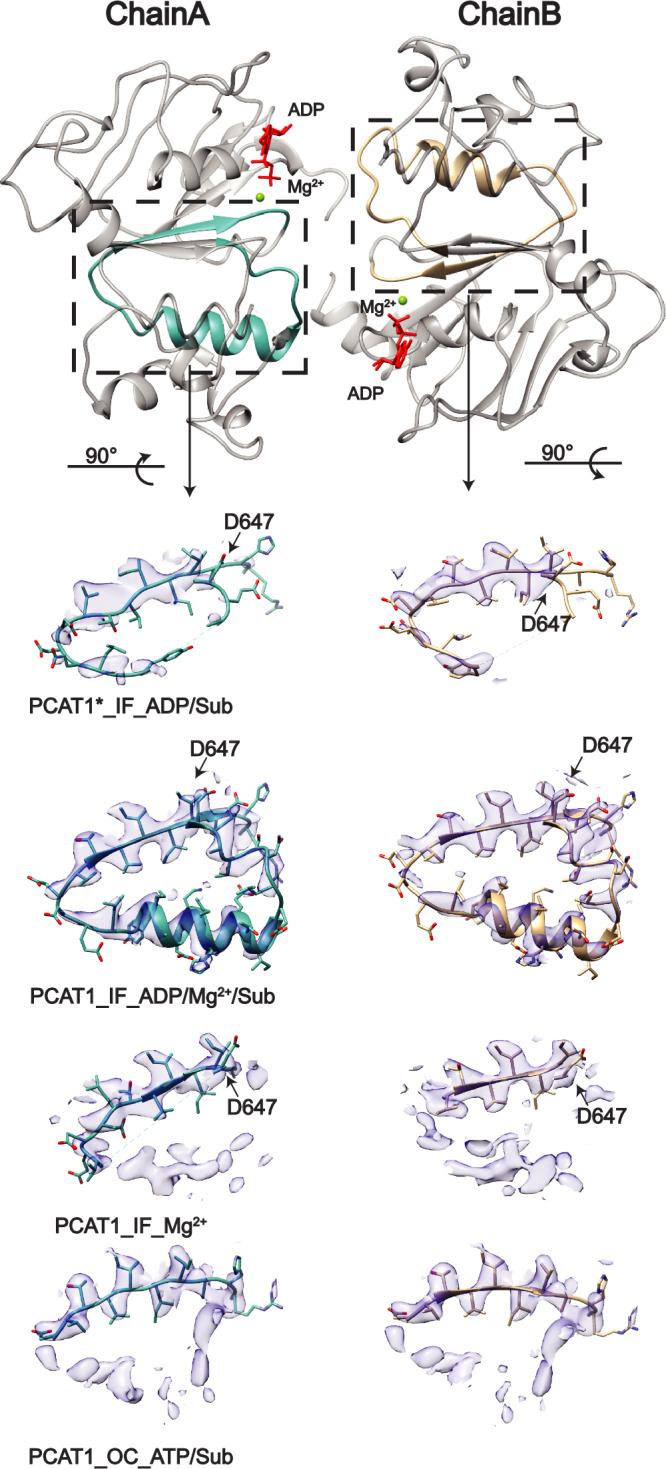
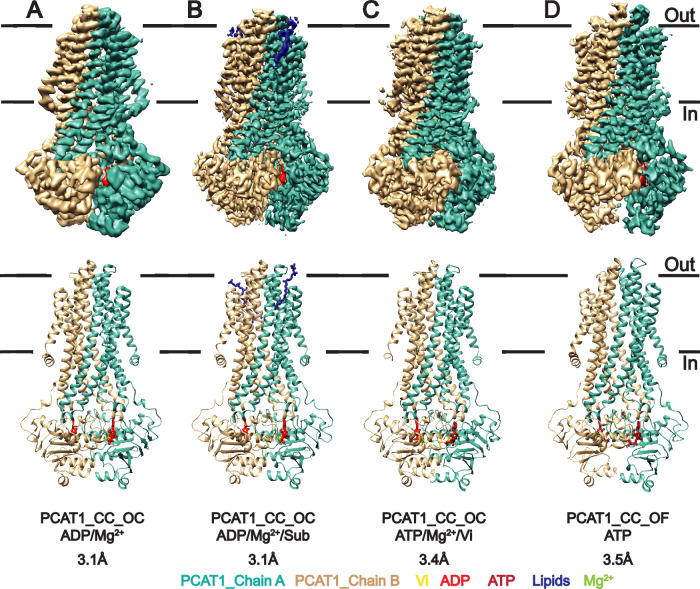
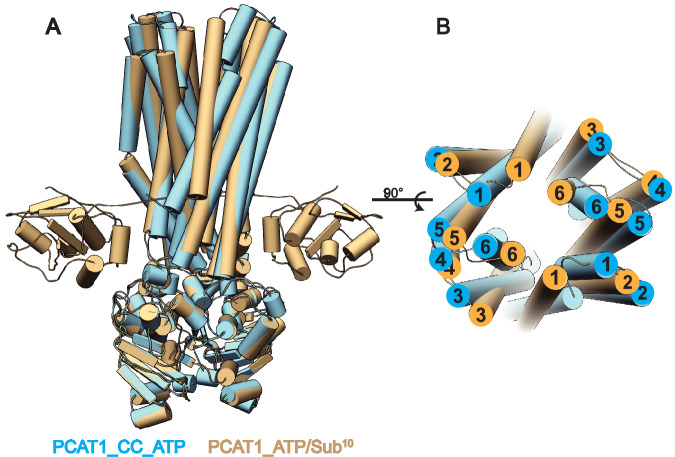
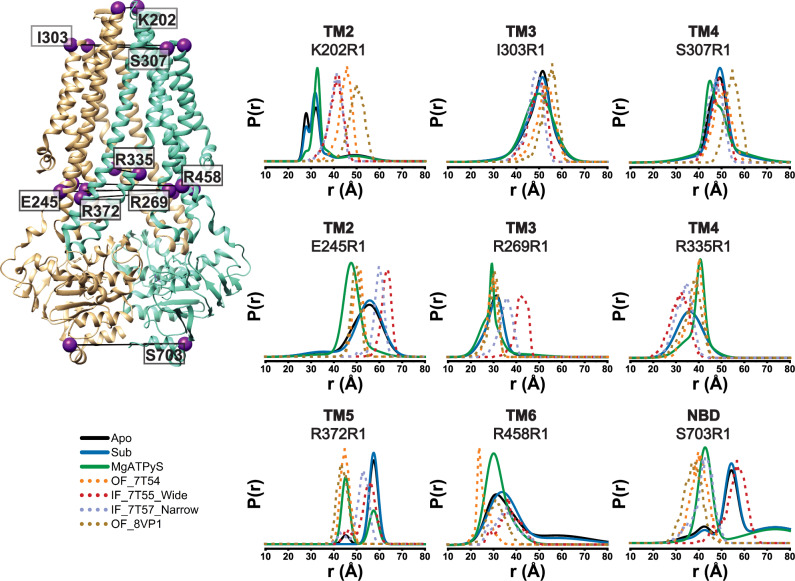
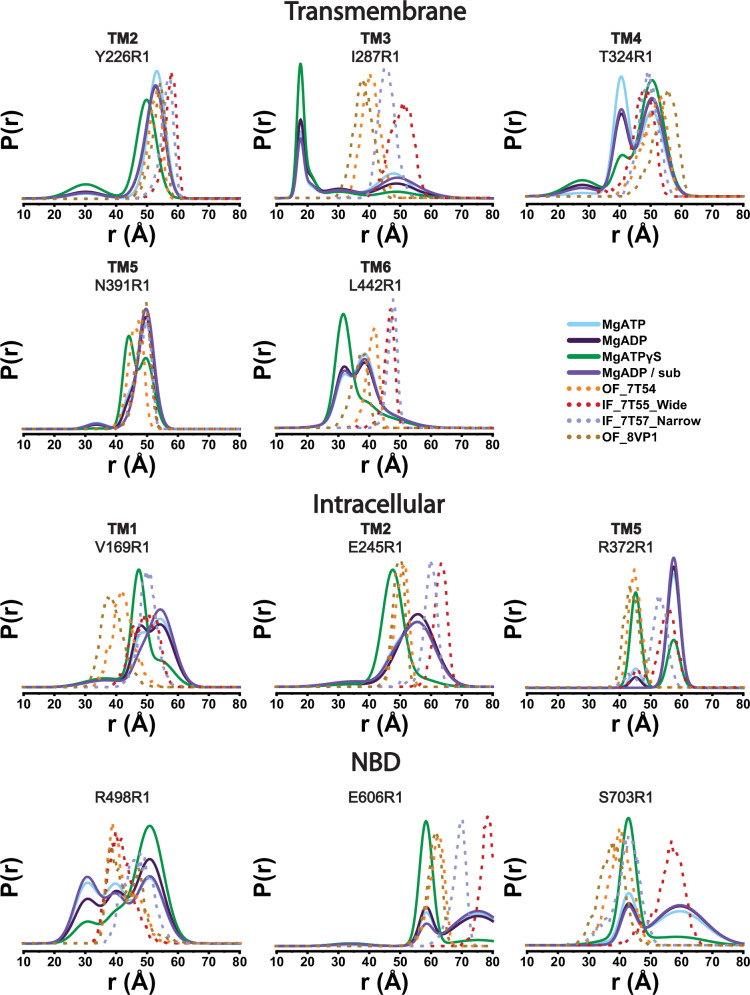
Protease-containing ABC transporters (PCATs) couple the energy of ATP hydrolysis to the processing and export of diverse cargo proteins across cell membranes to mediate antimicrobial resistance and quorum sensing. Here, we combine biochemical analysis, single particle cryoEM, and DEER spectroscopy in lipid bilayers along with computational analysis to illuminate the structural and energetic underpinnings of coupled cargo protein export. Our integrated investigation uncovers competitive interplay between nucleotides and cargo protein binding that ensures the latter's orderly processing and subsequent transport. The energetics of cryoEM structures in lipid bilayers are congruent with the inferred mechanism from ATP turnover analysis and reveal a snapshot of a high-energy outward-facing conformation that provides an exit pathway into the lipid bilayer and/or the extracellular side. DEER investigation of the core ABC transporter suggests evolutionary tuning of the energetic landscape to fulfill the function of substrate processing prior to export.
含蛋白酶的 ABC 转运体(PCATs)将 ATP 水解的能量与各种跨细胞膜货物蛋白的加工和输出偶联起来,以介导抗菌耐药性和群体感应。在这里,我们结合生化分析、单颗粒 cryoEM 和双层脂质中的 DEER 光谱以及计算分析来阐明偶联货物蛋白输出的结构和能量基础。我们的综合研究揭示了核苷酸和货物蛋白结合之间的竞争相互作用,这确保了后者的有序加工和随后的运输。双层脂质中 cryoEM 结构的能量与从 ATP 周转分析推断的机制一致,并揭示了一个高能外向构象的快照,该构象提供了进入脂质双层和/或细胞外侧的出口途径。对核心 ABC 转运体的 DEER 研究表明,能量景观的进化调整是为了在出口前完成底物加工的功能。