Renmin Hospital of Wuhan University, Wuhan University, 430071, Wuhan, China.
State Key Laboratory of Microbial Metabolism, Joint International Research Laboratory of Metabolic & Developmental Sciences, and School of Life Sciences and Biotechnology, Shanghai Jiao Tong University, 200240, Shanghai, China.
Signal Transduct Target Ther. 2024 Oct 21;9(1):292. doi: 10.1038/s41392-024-01984-0.
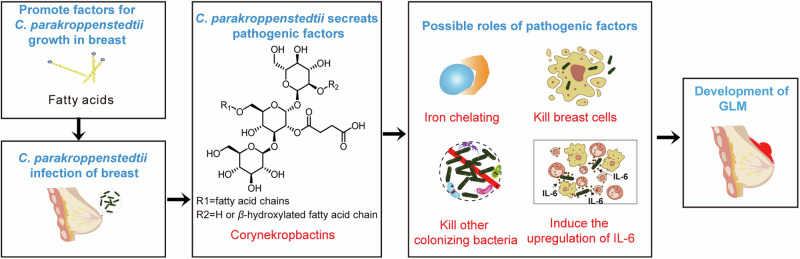
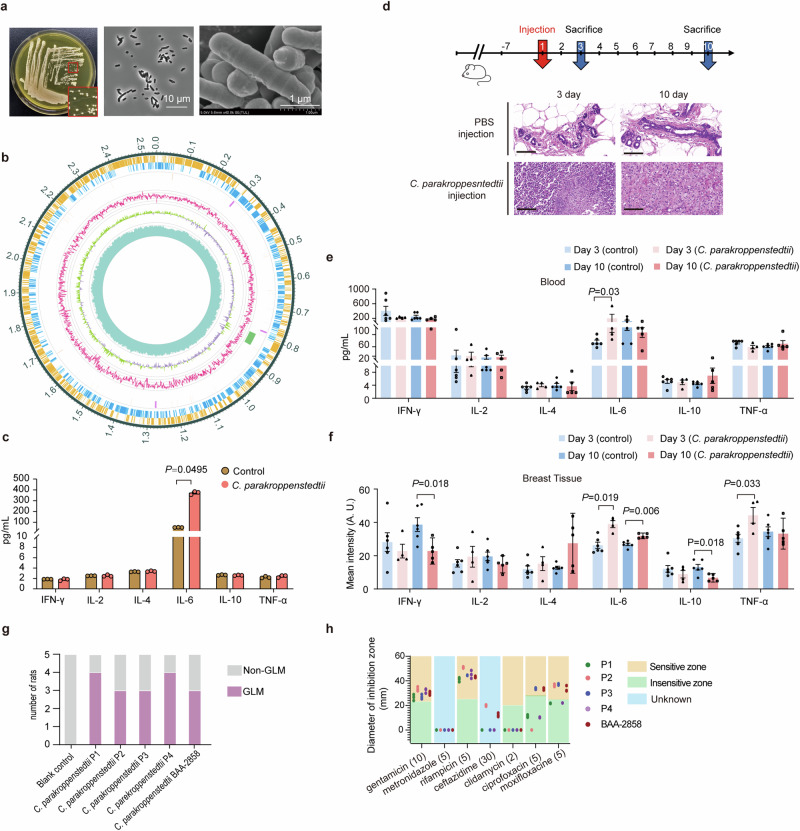
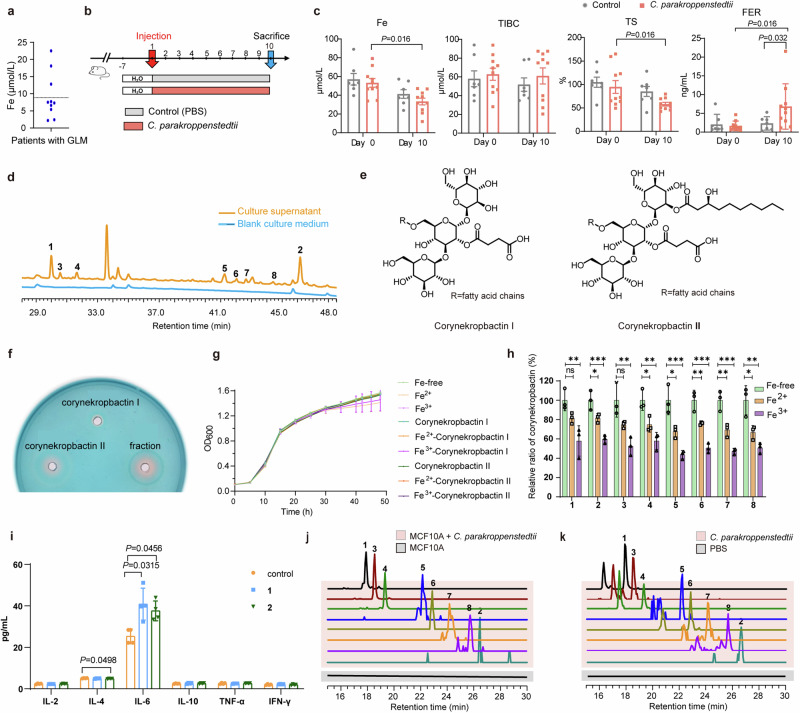
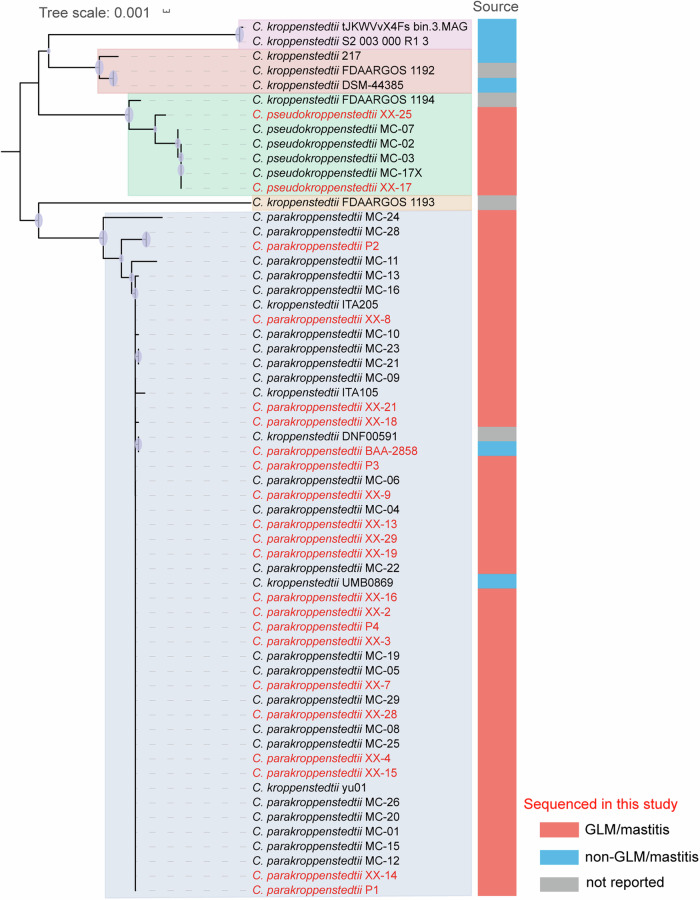
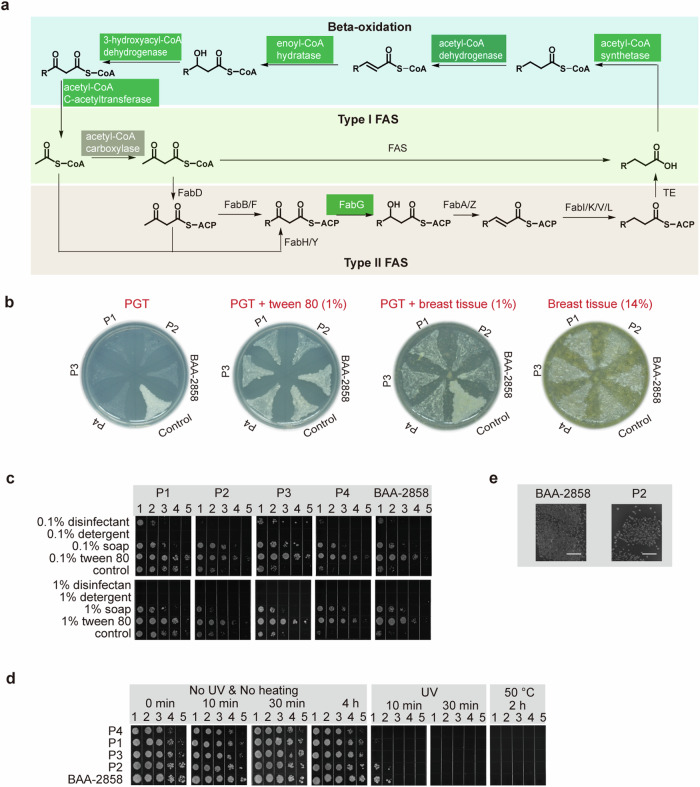
Granulomatous lobular mastitis (GLM) is a chronic idiopathic granulomatous mastitis of the mammary gland characterized by significant pain and a high propensity for recurrence, the incidence rate has gradually increased, and has become a serious breast disease that should not be ignored. GLM is highly suspected relative to microbial infections, especially those of Corynebacterium species; however, the mechanisms involved are unclear, and prevention and treatment are difficult. In this study, we demonstrated the pathogenicity of Corynebacterium parakroppenstedtii in GLM using Koch's postulates. Based on the drug sensitization results of C. parakroppenstedtii, and utilizing a retrospective study in conjunction with a comprehensive literature review, we suggested an efficacious, targeted antibiotic treatment strategy for GLM. Subsequently, we identified the pathogenic factor as a new type of glycolipid (named corynekropbactins) secreted by C. parakroppenstedtii. Corynekropbactins may chelate iron, cause the death of mammary cells and other mammary -gland-colonizing bacteria, and increase the levels of inflammatory cytokines. We further analyzed the prevalence of C. parakroppenstedtii infection in patients with GLM. Finally, we suggested that the lipophilicity of C. parakroppenstedtii may be associated with its infection route and proposed a possible model for the development of GLM. This research holds significant implications for the clinical diagnosis and therapeutic management of GLM, offering new insights into targeted treatment approaches.
肉芽肿性小叶性乳腺炎(GLM)是一种慢性特发性乳腺肉芽肿性疾病,其特征为显著疼痛和高复发倾向,发病率逐渐增高,已成为一种不容忽视的严重乳房疾病。GLM 与微生物感染高度相关,尤其是棒状杆菌属物种;然而,其涉及的机制尚不清楚,预防和治疗困难。在本研究中,我们使用科赫氏假设证明了副戈登氏棒状杆菌在 GLM 中的致病性。基于副戈登氏棒状杆菌的药敏结果,并结合回顾性研究和全面的文献复习,我们提出了一种针对 GLM 的有效、靶向抗生素治疗策略。随后,我们确定了致病因子是副戈登氏棒状杆菌分泌的一种新型糖脂(命名为 corynekropbactins)。Corynekropbactins 可能螯合铁,导致乳腺细胞和其他乳腺定植细菌死亡,并增加炎症细胞因子的水平。我们进一步分析了 GLM 患者中副戈登氏棒状杆菌感染的流行情况。最后,我们提出副戈登氏棒状杆菌的亲脂性可能与其感染途径有关,并提出了 GLM 发展的可能模型。本研究对 GLM 的临床诊断和治疗管理具有重要意义,为靶向治疗方法提供了新的见解。