Department of Animal Ecology, Evolutionary Biology Centre, Uppsala University, 75236, Sweden.
Department of Evolutionary Zoology and Human Biology, University of Debrecen, Debrecen, 4032, Hungary.
Parasitology. 2024 Jul;151(8):875-883. doi: 10.1017/S0031182024001021. Epub 2024 Oct 21.
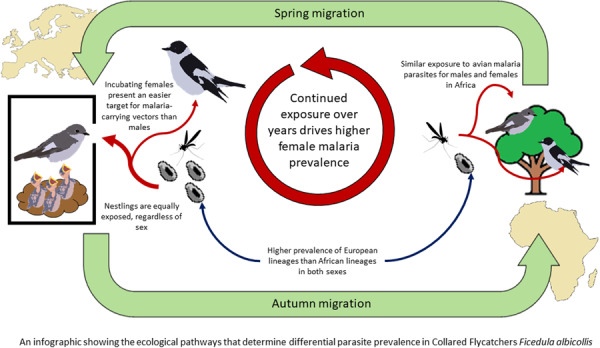
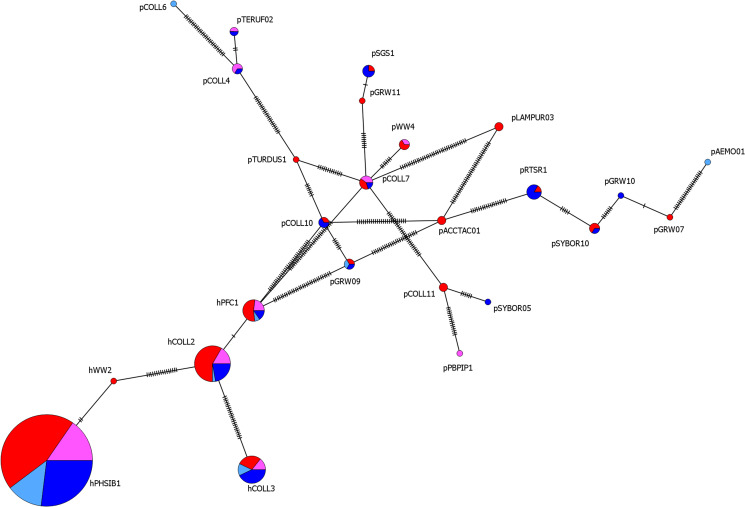
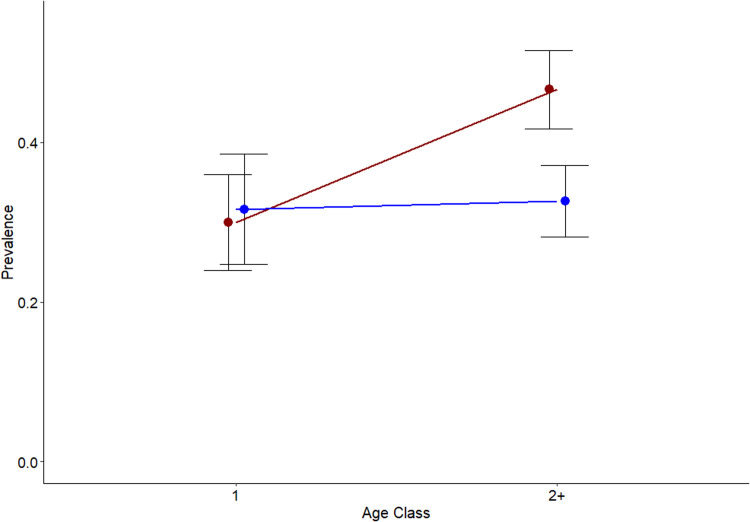
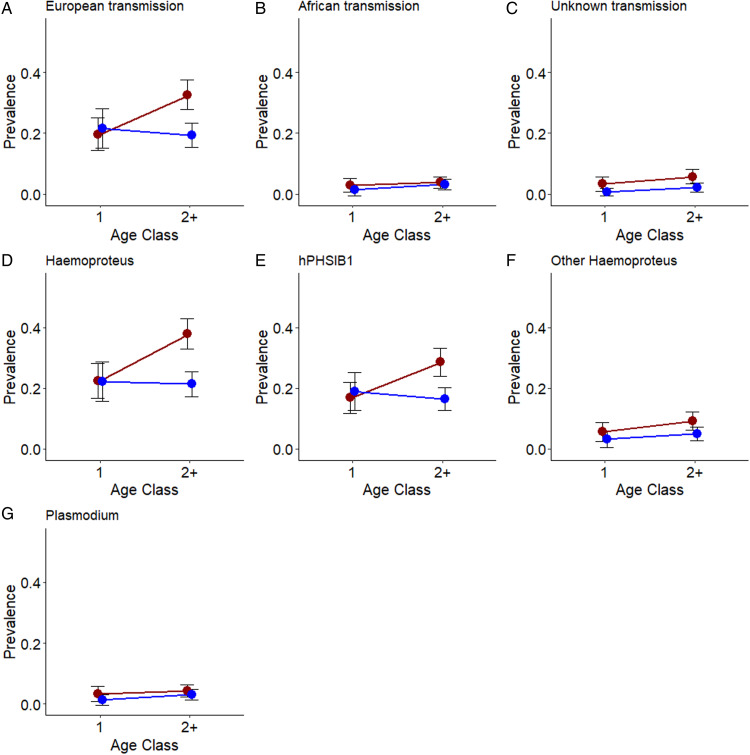
Sex biases in prevalence of disease are often attributed to intrinsic factors, such as physiological differences while a proximate role of extrinsic factors such as behavioural or ecological differences may be more difficult to establish. We combined large-scale screening for the presence and lineage identity of avian malaria (haemosporidian) parasites, in 1234 collared flycatchers () with life-history information from each bird to establish the location and timing of infection. We found an overall infection rate of 36.2% ± 0.03 (95% CI) with 25 distinct malaria lineages. Interestingly, first-year breeding males and females had similar infection prevalence while females accrued a significantly higher infection rate than males later in life. The sex difference in infection rate was driven by the most abundant lineage, hPHSIB1, while the infection rate of lineages was similar in males and females. Furthermore, when infections were assigned to an apparent transmission location, we found that the sex difference in infection rate trend was driven by lineages transmitted in Europe, more specifically by one lineage (the hPHSIB1), while no similar pattern was found in African lineages. We deduce that the observed infection patterns are likely to be caused by differences in breeding behaviour, with incubating females (and nestling individuals of both sexes) being easy targets for the biting insects that are the vectors of avian malaria parasites. Overall, our results are most consistent with ecological factors rather than intrinsic factors underlying the observed sex-biased infection rate of avian malaria in collared flycatchers.
疾病流行中的性别偏差通常归因于内在因素,如生理差异,而外在因素,如行为或生态差异的近因作用可能更难确定。我们结合了对 1234 只斑胸草雀()中鸟类疟疾(血孢子虫)寄生虫的存在和谱系身份的大规模筛查,以及每只鸟的生活史信息,以确定感染的位置和时间。我们发现总体感染率为 36.2%±0.03(95%置信区间),有 25 种不同的疟疾谱系。有趣的是,首次繁殖的雌雄鸟具有相似的感染率,而雌性在以后的生活中积累的感染率明显高于雄性。感染率的性别差异是由最丰富的 谱系驱动的,而 谱系在雄性和雌性中的感染率相似。此外,当将感染分配到一个明显的传播位置时,我们发现感染率趋势的性别差异是由在欧洲传播的谱系驱动的,更具体地说是由一个谱系(hPHSIB1)驱动的,而在非洲谱系中没有发现类似的模式。我们推断,观察到的感染模式很可能是由繁殖行为的差异引起的,孵卵的雌性(以及两性的巢雏个体)是携带鸟类疟疾寄生虫的吸血昆虫的容易目标。总体而言,我们的结果最符合生态因素,而不是斑胸草雀中观察到的鸟类疟疾感染率的性别偏向的内在因素。